Most people underestimate Idaho. Mention it at a dinner party and someone will say ‘potatoes’ and the conversation moves on. But Idaho has quietly become one of the most compelling destinations in the entire United States for people moving from California for foreign professionals chasing opportunity, and for first-time visitors looking for an alternative to overcrowded national parks.
This guide covers everything about The Gem State : cost of living, job market, neighborhoods, visa pathways for foreigners, tourist highlights, healthcare, insurance, and much more. Whether you’re a US citizen looking to relocate, an international professional planning your next chapter, or a traveler trying to squeeze the best out of two weeks in the Gem State this is the one article you need.
Idaho at a Glance More Than Just Potatoes
Idaho is the 14th largest state by area and covers roughly 83,569 square miles, yet its population sits at just around 2 million people making it one of the least densely populated states in the contiguous US. That combination of space, natural beauty, and growing economic opportunity is exactly why it’s attracting so much attention right now.
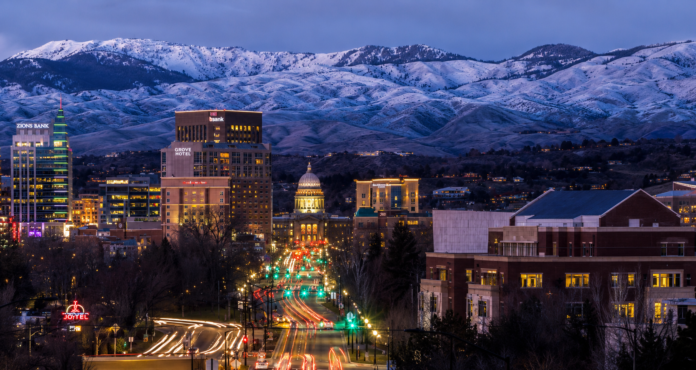
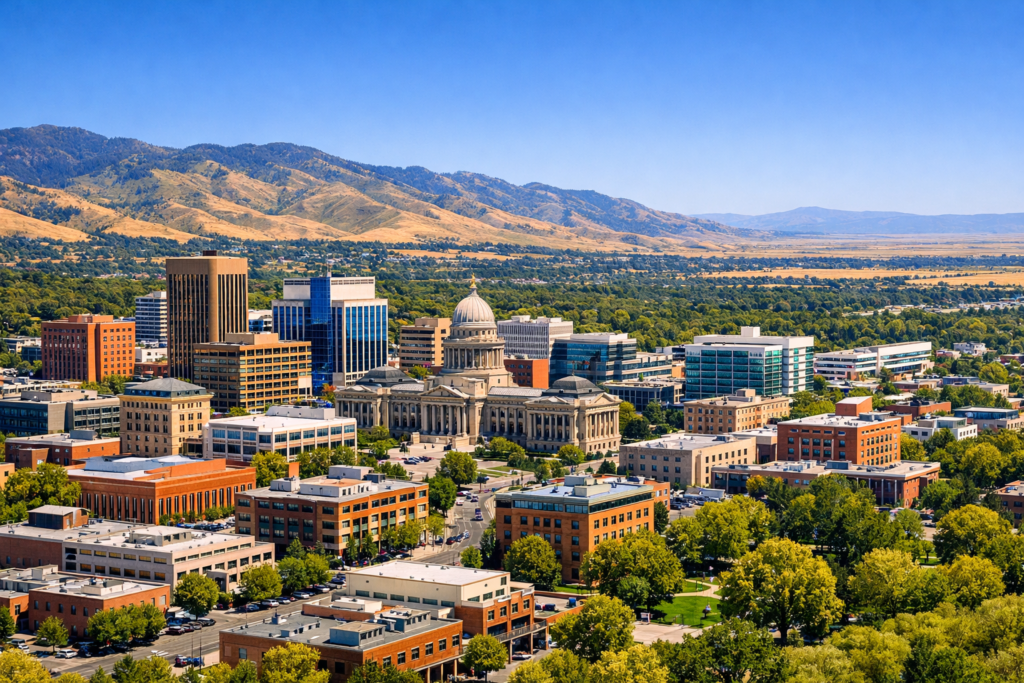
Boise is the state capital and by far the largest city, home to about 240,000 people in the city proper (and over 770,000 in the metro area). Other notable cities include Nampa, Meridian, Idaho Falls, Pocatello, and Coeur d’Alene. The state is divided into two very different halves: the south is high desert plateau with the Snake River Plain running through it, while the north is dense pine forests, mountain ranges, and crystal-clear lakes.
Surprising fact: Idaho produces around one-third of all potatoes grown in the United States, but its fastest-growing industry right now is technology not agriculture.
- State Capital: Boise
- Population: ~2.0 million (2024 estimate)
- Largest City: Boise
- Nickname: The Gem State (Idaho has over 72 precious and semi-precious gemstones)
- Official State Fruit: Huckleberry
- Time Zone: Mountain Time (most of the state), Pacific Time (northern panhandle counties)
Read Also : New Jersey 2026: The Complete Guide to Living, Working & Visiting the Garden State
Idaho Weather & the Best Time to Visit Pick Your Season Wisely
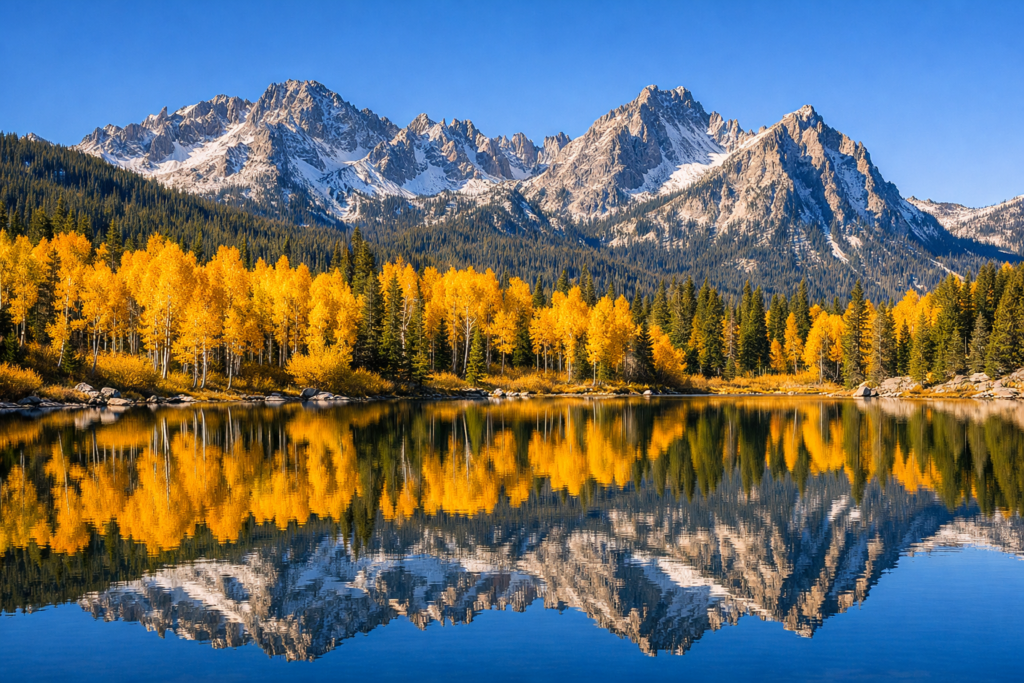
Idaho‘s climate varies dramatically depending on where you are. Southern Idaho (Boise, Twin Falls, Pocatello) has a semi-arid high desert climate — hot, dry summers and cold but relatively mild winters. Northern Idaho (Coeur d’Alene, Sandpoint) feels more like the Pacific Northwest, with more rainfall, lush forests, and heavier snowfall in the mountains.
Boise averages about 206 sunny days per year, which is more than Miami, Florida. Summers are warm and dry (July highs around 95°F), while winters are cold but manageable, with average lows around 25°F and occasional snowfall that usually melts quickly in the valley.
For tourists, the best months to visit depend entirely on what you’re after. Here’s a quick breakdown so you can plan without guessing:
Before diving into the seasonal table, note that spring and fall are genuinely underrated in Idaho crowds are low, prices drop, and the landscapes are at their most photogenic. Many outdoor enthusiasts consider September the single best month in the state.
| Season | Months | Avg Temp (Boise) | Best For | What to Avoid |
| Spring | Mar–May | 45–65°F | Wildflower hiking, rafting, fewer crowds | Muddy trails in mountains |
| Summer | Jun–Aug | 80–95°F | All outdoor sports, festivals, road trips | July heat waves (can hit 105°F) |
| Fall | Sep–Nov | 45–70°F | Scenic drives, hunting season, wine harvest | Mountain road closures post-October |
| Winter | Dec–Feb | 25–40°F | Skiing at Sun Valley, snowshoeing | Ice on roads, some closures |
Read Also : Massachusetts Living Guide 2026: The Ultimate Guide for Residents, Workers, Students & Tourists
Cost of Living in Idaho Affordable, But Changing Fast
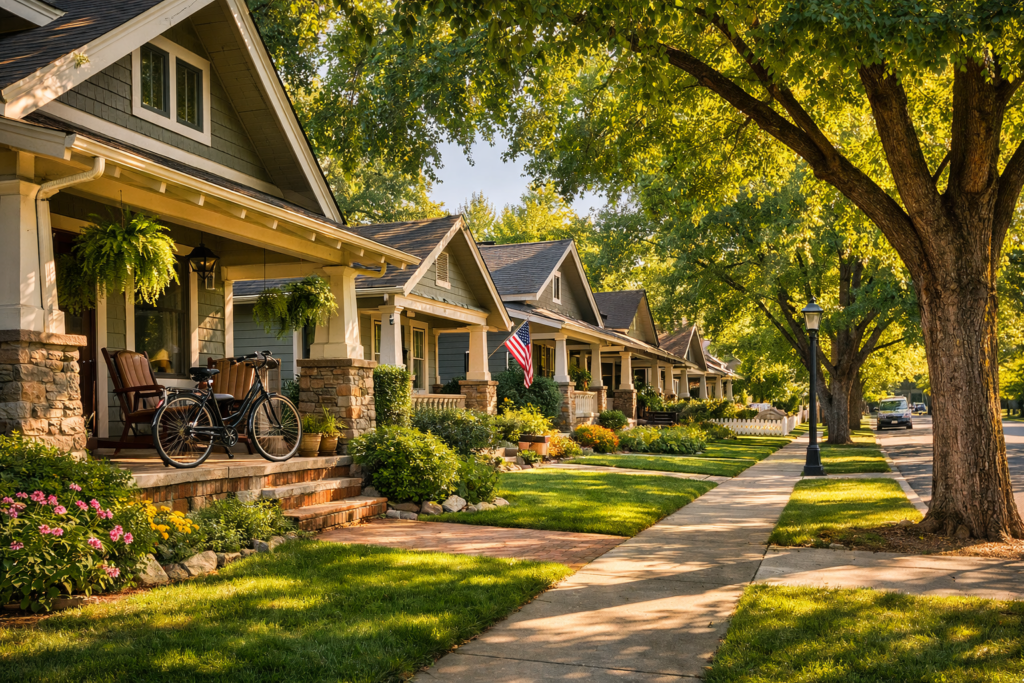
Idaho has been one of the fastest-growing states in the US for several years, and that growth has had a direct impact on housing costs. That said, Idaho remains significantly more affordable than California, Washington, or Oregon which is exactly why hundreds of thousands of people from those states have relocated here.
Compared to the national average, Idaho’s overall cost of living sits at roughly 95–98 on the index (100 = national average). Groceries, utilities, and transportation are below the national average. Healthcare is close to average. Housing is the wildcard Boise prices have climbed sharply since 2020, but smaller cities like Nampa, Idaho Falls, and Pocatello remain extremely affordable.
The table below gives you a realistic picture of what monthly expenses look like for a single person and a family of four in Boise versus a smaller Idaho city like Idaho Falls:
| Expense Category | Boise (Single) | Boise (Family of 4) | Idaho Falls (Single) | Idaho Falls (Family of 4) |
| Rent (1BR / 3BR) | $1,250–$1,500 | $1,800–$2,400 | $850–$1,050 | $1,200–$1,600 |
| Groceries | $350–$450 | $900–$1,100 | $300–$380 | $800–$950 |
| Utilities (Electric/Gas/Water) | $130–$180 | $220–$300 | $110–$160 | $180–$250 |
| Transportation (Gas/Car) | $180–$250 | $350–$450 | $150–$200 | $280–$380 |
| Healthcare (Insurance) | $300–$500 | $900–$1,400 | $280–$480 | $850–$1,300 |
| Dining Out (avg month) | $200–$350 | $400–$600 | $150–$250 | $300–$450 |
| Total Estimate | $2,410–$3,230 | $4,570–$6,250 | $1,840–$2,520 | $3,610–$4,930 |
Read Also : Houston Texas: The Ultimate Guide to Living, Working & Visiting in 2026
The Gem State Neighborhoods Guide Finding Your Perfect Fit
Idaho offers wildly different neighborhood personalities depending on your lifestyle budget, and priorities. Here’s an honest look at the most important areas:
Boise’s North End is the most walkable charming neighborhood in the state tree-lined streets bungalows from the 1920s, and independent coffee shops around every corner. It’s expensive by Boise standards (median home price above $550,000) but offers a lifestyle that rivals any hip urban neighborhood in Portland or Denver. The East End sits near downtown and Boise State University great for young professionals and academics.
Meridian, just west of Boise, is the fastest-growing city in Idaho and offers newer construction, excellent schools, and lower home prices than Boise proper. Families love it here. Eagle and Star are quieter suburban alternatives with even lower density.
Nampa sits further west in the Treasure Valley and offers the most affordable option in the metro average home prices are still well below $350,000. It has a more blue-collar character and a large Latino community, with excellent Mexican and Central American food.
For a completely different vibe, Coeur d’Alene in northern Idaho is essentially a resort town it sits on one of the most beautiful lakes in North America and attracts retirees, outdoor enthusiasts, and remote workers from across the country. It’s pricier than most of Idaho but still affordable compared to coastal cities.
Surprising fact: Meridian, Idaho was ranked by WalletHub as one of the top 10 best cities to raise a family in the entire United States.
Read Also : Miami, Florida: The Ultimate Guide for Visitors, Expats & New Residents
Safety & Crime in Boise region The Real Numbers
Idaho is one of the safer states in the US, but ‘safe’ means different things depending on where you live. Statewide, Idaho consistently ranks among the top 15 safest states by overall crime rate. Violent crime rates are well below the national average, and property crime while more common is also below average.
Within the state, suburban areas like Meridian, Eagle, and Nampa rank exceptionally well for safety. Downtown Boise sees more property crime than the suburbs but remains safer than downtown areas of most major US cities. Rural Idaho is extremely safe by virtually every metric.
Like all cities, specific pockets of Boise particularly certain areas near the Fairview Avenue corridor and parts of West Boise have higher crime concentrations. Always check neighborhood-level data at resources like NeighborhoodScout or the Boise Police Department’s crime mapping portal before choosing where to live.
Surprising fact: Idaho has one of the lowest murder rates in the entire United States, consistently ranking in the bottom 5 states for homicides per 100,000 residents.
Read Also : Living in Atlanta Georgia: The Unfiltered Truth Nobody Tells You Before You Move
Idaho Job Market & Salaries Where the Real Opportunities Are
Idaho’s economy has transformed significantly over the past decade. While agriculture and food processing remain the backbone of rural Idaho, the Boise metro has emerged as a genuine tech hub sometimes called the ‘Silicon Valley of the Intermountain West.’ Companies like Micron Technology, Hewlett Packard, Clearwater Analytics, and dozens of fast-growing startups are headquartered or have major operations here.
Idaho’s unemployment rate has consistently hovered between 2.5% and 3.5% well below the national average making it a job-seekers’ market in many sectors. Healthcare, construction, technology, manufacturing, and education are the dominant hiring sectors.
Here’s a look at average annual salaries in Idaho’s top employment sectors. These figures reflect 2024 data and will naturally vary based on experience, certifications, and specific employer:
| Job Title / Sector | Average Annual Salary (Idaho) | National Average | Top Idaho Employers |
| Software Engineer | $105,000–$130,000 | $115,000–$145,000 | Micron, HP, Clearwater Analytics |
| Registered Nurse | $72,000–$88,000 | $77,000–$95,000 | St. Luke’s, St. Al’s, VA Medical |
| Construction Manager | $78,000–$98,000 | $85,000–$110,000 | Strata Inc., Engineered Structures |
| Teacher (K–12) | $42,000–$58,000 | $48,000–$65,000 | Boise School District, CODA |
| Truck Driver (CDL) | $55,000–$72,000 | $50,000–$68,000 | Amalgamated Sugar, Lamb Weston |
| Financial Analyst | $70,000–$95,000 | $80,000–$110,000 | Clearwater Analytics, Simplot |
| Healthcare Administrator | $80,000–$115,000 | $90,000–$130,000 | St. Luke’s Health System |
| Agricultural Manager | $55,000–$80,000 | $60,000–$85,000 | Simplot, Lamb Weston, Snake River Farms |
Idaho has no major league sports teams or mega-corporations to compete with for talent, which works in your favor as a job seeker — your skills stand out more easily, and the local professional community is tight-knit and highly collaborative.
Idaho Visa & Work Permit Guide for International Professionals
If you’re an international citizen eyeing Idaho as your next home, the visa pathway is handled at the federal level Idaho itself doesn’t issue visas or work permits, but the state’s booming economy creates genuine demand for foreign talent, which strengthens your case for employer sponsorship.
The most common visa routes for professionals relocating to Idaho are:
- H-1B Visa: For specialty occupations requiring a bachelor’s degree or higher. Tech companies in Boise (Micron, HP) and healthcare systems regularly sponsor H-1B applicants. The annual cap is 85,000 but the cap-exempt season runs April through October.
- TN Visa (USMCA): For Canadian and Mexican citizens in specific professional categories. One of the simplest work visas no cap, no lottery, processed at the border or via consulate.
- L-1 Visa: For intra-company transferees. If your current employer has a US presence (including Idaho offices), this is a strong pathway.
- O-1 Visa: For individuals with extraordinary ability in sciences, arts, education, business, or athletics. Idaho’s growing startup ecosystem values this visa type.
- EB-2 / EB-3 Green Card: Employment-based permanent residency. Idaho employers, especially in healthcare and agriculture, frequently sponsor EB-3 petitions.
- F-1 OPT / STEM OPT: International students who graduate from Idaho universities (Boise State University, University of Idaho) can work in Idaho for 12–36 months on OPT before needing H-1B sponsorship.
Key universities in Idaho for international students include Boise State University (over 1,000 international students enrolled annually), University of Idaho in Moscow, Idaho State University in Pocatello, and Lewis-Clark State College. Tuition at these institutions is substantially lower than coastal universities, making Idaho a strategic choice for cost-conscious international students.
Read Also : New York City Cost of Living 2026: Survival Guide for Families & Immigrants
Getting Around Idaho Public Transit, Cars, and Everything In Between
Let’s be honest upfront: Idaho is not a public transportation state. Outside of Boise, you will almost certainly need a car. The state is large, distances between cities are significant, and rural areas have virtually no transit infrastructure.
That said, here’s what exists and how to work with it:
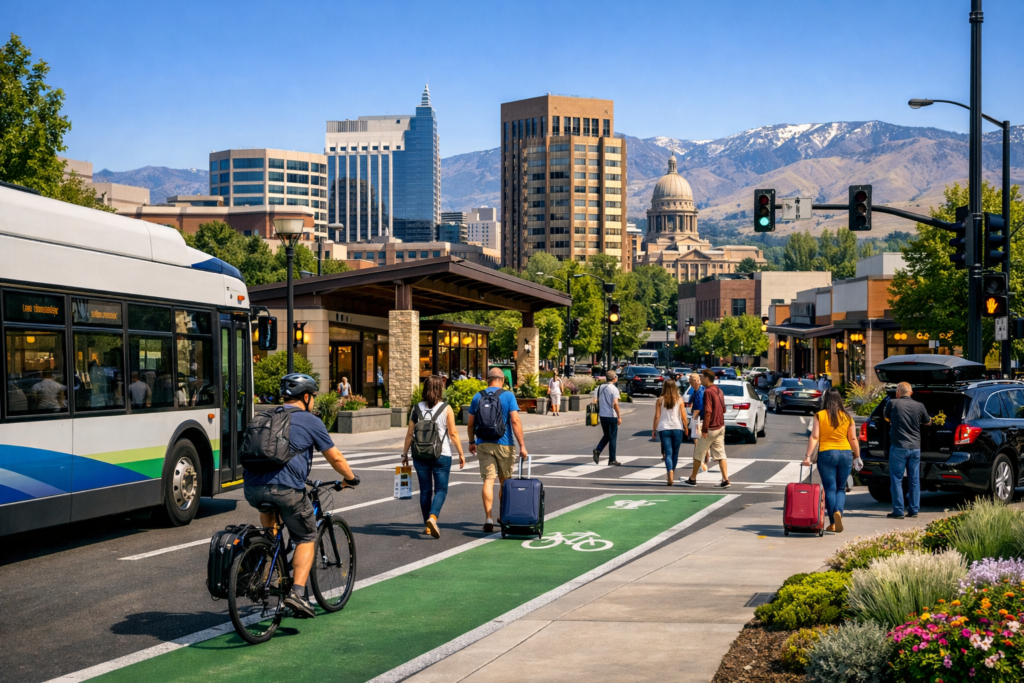
- Valley Regional Transit (VRT): Boise’s public bus system covers the Treasure Valley (Boise, Nampa, Caldwell, Meridian). Routes are functional but infrequent — expect 30–60 minute headways on most lines.
- Driving: The clear first choice for getting around Idaho. Gas prices are generally below the national average. Interstate 84 connects Boise to Portland and Salt Lake City. US-26 and US-20 are the main east-west corridors.
- Boise Airport (BOI): Increasingly well-connected. Direct flights to major hubs: Seattle, Denver, San Francisco, Los Angeles, Salt Lake City, Phoenix, Dallas, and more. Alaska, Delta, United, Southwest, and American all serve BOI.
- Amtrak: The Empire Builder train passes through northern Idaho (Sandpoint, Coeur d’Alene area) connecting Chicago to Seattle/Portland. No Amtrak service to southern Idaho.
- Cycling: Boise has a surprisingly well-developed cycling culture and a growing network of bike lanes. The Boise River Greenbelt (25+ miles of paved path) is excellent for commuters and recreational riders alike.
For international visitors renting a car: most major rental companies operate out of Boise Airport. Your home country license is valid for up to one year in Idaho for tourists. Foreign residents planning to stay longer should get an Idaho driver’s license within 90 days of establishing residency.
Read Also : How Much Does It Cost to Live in Fayetteville Arkansas in 2026? Full Breakdown
Where to Stay in Idaho From Budget Hostels to Luxury Resorts
Idaho offers lodging options across every price point, but the ‘best’ choice really depends on which part of the state you’re visiting and what kind of experience you want.
In Boise, the most centrally located hotels cluster around Downtown and the BoDo (Boise Downtown) district. The Grove Hotel is the upscale choice, consistently ranked as the best hotel in Boise. For boutique options, the Inn at 500 Capitol is a charming property right in the heart of downtown. Budget travelers can find decent chain hotels (Hampton Inn, Courtyard by Marriott) in the Meridian and Airport corridor for $90–$130/night.
Sun Valley (Ketchum area) is Idaho’s most famous resort destination home to one of America’s oldest and most prestigious ski resorts. Sun Valley Resort itself offers rooms ranging from around $200 to $700+ per night in peak ski season. Stanley, located in the Sawtooth Valley just north of Sun Valley, is one of the most spectacularly situated small towns in the entire country Airbnb cabins and rustic lodges run $150–$350/night.
Coeur d’Alene: The Coeur d’Alene Resort sits directly on the lake and is genuinely iconic it even has a floating golf green on the water. Peak summer rates run $200–$450/night. More affordable B&Bs and vacation rentals surround the lake.
Surprising fact: Sun Valley was America’s first destination ski resort, opened in 1936 by the Union Pacific Railroad to attract wealthy train passengers.
Read Also : Living in Bloomington Indiana (2026): Cost ,Jobs, Apartments & Salary Reality
Top Restaurants in Idaho Beyond Potatoes and Steakhouses
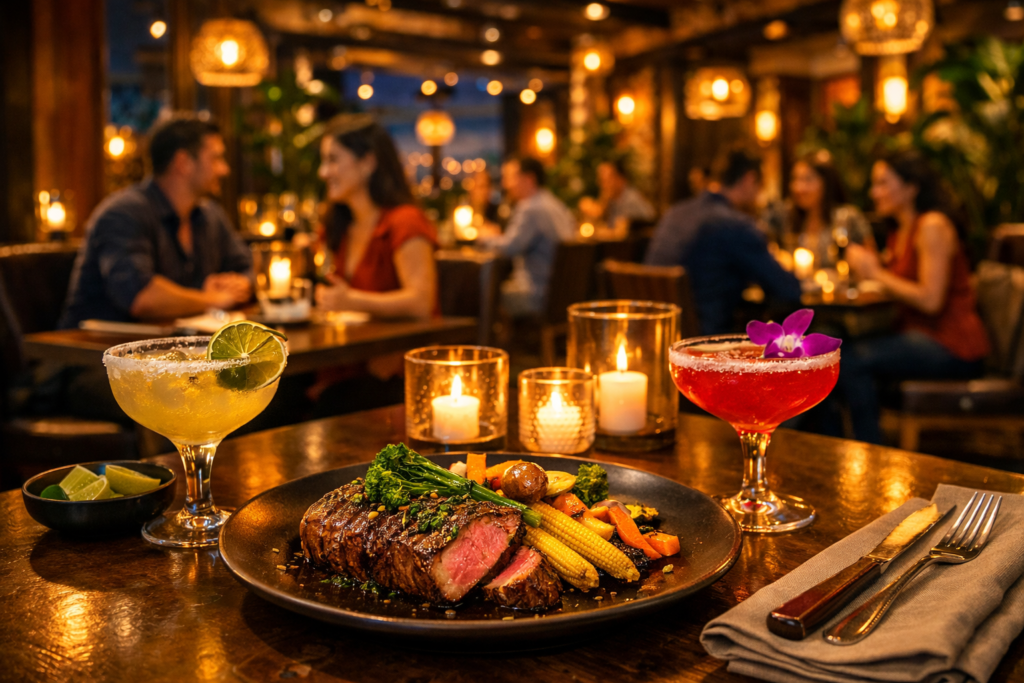
Idaho’s food scene has matured dramatically. Boise in particular has become a genuine culinary destination, with an impressive concentration of farm-to-table restaurants, craft cocktail bars, and internationally influenced menus. The state’s access to incredible local ingredients Idaho beef, trout, Treasure Valley produce, Snake River wine gives chefs serious ammunition.
- Barbacoa Grill (Boise): The best upscale Latin-influenced restaurant in the state. Think wood-fire grilled meats, creative cocktails, and a genuinely lively atmosphere. Reservation recommended.
- Juniper (Boise): Modern American fine dining with hyperlocal sourcing. The tasting menu changes seasonally and is one of the best culinary experiences in the Pacific Northwest.
- Fork (Boise): A downtown Boise institution. Brunch is legendary here their chicken and waffles have appeared in national food media. Expect a wait on weekends.
- Smoky Mountain Pizza (Multiple Locations): The Idaho chain that locals swear by. Sourdough crust, creative topping combinations, very reasonable prices.
- The Bittercreek Alehouse (Boise): The best casual spot for local craft beer alongside a thoughtful pub menu. Over 50 taps rotating regional and national craft beers.
- Cottonwood Grille (Boise): Upscale dining on the Boise River with some of the best Idaho trout preparations in the state.
- Table Rock Brew Pub (Boise): Great views from the Boise Foothills, solid house-brewed beers, and an unpretentious menu. Perfect after a hike.
- The Snake Pit (Twin Falls): Hearty portions of American comfort food near the Snake River Canyon. Cash-in-hand local dining at its best.
Read Also : Moving to Naperville Illinois? Your Complete Guide to Cost of Living Jobs & Best Hotels
Top Tours & Attractions in Idaho The Gem State Delivers
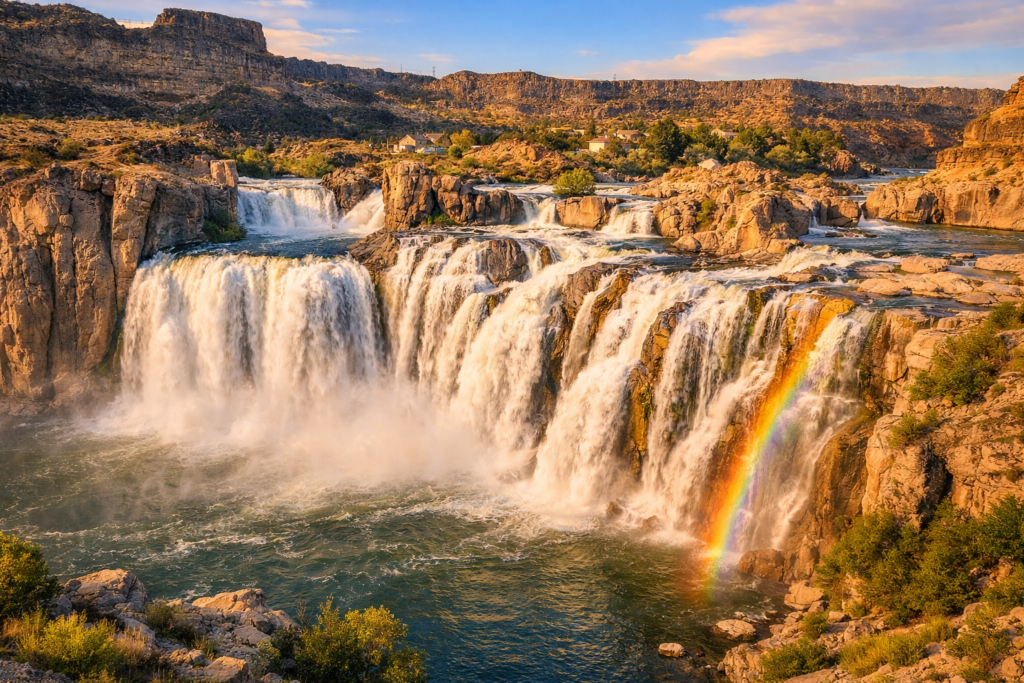
Idaho consistently surprises visitors. People come for Boise or Sun Valley and leave wondering why they’d never heard more about the rest of the state. Here are the must-do experiences:
- Craters of the Moon National Monument: A surreal lava landscape in central Idaho that looks like the surface of another planet. Over 400 square miles of volcanic features — lava tubes, cinder cones, spatter cones. Absolutely unlike anywhere else in the US.
- Sun Valley / Sawtooth Mountains: World-class skiing in winter, epic hiking and mountain biking in summer. The Sawtooth Range is genuinely one of the most beautiful mountain landscapes in North America.
- Shoshone Falls: Called the ‘Niagara of the West’ — at 212 feet, Shoshone Falls is actually taller than Niagara Falls. Located near Twin Falls on the Snake River.
- Hells Canyon: The deepest river gorge in North America (deeper than the Grand Canyon at its deepest point) stretches along the Idaho-Oregon border. Jet boat tours run from Lewiston.
- Boise River Greenbelt: The 25-mile greenbelt along the Boise River through downtown is perfect for walking, cycling, or simply watching golden eagles overhead.
- Idaho Potato Museum (Blackfoot): Surprisingly entertaining seriously. The world’s largest potato chip, a replica of a pioneer era potato cellar, and a genuine homage to Idaho’s most famous export.
- City of Rocks National Reserve: Granite spires and formations near Almo used by pioneers on the California Trail. Now a world-class rock climbing destination.
- Frank Church-River of No Return Wilderness: The largest contiguous wilderness area in the lower 48 states. No roads, no infrastructure — just 2.3 million acres of pure backcountry.
Read Also :Orem, Utah Cost of Living, Jobs & Housing (2026): Is It Worth Moving?
Shopping in Idaho Malls, Markets, and Hidden Gems
Idaho’s retail landscape is typical of a mid-sized Western state solid chain retail in the cities, but also some genuinely interesting local shopping scenes worth exploring.
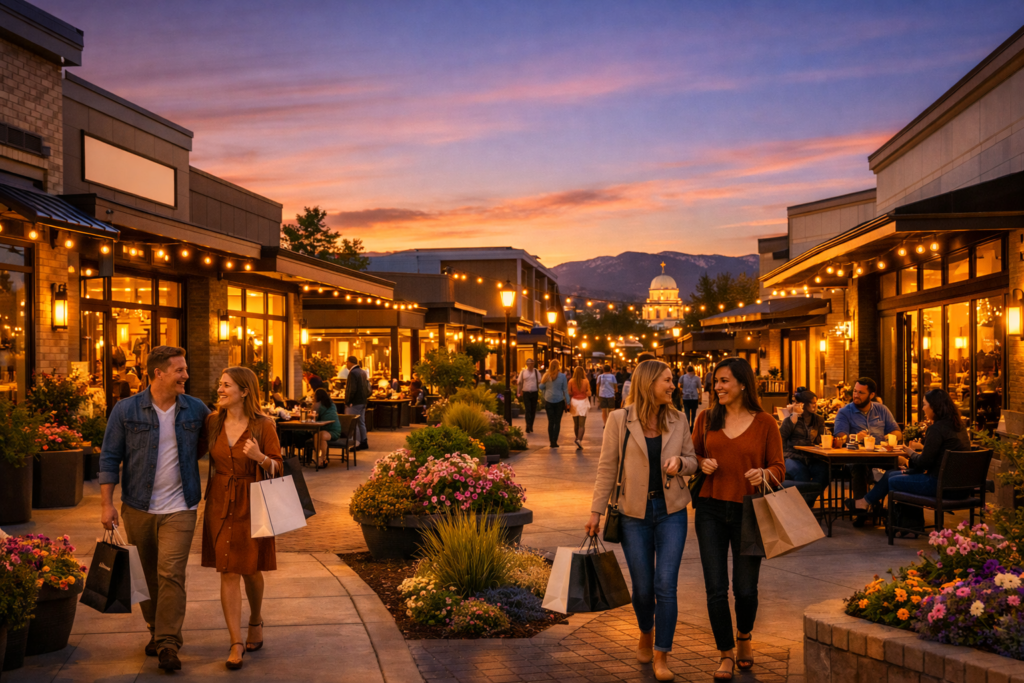
Boise’s downtown core along 8th Street and the BoDo District offers the best boutique shopping in the state. You’ll find independent clothing stores, bookshops, art galleries, outdoor gear retailers, and locally made goods alongside national brands. The Boise Farmers Market (open Saturdays April through October) is a must-visit for local produce, cheese, honey, and artisan crafts.
The Boise Towne Square Mall is Idaho’s largest mall all the standard anchor stores and national chains. Village at Meridian and The Village on Main Street (Meridian) offer outdoor lifestyle centers with restaurants and entertainment alongside retail. For outdoor gear specifically, Boise has excellent REI, Recreational Equipment outlets, and several local outfitters like Idaho Mountain Touring.
For unique Idaho souvenirs, look for: locally made huckleberry products (jam, honey, chocolate), Sun Valley branded apparel, Idaho-made wines from the Snake River Valley AVA, and Boise-roasted specialty coffee from local roasters like Dawson Taylor or Thomas Hammer.
Read Also : Overland Park Kansas – Complete Guide to Living, Jobs, Cost of Living & Lifestyle
Nightlife & Entertainment in Idaho More Than You’d Expect
Idaho isn’t Las Vegas, and nobody’s pretending it is. But Boise has a genuinely vibrant arts and entertainment scene that catches newcomers off guard. The city punches well above its weight class for live music, theater, and craft beverage culture.
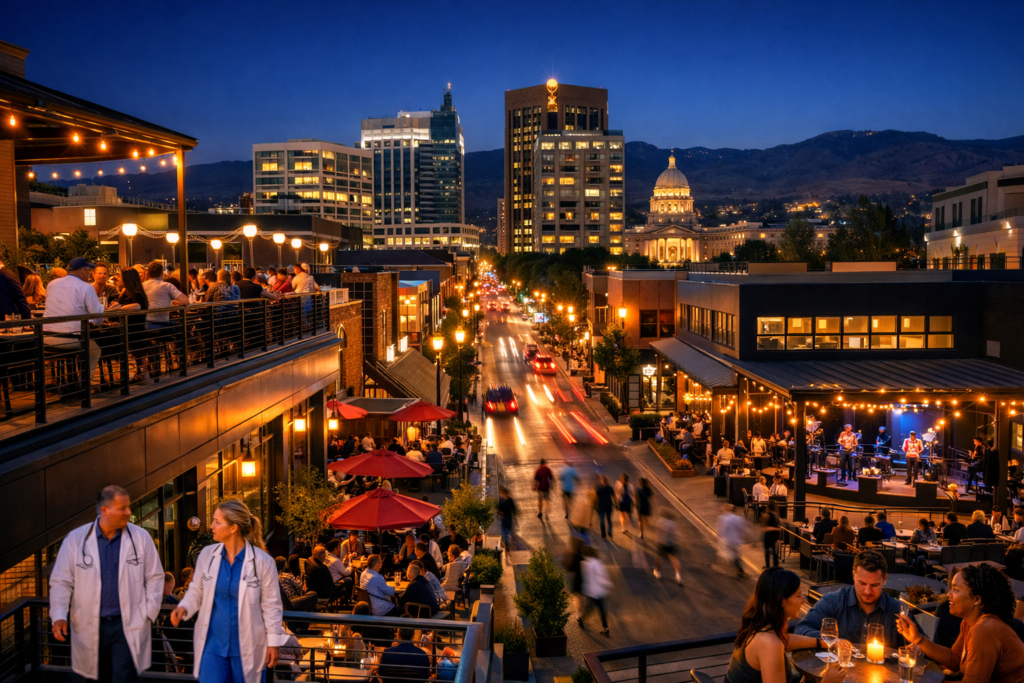
The Treefort Music Fest (held every March in Boise) has become one of the most respected independent music festivals in the country, drawing 500+ artists across 30+ venues over five days. The Morrison Center at Boise State University hosts Broadway touring productions and major concerts year-round. The Egyptian Theatre a stunning 1927 venue in downtown Boise shows independent films and hosts live performances.
- Craft Beer Scene: Boise has over 30 craft breweries in the metro area. 10 Barrel Brewing (now AB-InBev but still excellent), Payette Brewing, Sockeye Brewing, Barbarian Brewing are standouts.
- Cocktail Bars: The Modern Hotel bar, Nectar, and Bittercreek are the downtown favorites. The cocktail program at Juniper restaurant is arguably the best in the state.
- Live Music: The Knitting Factory (Boise) is the best mid-size venue for touring acts. The Olympic Venue complex and Ford Idaho Center handle larger shows.
- Coeur d’Alene: Smaller city but surprisingly active nightlife the resort area bars and restaurants along Sherman Avenue stay lively through summer.
Surprising fact: Boise is consistently ranked as one of the top 10 cities in the US for arts and culture per capita — meaning the arts scene here is more vibrant than its population size would suggest.
Read Also : Cary North Carolina – Living Cost, Jobs, Apartments, Student Housing & Real Survival Guide (2026)
Healthcare & Hospitals in Idaho Quality Care, Growing System
Idaho’s healthcare system has historically lagged slightly behind national averages due to the state’s rural nature and rapid population growth outpacing medical infrastructure. That said, the major urban centers have strong healthcare networks.

In Boise, the two dominant health systems are St. Luke’s Health System and Saint Alphonsus Regional Medical Center (Saint Al’s). Both are full-service regional medical centers with Level II trauma capabilities, cancer centers, cardiac care, and a full range of specialist services. St. Luke’s has expanded rapidly and now operates hospitals across the Treasure Valley and beyond.
Idaho State University has a medical school program (in partnership with the University of Washington WWAMI program), and Boise is actively working to increase physician availability, which has been a limiting factor for growth. For specialized or complex care (transplant centers, Level I trauma, pediatric subspecialties), many Idahoans travel to Seattle, Portland, or Salt Lake City.
- St. Luke’s Boise Medical Center: Main campus, flagship hospital. Level II Trauma, cardiac and cancer centers.
- Saint Alphonsus Regional Medical Center: Second major Boise hospital with excellent cardiac and emergency services.
- Eastern Idaho Regional Medical Center (Idaho Falls): The main hospital serving eastern Idaho and the upper Snake River area.
- Kootenai Health (Coeur d’Alene): Serves northern Idaho with comprehensive services.
- Telehealth: Widely adopted across rural Idaho many residents in smaller towns access specialist care via telemedicine.
Read Also : Sugar Land Texas: The Ultimate Relocation, Financial Survival & Settlement Guide(2026)
Health Insurance in Idaho Your Options Explained

Health insurance in Idaho works the same as the rest of the US, but the state has some specific nuances worth knowing. Idaho operates its own state-based health insurance marketplace called Your Health Idaho (YourHealthIdaho.org) one of only a handful of states to do so independently rather than using the federal HealthCare.gov portal.
Open enrollment for 2025 coverage runs November 1 through December 15 (with some extended windows). Idaho’s marketplace offers plans from several carriers including Blue Cross of Idaho, SelectHealth, Mountain Health CO-OP, and others.
For employer-sponsored insurance: most major Idaho employers offer health benefits, with employee premium contributions typically ranging from $100–$400/month for individual coverage depending on plan tier and employer contribution.
- Medicaid in Idaho: Idaho expanded Medicaid in 2020. Individuals earning up to 138% of the Federal Poverty Level qualify. This has extended coverage to over 100,000 low-income Idahoans.
- Premium Tax Credits: Most Marketplace enrollees qualify for subsidies under the Affordable Care Act. A family of four at $80,000/year income could see premiums reduced by 50–70%.
- International Visitors: Travel insurance is essential. Idaho does not offer free or reduced-cost care to short-term visitors. Expect emergency room visits to start at $1,500+.
- Short-Term Health Plans: Idaho is one of the states that allows extended short-term health plans (up to 36 months). These are cheaper but offer fewer protections — generally not recommended for primary coverage.
Mortgage & Home Loans in Idaho What Buyers Need to Know in 2026
Idaho’s housing market went through a dramatic run-up between 2020 and 2022, with Boise becoming briefly famous as one of the fastest-appreciating housing markets in the US. Home prices have since stabilized, but remain elevated compared to pre-pandemic levels.
As of 2025, median home prices in Idaho look roughly like this: Boise city ($440,000–$520,000), Meridian ($415,000–$490,000), Nampa ($320,000–$380,000), Idaho Falls ($270,000–$330,000), Coeur d’Alene ($450,000–$600,000), and Pocatello ($220,000–$280,000).
Idaho is a non-disclosure state, meaning home sale prices aren’t publicly reported so working with a local real estate agent who has access to MLS data is genuinely important here, not just a formality.
- Conventional Loans: 20% down to avoid PMI. With Idaho’s median home prices, that’s roughly $88,000–$104,000 down on a Boise purchase — significant but achievable for many relocating from high-cost states.
- FHA Loans: 3.5% down payment for buyers with credit scores above 580. Popular among first-time buyers in Idaho.
- VA Loans: Idaho has a substantial military and veteran population. VA loans (no down payment, no PMI) are widely used especially near Mountain Home AFB.
- USDA Rural Development Loans: Much of Idaho qualifies as rural for USDA purposes, making 0% down loans available in many areas outside Boise.
- Idaho Housing and Finance Association (IHFA): Offers first-time homebuyer programs, down payment assistance, and below-market rate mortgages for qualifying buyers.
Current mortgage rates in Idaho follow national trends always check current rates through IHFA, local credit unions (Idaho Central Credit Union is the largest), and national lenders. Credit unions in Idaho often offer better rates than national banks.
Car Insurance in Idaho — Rates, Requirements & How to Save
Car insurance in Idaho is required by law, and the minimum coverage requirements are among the more modest in the US. However, given the weather conditions (icy roads in winter, wildlife crossings), comprehensive coverage is strongly recommended beyond the legal minimums.
Idaho’s minimum required coverage is: $25,000 bodily injury liability per person, $50,000 per accident, and $15,000 property damage liability. Most insurance professionals and the Idaho Department of Insurance recommend carrying significantly more than the minimum, especially if you’re driving mountain roads or rural highways where wildlife collisions are common.
Average car insurance rates in Idaho are below the national average typically $90–$140/month for full coverage on a single vehicle for a driver with a clean record. Rates vary by city, driver age, vehicle type, and coverage level. Here are the main factors affecting your Idaho car insurance premium:
- Location: Boise rates are slightly higher than rural Idaho due to traffic density.
- Driving Record: DUIs in Idaho carry harsh penalties and will spike your rates significantly.
- Vehicle Type: Trucks and SUVs (dominant in Idaho) are more expensive to insure than sedans.
- Winter Driving Coverage: Consider comprehensive for hail, ice damage, and deer collisions all genuinely common in Idaho.
- Top Insurers in Idaho: State Farm, GEICO, Progressive, Farmers, and USAA (for military) are the major players. Idaho Central Credit Union also offers competitive insurance products.
Practical Tips for Foreigners Moving to Idaho
Moving to Idaho as an international citizen involves the standard US federal requirements plus some Idaho-specific practicalities. Here are the things that will save you time, money, and confusion:
- Get your REAL ID-compliant Idaho driver’s license early it serves as your primary state ID and is required for domestic air travel starting May 2025.
- Open a bank account immediately upon arrival. Idaho Central Credit Union (ICCU) and Banner Bank are generally more foreigner-friendly than large national banks for initial account setup.
- Register your vehicle within 90 days of establishing Idaho residency. Idaho Department of Motor Vehicles offices in Boise have Spanish-language services. Other language assistance varies.
- File your taxes correctly from day one. Idaho has a state income tax (ranging 1.125% to 5.8% in 2024). Keep all employment records, W-2s, and 1099s organized. A CPA familiar with international tax situations is worth the $300–$500 annual fee.
- Understand Idaho’s water laws — the state operates on a ‘prior appropriation’ water rights system, which affects rural property buyers especially. Don’t assume that a property with a creek running through it gives you unlimited water access.
- Join community organizations early. The International Rescue Committee (IRC) in Boise assists newly arrived refugees and immigrants. The Boise State University International Student Services office offers guidance for F-1 and J-1 visa holders specifically.
- Huckleberry season (late July–early August) is a genuine cultural event in Idaho. Pick your own or buy from roadside stands this is one of the best things about living here.
- Winter driving: If you’re from a warm climate, invest in proper snow tires before your first Idaho winter. All-weather or all-season tires are not adequate for mountain passes in January.
Final Verdict — Should You Move to, Work in, or Visit Idaho?
For US citizens considering a move: Idaho is one of the best value propositions in the country right now if you work remotely or have transferable skills in tech, healthcare, or construction. Lower taxes than California (no capital gains tax at the state level on most investments), more space, better air quality, and a genuinely welcoming community culture. The trade-off is fewer cultural amenities than a major metro and a healthcare system still playing catch-up with population growth. If you can get past those, Idaho is exceptional.
For international professionals: Idaho offers genuine opportunity, particularly in tech (Boise’s Silicon Valley North reputation is real), healthcare, and agricultural business. Employer sponsorship for H-1B and EB-3 is available, and the cost of living gives your salary real purchasing power. The cultural adjustment is manageable — Boise in particular has grown diverse and internationally connected. Do your visa research carefully, connect with the IRC and BSU international offices, and arrive with a 6-month financial cushion.
For tourists: Idaho is criminally underrated and you’re going to wish you came sooner. Craters of the Moon alone is worth the trip. Add Shoshone Falls, Hells Canyon, Sun Valley, and a weekend in Boise — that’s already better than most itineraries people spend triple the money on. Idaho is best visited May through October, with late September being the absolute sweet spot: golden light, empty trails, and the first skim of snow on the peaks.
Bottom line: Idaho rewards the people who take the time to understand it. Dig past the potato jokes, and you’ll find one of the most livable, adventurous, and undervalued places in North America.
Frequently Asked Questions (FAQs) About Idaho
Is Idaho a good state to live in?
Yes — Idaho consistently ranks highly for quality of life, safety, natural beauty, and economic opportunity. The main caveats are limited public transit, a healthcare system still expanding to meet population growth, and housing prices that have risen significantly in Boise since 2020.
What is the average cost of living in Idaho compared to California?
Overall, Idaho’s cost of living is roughly 30–45% lower than major California metro areas. Housing is the biggest driver — a home that costs $900,000 in the Bay Area might cost $450,000 in Boise and $280,000 in Idaho Falls. Taxes are also lower in Idaho than California.
Can foreigners get a job in Idaho without a US work visa?
No. To work legally in Idaho (or anywhere in the US), foreign nationals need a valid US work authorization — either a work visa (H-1B, TN, L-1, O-1, etc.), an EAD card (Employment Authorization Document), or a green card. Idaho employers in tech and healthcare are among the more active H-1B sponsors in the Intermountain West.
What is Idaho famous for besides potatoes?
Gemstones (Idaho produces more types of precious and semi-precious gemstones than any other state), outdoor recreation (Sun Valley ski resort, Hells Canyon, Craters of the Moon), the Snake River (white water rafting, fishing, jet boating), and increasingly, technology — Micron Technology, one of the world’s largest semiconductor manufacturers, is headquartered in Boise.
Is Boise, Idaho a good place for young professionals?
Absolutely. Boise has consistently ranked as one of the top cities in the US for young professionals combining a growing tech job market, affordable (relative to coastal cities) cost of living, active outdoor culture, and a genuine downtown scene with restaurants, breweries, and live music. The Boise State University area adds an energetic college-town vibe.
What is the best time of year to visit Idaho?
For outdoor activities and overall weather, late May through early October is ideal. September is arguably the single best month summer crowds are gone, temperatures are pleasant, fall colors begin in the mountains, and trails are in excellent condition. Skiers and snowboarders should target December through March for Sun Valley.
Does Idaho have good schools?
Idaho’s K-12 education system is a mixed picture per-pupil funding has historically been below national averages, but many specific districts (Meridian, Eagle, Coeur d’Alene) have excellent schools with strong test scores and college acceptance rates. For higher education, Boise State University is the largest institution and has nationally recognized programs in computer science, business, and engineering.
Is Idaho politically conservative?
Broadly yes Idaho is a reliably Republican state at the federal and statewide level. However, Boise and a few college towns lean more politically moderate to progressive. For people relocating, the practical day-to-day impact of this varies widely. Boise in particular is culturally diverse and welcoming regardless of political background.

