
Fayetteville Arkansas stands as the “Crown Jewel” of the Ozark Mountains. It is a dynamic city that perfectly blends the energetic vibe of a major college town with the economic power of a growing metropolitan hub. Whether you are a professional seeking career growth in Northwest Arkansas a family looking for a safe community, or an international student aiming for academic excellence Fayetteville Arkansas offers a lifestyle that is hard to beat.
This comprehensive guide covers every aspect of life in Fayetteville Arkansas ensuring you have all the data needed to make informed decisions about moving or studying here.
Quick Facts: Fayetteville Arkansas Overview
Before we dive into the details of daily life here is a statistical snapshot of Fayetteville Arkansas. This table provides the essential demographics and geographic data you need for quick reference.
| Feature | Details |
|---|---|
| City Name | Fayetteville |
| State | Arkansas |
| County | Washington County |
| Population | Approx. 95,000 (City) |
| Metro Area | Fayetteville-Springdale-Rogers MSA |
| Elevation | 1,400 ft (430 m) |
| Known For | University of Arkansas, Arts, Biking Trails |
| Time Zone | Central Time Zone (CT) |
| Airport Code | XNA (Northwest Arkansas National Airport) |
As the county seat of Washington County Fayetteville Arkansas acts as the cultural and academic heartbeat of the region. It consistently ranks among the top cities in the US for quality of life, making it a prime destination for people from all walks of life.
Read Also : Living in Bloomington Indiana (2026): Cost ,Jobs, Apartments & Salary Reality
Geography & Location of Fayetteville Arkansas
The geography of Fayetteville Arkansas is defined by the stunning Boston Mountains a subset of the Ozark Plateau. Unlike the flat terrains found in other parts of the state this city is characterized by rolling hills lush valleys and scenic bluffs. This unique topography not only provides breathtaking views but also drives the city’s outdoor culture.
Located in the northwest corner of the state Fayetteville Arkansas serves as a central anchor for the region. It is strategically positioned near the borders of Missouri and Oklahoma serving as a vital connector for commerce and travel in the Midwest.
| Geographic Aspect | Description |
|---|---|
| Topography | Hilly and mountainous (Ozark Mountains region). |
| Climate Zone | Humid Subtropical. |
| Surrounding Cities | Springdale, Rogers, Bentonville. |
| Water Bodies | Lake Fayetteville, Lake Wilson. |
Climate & Weather in Fayetteville Arkansas
Understanding the climate is crucial for anyone moving to Fayetteville Arkansas. The city experiences four distinct seasons offering a variety of weather patterns throughout the year.
Residents of Fayetteville Arkansas enjoy hot, humid summers perfect for lake activities and crisp cool autumns that attract tourists from all over to see the fall foliage. Winters are generally mild compared to the northern US though occasional snow and ice storms can occur. Spring brings vibrant blooms but is also the season for severe thunderstorms.
| Season | Months | Avg. Temp (High/Low) | Weather Highlights |
|---|---|---|---|
| Spring | Mar – May | 71°F / 45°F | Blooming flowers, rain, tornado season. |
| Summer | Jun – Aug | 90°F / 68°F | Hot, humid, ideal for water sports. |
| Fall | Sep – Nov | 72°F / 48°F | Cool, dry, beautiful autumn colors. |
| Winter | Dec – Feb | 48°F / 28°F | Cold snaps, occasional snow/ice. |
History & Culture of Fayetteville Arkansas
Established in 1828, Fayetteville Arkansas has a deep historical roots that predate Arkansas statehood. It played a significant role during the Civil War and has evolved from a frontier town into a modern, progressive city.
The culture in Fayetteville Arkansas is unique within the South. It is often described as the “San Francisco of the Ozarks” due to its progressive politics vibrant arts scene and eclectic population. The influence of the University of Arkansas fosters an environment of learning and inclusivity making it a welcoming place for international students and expats.
| Historical/Cultural Element | Details |
|---|---|
| Founded | 1828 |
| Civil War History | Site of the Battle of Fayetteville. |
| Arts Scene | Walton Arts Center, TheatreSquared. |
| Cultural Vibe | Progressive, artistic, “hippie” Southern charm. |
| Annual Events | Fayetteville Roots Festival, First Thursday. |
Read Also : Moving to Naperville Illinois? Your Complete Guide to Cost of Living Jobs & Best Hotels
Economy & Job Market in Fayetteville Arkansas
The economy of Fayetteville Arkansas is robust and rapidly expanding. While the University of Arkansas is a major employer the city benefits immensely from its proximity to the global headquarters of Walmart Tyson Foods and J.B. Hunt in neighboring Bentonville.
For professionals and students on work visas Fayetteville Arkansas offers a wealth of opportunities. The region is a hub for supply chain management retail technology, and healthcare. The low unemployment rate and high growth potential make it an attractive location for career advancement.
| Economic Sector | Major Employers/Details |
|---|---|
| Education | University of Arkansas (Largest employer). |
| Healthcare | Washington Regional Medical Center, Mercy Health. |
| Corporate/Retail | Walmart (Global HQ nearby), Tyson Foods. |
| Logistics | J.B. Hunt Transport Services. |
| Innovation | Numerous startups in the NWA tech corridor. |
Cost of Living & Housing in Fayetteville Arkansas
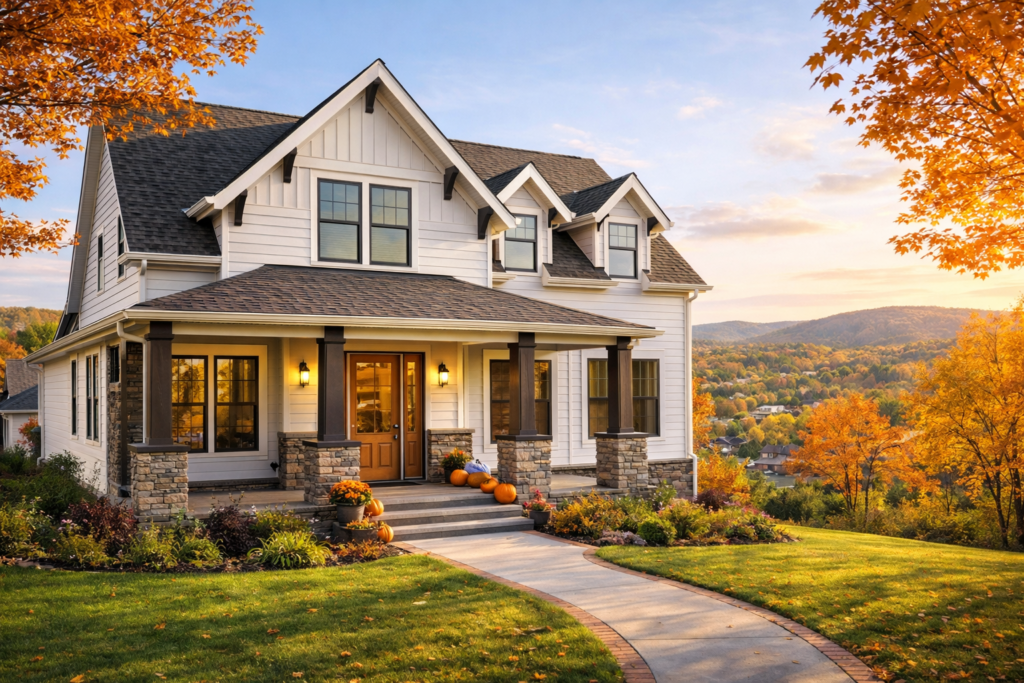
When analyzing the affordability of Fayetteville Arkansas, the city presents a balanced picture. While the cost of living has risen due to the influx of new residents, it remains reasonable compared to the national average, especially when considering the high quality of life.
The housing market in Fayetteville Arkansas is competitive. Rent near the university can be pricey during the school year, but buying a home is still achievable for many professionals. The following table breaks down the typical monthly expenses you can expect.
| Expense Category | Estimated Cost (Monthly) | Notes |
|---|---|---|
| Rent (1-Bedroom) | $950 – $1,350 | Higher near campus/Dickson Street. |
| Rent (3-Bedroom) | $1,600 – $2,400 | Good for families or shared student housing. |
| Home Price (Median) | $400,000+ | Inventory is tight; market moves fast. |
| Utilities | $160 – $220 | High AC usage in summer. |
| Groceries | Moderate | Access to affordable local produce. |
Read Also : Orem, Utah Cost of Living, Jobs & Housing (2026): Is It Worth Moving?
Education & Student Life in Fayetteville Arkansas
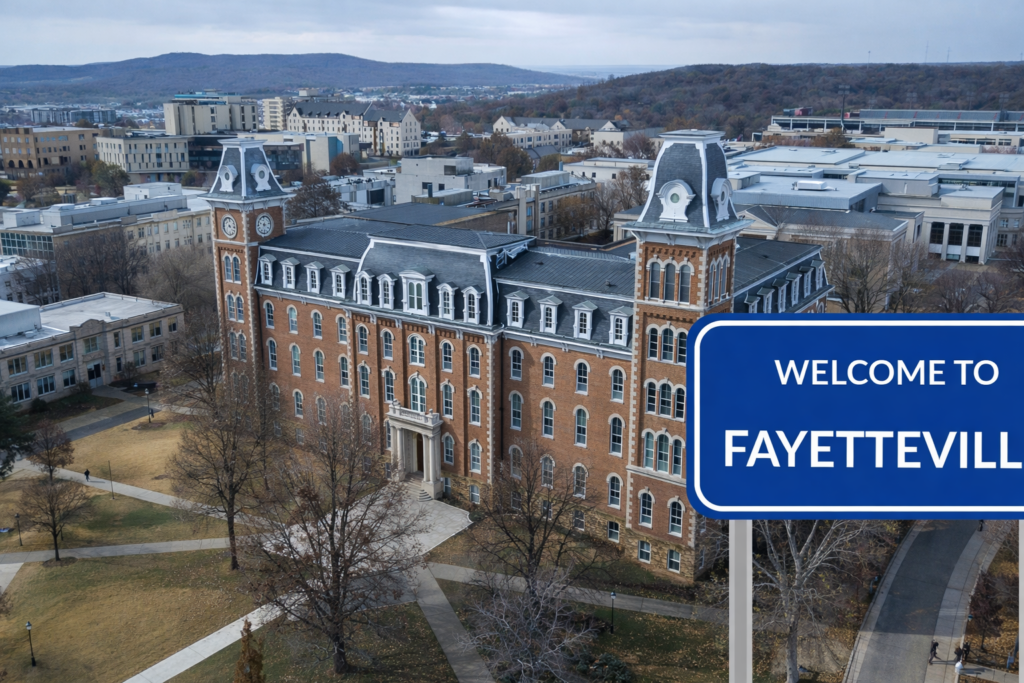
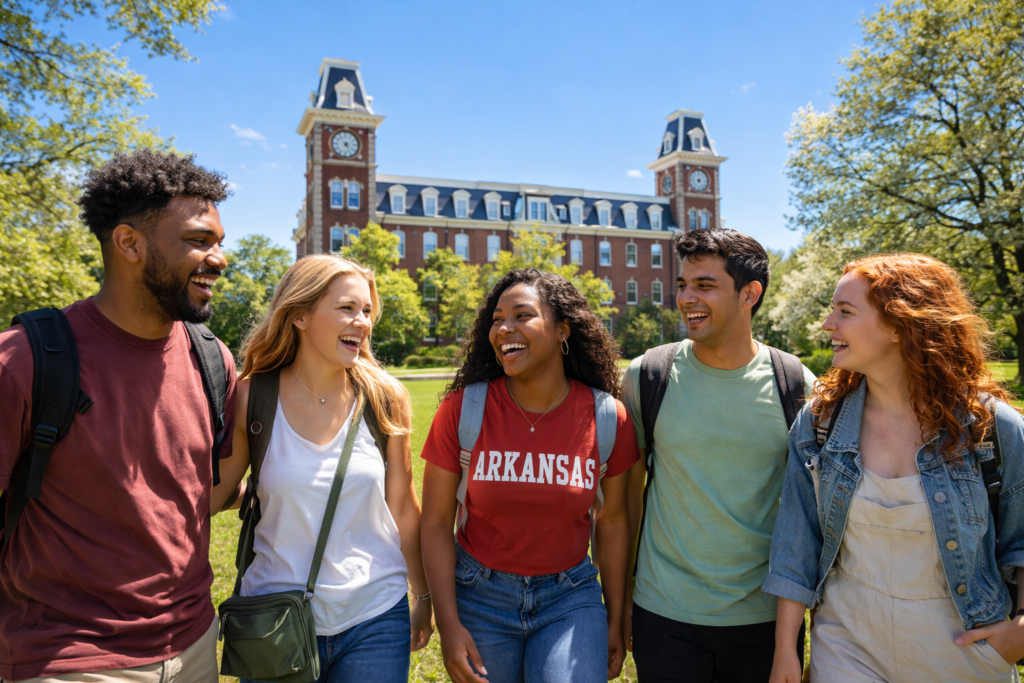
For international students, Fayetteville Arkansas is synonymous with the University of Arkansas (U of A). As the flagship campus it attracts students from over 100 countries. The university is particularly renowned for its business school architecture program and agricultural sciences.
Student life in Fayetteville Arkansas is vibrant. The city literally revolves around the Razorbacks (the university sports teams). For students on F-1 visas seeking CPT or OPT the local economy provides ample internship opportunities with major corporations located just a short drive away.
| Educational Feature | Details |
|---|---|
| University | University of Arkansas. |
| Student Enrollment | ~30,000 students. |
| Top Programs | Business, Supply Chain, Engineering, Law. |
| Student Support | International Students & Scholars (ISS) office. |
| Campus Life | Greek life, clubs, Division I sports. |
Best Neighborhoods in Fayetteville Arkansas
Choosing the right place to live is essential when moving to Fayetteville Arkansas. The city offers a diverse range of neighborhoods, each with its own distinct character.
- Dickson Street: The entertainment district. Loud, fun, and walking distance to campus.
- Wilson Park: Known for its bohemian vibe, historic homes, and the famous “castle” park.
- Stapleton: A quiet, suburban area perfect for families.
- University Area: Dominated by student housing and Greek life.
| Neighborhood | Atmosphere | Ideal For |
|---|---|---|
| Dickson Street | Urban, Nightlife, Busy | Students, Young Professionals. |
| Wilson Park | Artsy, Quirky, Historic | Creatives, Grad Students. |
| Stapleton | Quiet, Residential, Green | Families, Retirees. |
| Baldwin | Convenient, Mixed | Students, Staff. |
Things to Do & Tourism in Fayetteville Arkansas
There is no shortage of activities in Fayetteville Arkansas. The city is a paradise for outdoor enthusiasts, boasting one of the best trail systems in the United States.
The Razorback Greenway is a 36-mile paved trail that connects Fayetteville Arkansas to neighboring cities, perfect for biking and walking. For culture lovers, the Walton Arts Center brings Broadway-level performances to the region. The Botanical Garden of the Ozarks offers a serene escape into nature.
| Activity | Location/Details |
|---|---|
| Outdoor Adventure | Razorback Greenway, Mount Kessler. |
| Arts & Culture | Crystal Bridges (nearby), Walton Arts Center. |
| Sports | Razorback Stadium (Football), Bud Walton Arena. |
| Parks | Lake Fayetteville Park, Wilson Park. |

Food, Dining & Nightlife in Fayetteville Arkansas
The culinary scene in Fayetteville Arkansas is surprisingly diverse and sophisticated. From award-winning farm-to-table restaurants to authentic international cuisines, the city satisfies every palate.
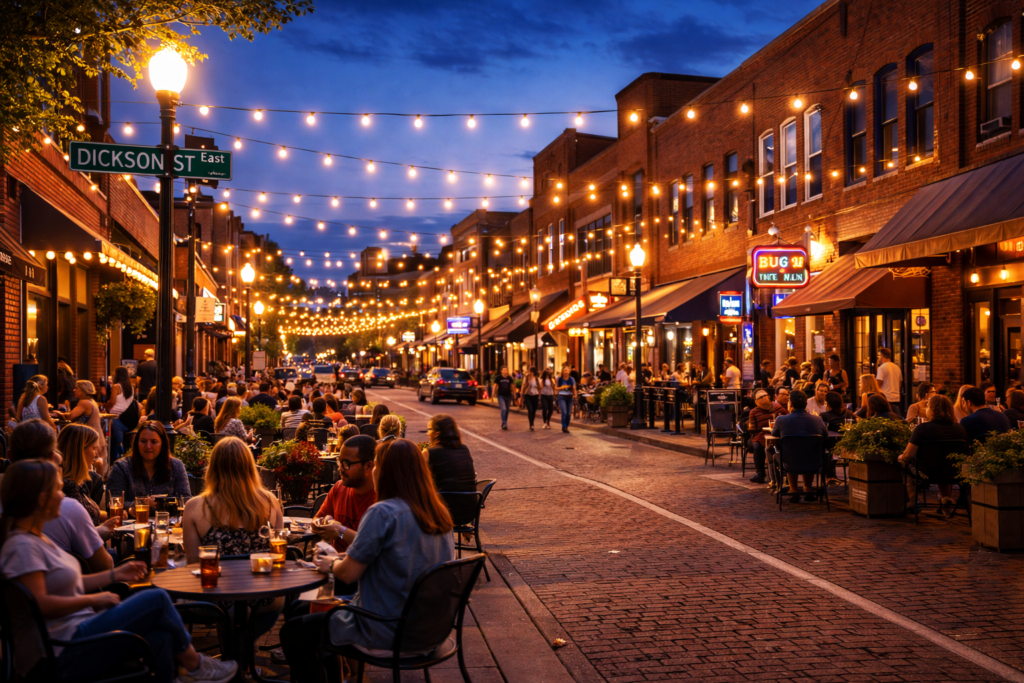
Because of the large international population you can find excellent Indian Thai, and Mexican food. Fayetteville Arkansas is also a hub for craft beer enthusiasts with several local breweries offering unique Ozark-brewed beers. Dickson Street is the epicenter for nightlife, featuring bars, pubs, and live music venues.
| Cuisine Type | Popular Restaurants |
|---|---|
| American/Steakhouse | Herman’s Ribhouse, James at the Mill. |
| International | Taziki’s, Daco’s, Mumbai Grill. |
| Breweries | Fossil Cove Brewing, Core Brewing. |
| Coffee Shops | Puritan Coffee & Beer, Arsaga’s at the Depot. |
Transportation & Safety in Fayetteville Arkansas
Getting around Fayetteville Arkansas requires some planning. While the city is walkable in the downtown and campus areas, the broader region is car-dependent.
The Ozark Regional Transit (ORT) provides bus services, which are free for University of Arkansas students—a huge perk for international students. Regarding safety Fayetteville Arkansas is generally considered safe with the university campus maintaining a high security presence. However, standard precautions should always be taken in urban areas.
| Category | Details |
|---|---|
| Public Transit | Ozark Regional Transit (Free for U of A students). |
| Walkability | High in Downtown/Campus; Low elsewhere. |
| Airport | XNA (Northwest Arkansas National Airport) – 25 mins away. |
| Safety | Generally safe; active community policing. |
Read Also : Iowa State University Cost of Attendance 2026: Tuition Fees, Admission, Jobs, Salary & Living in Ames Iowa
Practical Tips for Living in Fayetteville Arkansas
If you are new to Fayetteville Arkansas here are some practical tips to help you settle in. Whether you are a student or a professional, these insights will save you time and money.
- Get an Arkansas ID: Essential for banking and age verification.
- Prepare for Weather: Invest in a good jacket and rain gear.
- Tipping is Mandatory: 18-20% is expected in US restaurants.
- Explore Beyond the City: Take trips to Bentonville and Eureka Springs.
| Tip | Reason |
|---|---|
| Renters Insurance | Protects belongings; often required by leases. |
| Bike Security | Use a U-lock; bike theft is common. |
| Health Insurance | Mandatory for students; US healthcare is costly. |
| Networking | Attend local events to build professional connections. |

Read Also : Uber Eats Driver in the USA – Salary, Skills, Visa, and Reality Check (2026)
Final Verdict: Is Fayetteville Arkansas Right for You?
Fayetteville Arkansas is a city that offers the best of both worlds: small-town safety and big-city amenities. For USA residents, it provides a high quality of life, a booming job market, and a strong sense of community. For international students it offers a world-class education at the University of Arkansas and a welcoming, inclusive environment.
While the requirement of a car and the rising housing costs are minor drawbacks, the benefits of living in Fayetteville Arkansas far outweigh them. It is a city on the rise full of opportunity and natural beauty.
Frequently Asked Questions About Fayetteville Arkansas
1. What is the cost of living in Fayetteville Arkansas compared to the US average?
The cost of living in Fayetteville is slightly higher than the Arkansas average but remains lower than the US national average, particularly in housing and utilities, though prices are rising.
2. How safe is Fayetteville Arkansas for international students?
Fayetteville is very safe. The university campus has its own police force, and the city has a lower violent crime rate than many major US cities, making it ideal for students.
3. Do I need a car to live in Fayetteville Arkansas?
Yes, while you can manage without a car if you live strictly on campus, owning a vehicle is highly recommended to explore the region and commute to internships or shopping centers.
4. What are the main job opportunities in Fayetteville Arkansas?
The main job sectors are Education, Healthcare (Washington Regional), Retail/Corporate (Walmart HQ nearby), and Logistics. The region is a global hub for supply chain management.
5. What is the weather like in Fayetteville Arkansas during winter?
Winters are cold but manageable. Daytime highs are usually in the 40s (°F), with occasional snow and ice storms that can temporarily shut down the city.
6. Is Fayetteville Arkansas a good place for outdoor activities?
Absolutely. It is one of the best cities in the US for outdoor lovers, offering extensive biking trails (Razorback Greenway), hiking, and nearby lakes for fishing and boating.
7. What is Fayetteville Arkansas famous for?
Fayetteville is famous for the University of Arkansas Razorbacks, its vibrant arts scene, the Fayetteville Roots Festival, and being a central part of the booming Northwest Arkansas economy.
8. Are there good housing options for students in Fayetteville Arkansas?
Yes, there is ample housing ranging from on-campus dorms to private apartments. However, students should start looking for housing early as the best units near campus fill up quickly.