
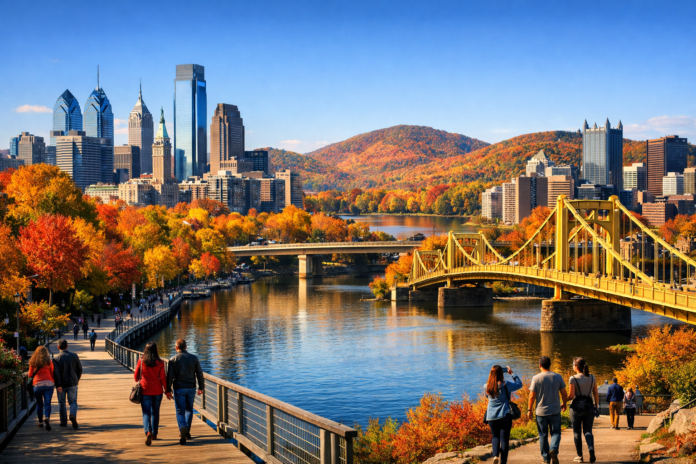
Pennsylvania keeps landing on best places to relocate rankings, and not because of marketing spin. This is a state where an Ohio-based first-time buyer can still find an affordable house, where a software developer from Bangalore can get a sponsored offer inside half a year and where a Texas family can drive two hours in either direction and hit mountain trails or a major coastline city. Whether you’re an American weighing a cross-state move, an overseas professional working toward a visa or a traveler planning a first trip to Philly or Pittsburgh, this breakdown covers the real numbers on cost, safety employment visas, and the neighborhood-level details that rarely make it into a tourism brochure.
Getting to Know the Keystone State
Pennsylvania sits at the crossroads of the Northeast and the Midwest, which is exactly why it feels so different depending on which corner you’re standing in. Philadelphia in the east moves like a dense East Coast city rowhouses, subways, and a fierce sports culture. Pittsburgh in the west feels more like a reinvented steel town turned tech hub, with rivers, bridges and a noticeably lower cost of living. In between, you’ll find Amish farmland college towns, and the Pocono Mountains.

- Population: roughly 13 million, the 5th most populous U.S. state
- Capital: Harrisburg; largest city: Philadelphia
- Nickname: the Keystone State — historically the political and economic keystone linking the North and South
Surprising fact: Pennsylvania was the second state to ratify the U.S. Constitution, and Philadelphia served as the nation’s capital before Washington, D.C. even existed a detail that still shapes how much of the state thinks about itself as a founding, not a follower.
Read Also : Idaho: The Complete 2026 Guide to Moving, Working, and Visiting the Gem State
Seasons and Timing: When to Plan a Trip

Pennsylvania runs a full four-season calendar, which surprises people coming from year-round warm states. Summers are humid and can hit the low 90s°F in Philadelphia; winters bring real snow, especially in the Poconos and the Allegheny Plateau near Erie, which gets some of the heaviest lake-effect snowfall in the country.
For tourism, fall (late September to late October) is genuinely the best time to visit Pennsylvania the Poconos and Allegheny National Forest turn into a wall of red and orange, and temperatures stay mild enough for hiking. Spring (April–May) is the second-best window, with fewer crowds at historic sites like Independence Hall.
- Best for outdoor tourism: September–October (fall foliage)
- Best for budget travel: January–March (lowest hotel rates, off-peak flights)
- Best for families: June–August (school break, festivals, but expect humidity)
Read Also : New Jersey 2026: The Complete Guide to Living, Working & Visiting the Garden State
What It Really Costs to Live in Pennsylvania
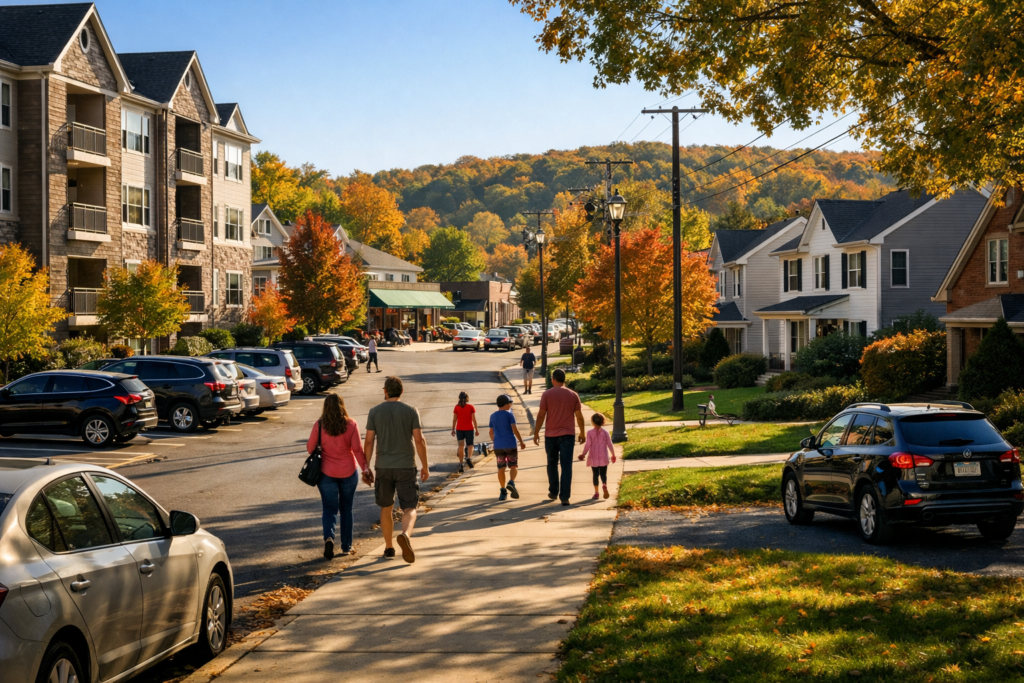
Cost of living in Pennsylvania varies more than almost any other state on the East Coast Philadelphia’s suburbs can rival New Jersey pricing, while cities like Erie or Allentown run noticeably cheaper. Overall, Pennsylvania sits close to the national average, which is a big part of its appeal compared to neighboring New York or New Jersey.
The table below compares average monthly costs across Pennsylvania’s major metro areas, based on typical 2025–2026 rental and living-cost data, so you can budget realistically before you move.
| City | 1BR Rent (avg) | Utilities (monthly) | Groceries (monthly, 1 person) | Overall Cost Index |
| Philadelphia | $1,650 | $180 | $400 | High |
| Pittsburgh | $1,350 | $165 | $370 | Moderate |
| Harrisburg | $1,150 | $155 | $350 | Moderate |
| Allentown | $1,300 | $160 | $360 | Moderate |
| Erie | $950 | $150 | $330 | Low-Moderate |
Surprising fact: Pennsylvania has no state tax on retirement income, including pensions and 401(k) withdrawals, which makes it one of the more tax-friendly states in the Northeast for retirees relocating from high-tax states like New York or California.
Read Also : Massachusetts Living Guide 2026: The Ultimate Guide for Residents, Workers, Students & Tourists
Choosing a Neighborhood: Where Residents Actually Settle
If you’re relocating to Pennsylvania, the neighborhood you pick matters more than the city name on your lease. Here’s a quick breakdown byFor anyone relocating to Pennsylvania the neighborhood matters more than the city name printed on the lease. Here’s a quick lifestyle-and-budget snapshot.
- Fishtown & Northern Liberties (Philadelphia) — young-professional crowd, breweries, walkable, mid-to-high rents
- Rittenhouse Square (Philadelphia) — upscale, near Center City employers, the state’s priciest rents
- Shadyside & Squirrel Hill (Pittsburgh) — close to campus, safe, favored by grad students and tech workers
- Lawrenceville (Pittsburgh) — once industrial, now packed with startups, cafes, and loft conversions
- Camp Hill (Harrisburg area) — family-oriented suburb, strong schools, lower cost of living
Work-visa holders often find Shadyside and Lawrenceville in Pittsburgh the easiest starting points shorter commutes to major employers like UPMC and Google’s Pittsburgh office, plus a sizable international student population from Carnegie Mellon and the University of Pittsburgh.
Read Also : Houston Texas: The Ultimate Guide to Living, Working & Visiting in 2026
How Safe Is Pennsylvania, Really?
Safety is nearly always one of the first questions foreigners raise before relocating, and the honest answer is that it depends far more on the specific neighborhood than on the state overall. Statewide violent-crime figures sit near the national average, but they cluster in particular pockets of Philadelphia meanwhile, suburban and rural Pennsylvania runs notably safer than the U.S. average.
- Safest metro areas overall: Harrisburg’s suburbs and Lancaster County
- Use normal caution: Center City Philadelphia after dark, sections of North Philadelphia
- Low-crime college towns: State College (home to Penn State) and Bethlehem
Little-known fact: recent pedestrian-walkability studies ranked Pittsburgh among the safest large U.S. cities to walk in, largely thanks to its bridge-and-hill terrain, which naturally slows traffic through residential areas.
Read Also : Miami, Florida: The Ultimate Guide for Visitors, Expats & New Residents
Job Market & Salary Guide in Pennsylvania
Pennsylvania’s economy has quietly diversified away from steel and coal into healthcare, education, logistics, and technology. Philadelphia is now one of the top five U.S. cities for biotech and pharmaceutical jobs, while Pittsburgh has become a genuine robotics and AI hub thanks to Carnegie Mellon’s research pipeline.

The table below outlines average salaries across Pennsylvania’s highest-demand sectors, useful for anyone comparing offers before relocating for work.
| Industry | Entry-Level Salary | Mid-Level Salary | Senior-Level Salary |
| Healthcare (RN, allied health) | $58,000 | $78,000 | $105,000 |
| Software / IT | $68,000 | $95,000 | $140,000 |
| Pharma & Biotech | $62,000 | $90,000 | $130,000 |
| Logistics & Supply Chain | $50,000 | $70,000 | $95,000 |
| Education | $45,000 | $62,000 | $85,000 |
Major employers hiring year-round include UPMC, Comcast, PNC Financial, Merck, Amazon (multiple fulfillment hubs), and Google’s growing Pittsburgh campus. Job seekers relocating to Pennsylvania should target Philadelphia for finance and pharma, and Pittsburgh for tech, robotics, and healthcare IT.
Read Also : Houston Texas: The Ultimate Guide to Living, Working & Visiting in 2026
Visa & Work Permit Guide for Foreigners
For Indian and Chinese professionals, Pennsylvania is one of the more approachable U.S. states to land in, mainly because of its dense concentration of universities and H-1B-sponsoring employers. Here’s how the main visa routes typically play out.
| Visa Type | Best For | Typical Timeline | Notes |
| F-1 Student Visa | Indian/Chinese students at Penn State, CMU, Pitt, Temple | 3–5 months processing | OPT allows 12–36 months of work after graduation |
| H-1B Work Visa | Skilled professionals with a job offer | Lottery-based, 6–12 months | Cap of 85,000 annually; STEM OPT extensions help odds |
| L-1 Intra-company Transfer | Employees of multinational firms (TCS, Infosys, Wipro clients) | 2–4 months | No lottery; common route for Indian IT consultants |
| EB-2/EB-3 Green Card | Long-term skilled immigrants | 1–10+ years depending on country | Longer backlogs for India and China specifically |
Surprising fact: Pennsylvania hosts one of the largest concentrations of Indian IT consulting placements on the East Coast, largely because Philadelphia and Harrisburg are within driving distance of major insurance and healthcare-IT clients that regularly contract Indian staffing firms.
- Indians: check OPT/CPT rules carefully if entering via F-1 before switching to H-1B
- Chinese applicants: be aware of additional Section 221(g) administrative processing delays that sometimes apply
- Both: Pennsylvania’s Department of State licensing (for nurses, engineers) can take 4–8 weeks — start early
Public Transport & Getting Around Pennsylvania
Philadelphia has the only truly comprehensive public transit system in the state, run by SEPTA subway, regional rail trolleys and buses. Pittsburgh’s system is smaller but reliable within the city core. Outside these two cities, a car is close to mandatory.
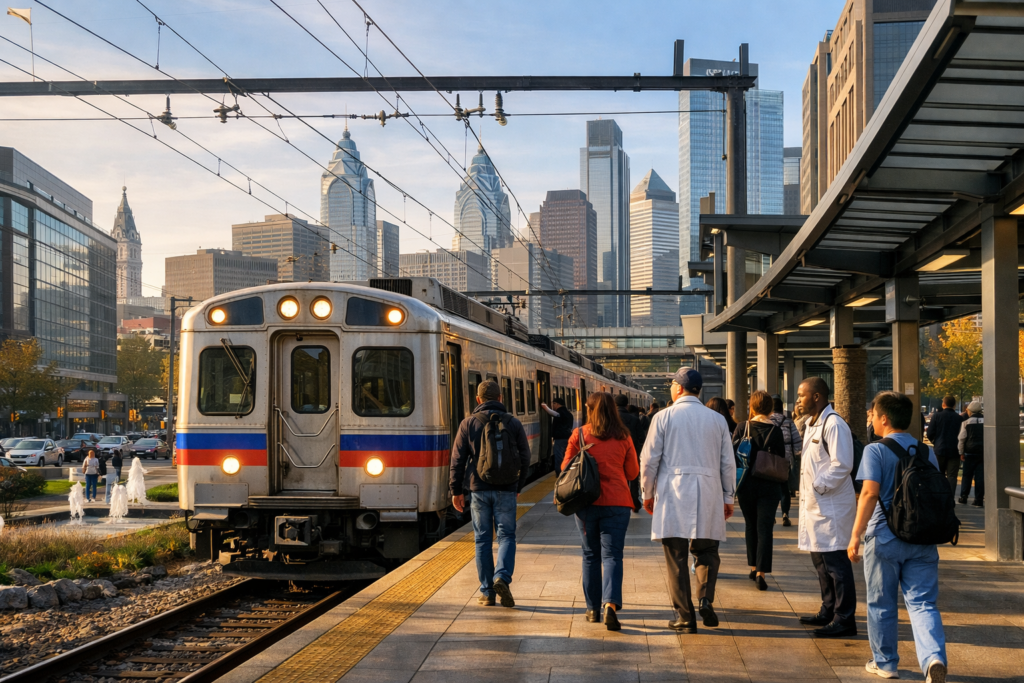
- Philadelphia: SEPTA monthly pass around $96–$110
- Pittsburgh: Port Authority buses and the T light rail, monthly pass around $97
- Rural & suburban Pennsylvania: car ownership is essential; Uber/Lyft coverage thins out quickly
Amtrak’s Keystone Corridor connects Philadelphia, Harrisburg, and onward to New York and Washington, D.C., making Pennsylvania one of the easier states for car-free interstate travel on the East Coast.
Read Also : New Jersey 2026: The Complete Guide to Living, Working & Visiting the Garden State
Where to Stay: Hotels, Rentals & Short-Term Options
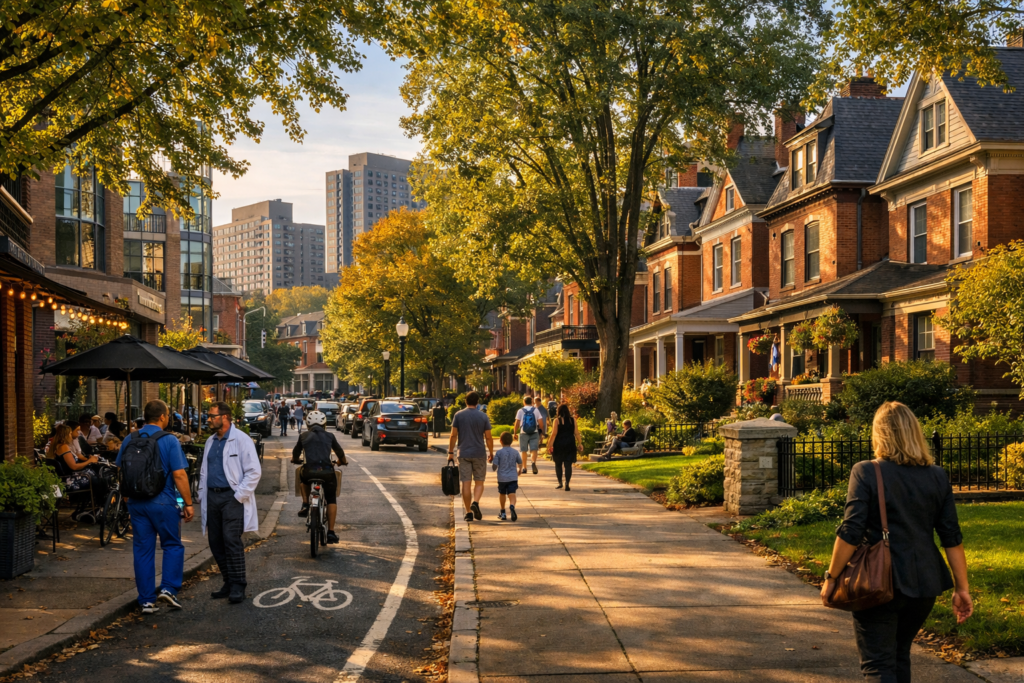
Tourists visiting Pennsylvania for the first time generally split between Center City Philadelphia (walkable to historic sites) and Downtown Pittsburgh (close to museums and the Point). Both offer everything from budget hostels to luxury high-rises.
- Budget: hostels and extended-stay hotels near university areas (State College, West Philly)
- Mid-range: Old City Philadelphia or Downtown Pittsburgh (walkable, safe, well-connected)
- Luxury: Rittenhouse Square hotels, or riverside high-rises in Pittsburgh’s Strip District
Read Also : How Much Does It Cost to Live in Fayetteville Arkansas in 2026? Full Breakdown
Top Restaurants, Tours & Attractions in Pennsylvania
You can’t visit Pennsylvania without eating a real Philly cheesesteak but the state’s food scene goes far beyond that. Pittsburgh’s Strip District is a food-tourism destination in its own right, and Amish Country in Lancaster offers a completely different, farm-to-table experience.
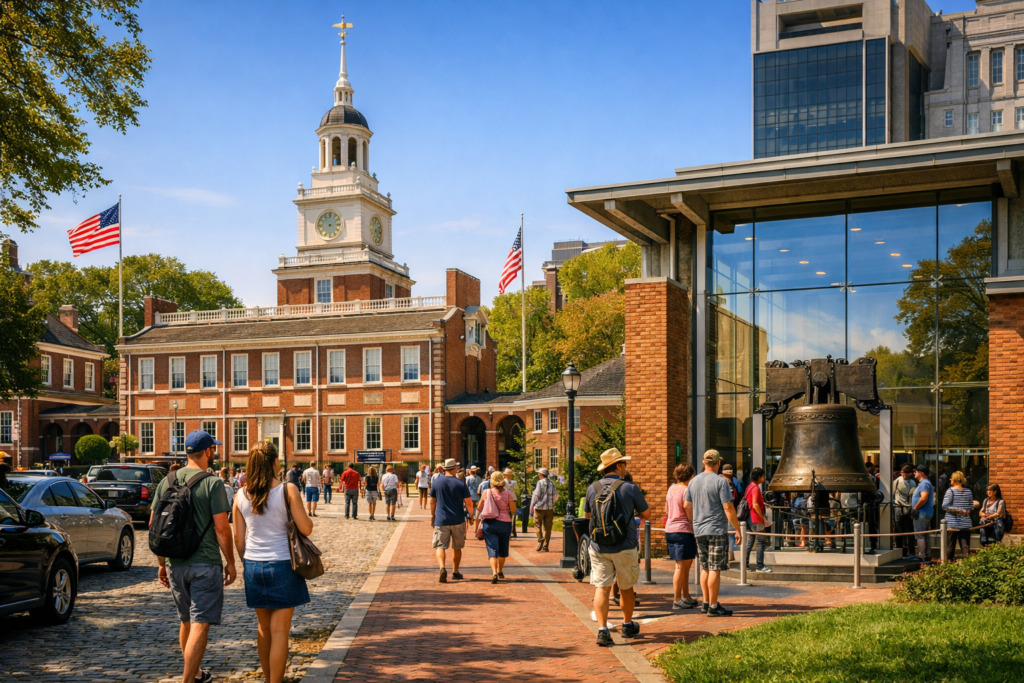
- Independence Hall & the Liberty Bell (Philadelphia) — free, book timed-entry tickets in advance
- Reading Terminal Market (Philadelphia) — the best single stop for local food variety
- Andy Warhol Museum (Pittsburgh) — the largest museum in North America dedicated to a single artist
- Fallingwater (near Pittsburgh) — Frank Lloyd Wright’s iconic house built over a waterfall
- Hershey Park — part theme park, part working chocolate factory town
Surprising fact: Reading Terminal Market has operated continuously since 1893, making it one of the oldest continuously running public markets in the United States.
Read Also : Living in Bloomington Indiana (2026): Cost ,Jobs, Apartments & Salary Reality
Shopping and Nightlife by City
Philadelphia’s nightlife skews toward craft breweries and late-night BYOBs, while Pittsburgh has built a genuinely strong live-music and brewery scene in Lawrenceville and the South Side. For shopping, King of Prussia Mall near Philadelphia is the second-largest shopping mall in the United States by leasable retail space.
- King of Prussia Mall — over 450 stores, a genuine day-trip destination
- South Side Pittsburgh — bar-hopping strip with dozens of venues within walking distance
- Fishtown breweries — Philadelphia’s craft beer epicenter
Healthcare Access Across the State
Pennsylvania has an unusually strong healthcare infrastructure for its population size, anchored by two major nonprofit health systems: UPMC in the west and Penn Medicine / Jefferson Health in the east. Both are internationally recognized, which matters for relocating families weighing long-term care access.
- UPMC (Pittsburgh) — one of the largest health systems in the U.S., strong in transplant and cancer care
- Penn Medicine (Philadelphia) — tied to an Ivy League research hospital, strong in cardiology and oncology
- Health insurance: employer-sponsored plans are standard; ACA marketplace plans available for the self-employed
For foreigners on a work visa, most employer health plans in Pennsylvania kick in after a 30–90 day waiting period, so budgeting for private short-term insurance during that gap is worth planning for in advance.

Setting Up Life in Pennsylvania: A Foreigner’s Checklist
- Apply for a Pennsylvania driver’s license within 60 days of establishing residency
- Open an account with a national bank chain (PNC, headquartered in Pennsylvania, is a solid option) to start building credit history
- Apply for a Social Security Number as soon as your visa status permits most landlords require it for credit checks
- Plan around Pennsylvania’s flat 3.07% state income tax, lower than most neighboring states
- Connect with local Indian or Chinese community associations in Philadelphia or Pittsburgh both maintain active professional networks that help with job referrals
Read Also : Moving to Naperville Illinois? Your Complete Guide to Cost of Living Jobs & Best Hotels
The Bottom Line
Pennsylvania earns its reputation as one of the most balanced states to relocate to in the U.S. real cities with real job markets, a manageable cost of living compared to the coasts, and enough historic and natural attractions to keep tourists busy for a week or more. It’s not the cheapest state, and Philadelphia’s core neighborhoods carry real safety considerations but for U.S. citizens weighing a move or foreign professionals trying to land a visa-sponsored role, Pennsylvania offers a genuinely practical middle ground between opportunity and affordability. If your priority is tech and lower cost of living, lean toward Pittsburgh if it’s finance, pharma and East Coast connectivity, Philadelphia is the stronger bet.
Common Questions About Moving to Pennsylvania
Is Pennsylvania a good state to move to in 2026?
Yes Pennsylvania offers a lower cost of living than most East Coast states, a diversified job market in healthcare, tech, and pharma, and no state tax on retirement income, making it attractive for both career movers and retirees.
What is the average cost of living in Pennsylvania?
A single person’s monthly costs, excluding rent, typically run $900–$1,100, while a 1-bedroom apartment ranges from $950 in Erie to $1,650 in Philadelphia, depending on the city.
Is it easy for Indians to get a work visa in Pennsylvania?
Pennsylvania has a strong presence of Indian IT consulting and healthcare-IT employers, particularly around Philadelphia and Harrisburg, which makes H-1B and L-1 sponsorship more common than in many other states.
Is Pennsylvania safe for foreigners and tourists?
Most of Pennsylvania, including suburban Philadelphia, Pittsburgh, and Lancaster County, is safer than the U.S. average. Certain sections of North Philadelphia require extra caution, especially at night.
What is the best time to visit Pennsylvania as a tourist?
Late September through October is ideal for fall foliage in the Poconos, while April and May offer mild weather and smaller crowds at historic sites like Independence Hall.
Does Pennsylvania have good public transportation?
Philadelphia’s SEPTA system is the most comprehensive in the state, followed by Pittsburgh’s bus and light-rail network. Outside these two cities, a car is generally necessary.
What industries offer the highest salaries in Pennsylvania?
Software and IT, pharmaceuticals and biotech, and healthcare offer the highest average salaries, with senior-level roles in tech reaching $140,000 or more in the Philadelphia and Pittsburgh metro areas.
Is healthcare in Pennsylvania good for expats and immigrants?
Yes Pennsylvania is home to nationally ranked health systems like UPMC and Penn Medicine, and most employers offer health insurance after a short waiting period, typically 30–90 days.
However you’re approaching it as a citizen planning a move, a foreign professional chasing a visa, or a tourist mapping out a first trip — Pennsylvania rewards a little upfront research with a genuinely livable, well-connected state to call home or explore.
Read Also : Orem, Utah Cost of Living, Jobs & Housing (2026): Is It Worth Moving?

