

Where Is New York City & Why Thousands Move Here Every Year
New York City is one of the most searched relocation destinations in the United States in 2026, attracting families, immigrants, students, and job relocators looking for career growth, higher salaries, and long-term opportunity. This New York City survival guide explains the real cost of living, apartment rent, job market conditions, transportation costs, and neighborhood-by-neighborhood living reality before moving. While New York City offers unmatched economic opportunity, cultural diversity, and global career access, surviving here requires careful financial planning, smart neighborhood selection, and realistic monthly budgeting before arrival.
The biggest reason people still move here is opportunity concentration. A person can lose one job and still find interviews within days because thousands of employers operate within commuting distance. That is why even after rent pressure people continue choosing New York over cheaper cities. For immigrants, this city offers strong ethnic communities public transit independence, and easier access to part-time survival jobs while building long term careers. For students, it gives direct access to internships that often convert into paid employment faster than many college towns. For families, however the equation becomes harder because childcare, school district decisions, and apartment size quickly multiply expenses.
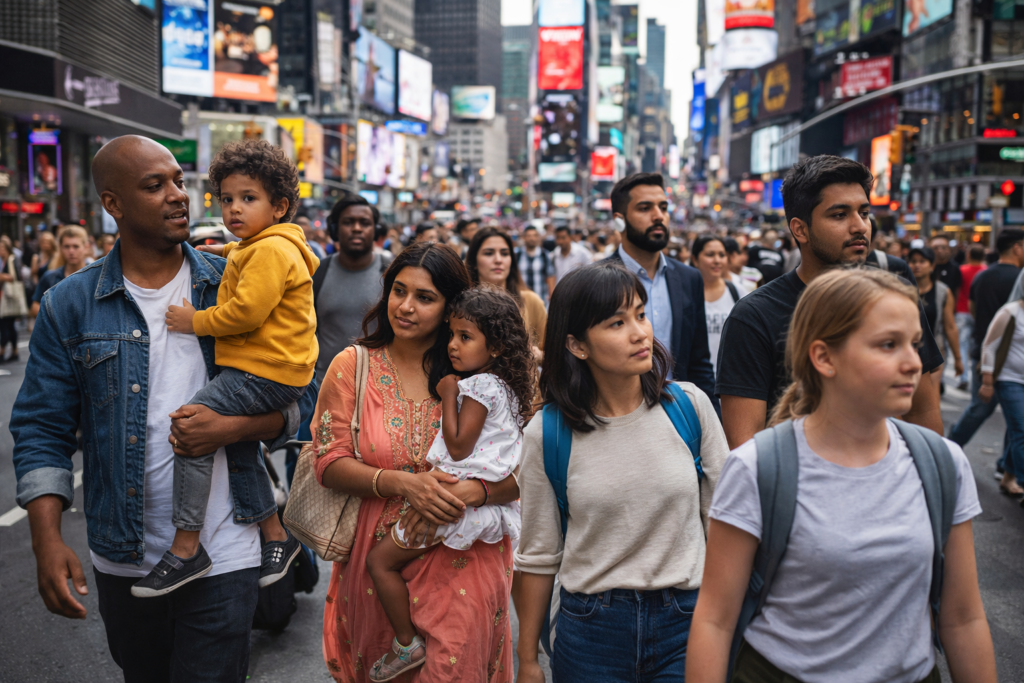
New York City sits across five boroughs Manhattan, Brooklyn, Queens, the Bronx, and Staten Island. With 8.3 million residents packed into 302 square miles, it is the most densely populated major city in America. Immigrants make up nearly 37% of the city’s population. Over 200 languages are spoken here. Ethnic enclaves like Jackson Heights (Queens), Flushing (Queens), Sunset Park (Brooklyn), and the South Bronx give newcomers built in community support, familiar food, and native-language services from day one.
The first survival truth is simple: moving to New York City without at least 4–6 months of expense backup is financially risky. Come prepared, come with a plan.
Read Also : How Much Does It Cost to Live in Fayetteville Arkansas in 2026? Full Breakdown
New York City Cost of Living 2026: Rent, Food & Transport Breakdown
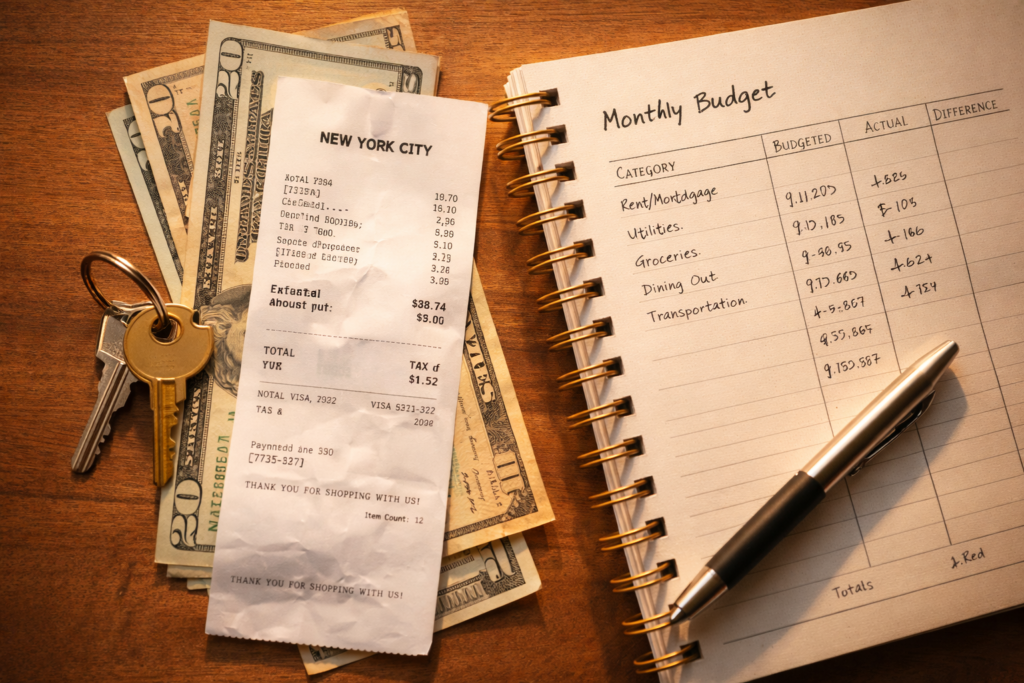
The cost of living in New York City is not uniformly expensive across every borough but almost every essential category runs above the national average. Housing dominates all decisions. Most first year movers fail because they underestimate upfront move-in cash: first month rent, security deposit, broker fee in some cases, moving cost utility setup and furniture replacement together can cross $8,000–$12,000 before the first salary arrives.
RENT IN NEW YORK CITY (2026)
| Borough / Area | Studio | 1-Bedroom | 2-Bedroom | 3-Bedroom |
|---|---|---|---|---|
| Manhattan (Midtown) | $2,800–$3,500 | $3,500–$5,000 | $5,500–$8,000 | $8,000–$15,000+ |
| Manhattan (Upper) | $2,200–$2,800 | $2,800–$3,800 | $4,000–$6,000 | $6,000–$9,000 |
| Brooklyn (Williamsburg) | $2,500–$3,200 | $3,000–$4,500 | $4,500–$6,500 | $6,500–$10,000 |
| Brooklyn (Flatbush) | $1,800–$2,300 | $2,200–$2,900 | $2,800–$3,800 | $3,500–$5,000 |
| Queens (Astoria / LIC) | $2,000–$2,700 | $2,500–$3,500 | $3,200–$4,500 | $4,500–$6,500 |
| Queens (Jamaica / Flushing) | $1,600–$2,100 | $1,900–$2,600 | $2,400–$3,400 | $3,000–$4,500 |
| The Bronx | $1,400–$1,900 | $1,700–$2,400 | $2,200–$3,200 | $2,800–$4,000 |
| Staten Island | $1,500–$2,000 | $1,800–$2,500 | $2,300–$3,000 | $2,800–$3,800 |
NYC Survival Rule: Never spend more than 30% of gross income on rent. If you earn $60,000/year, your rent ceiling is $1,500/month — which means The Bronx, outer Queens, or a roommate situation.
Utilities
Utility costs in NYC are often partially included in rent, especially in older apartment buildings. However, if utilities are NOT included budget the following monthly amounts:
| Utility | Monthly Cost (Approx.) |
|---|---|
| Electricity (Con Edison) | $80–$180 |
| Gas (National Grid / Con Edison) | $40–$120 (winter higher) |
| Internet (Optimum / Verizon FiOS) | $50–$90 |
| Water / Sewer (usually landlord-paid) | $0–$30 |
| Total Utilities Estimate | $170–$420/month |
Always ask upfront whether heat and hot water are included in your lease. In NYC’s older housing stock, many landlords include heat as a legally required amenity.
Food
Food in NYC ranges from shockingly affordable to absurdly expensive depending on how you shop and eat. Cooking at home from a grocery store like Trader Joe’s Aldi or a local ethnic supermarket in Queens or Brooklyn will run a single adult $350–$550/month. A family of four cooking at home can expect to spend $900–$1,400/month on groceries. Eating out for lunch every day at a deli or food cart ($10–$16/meal) adds up to $220–$350/month before you count one weekend dinner.
Food Costs in New York City (2026)
| Situation | Monthly Cost |
|---|---|
| Single adult – cooking at home | $350–$550 |
| Family of 4 – cooking at home | $900–$1,400 |
| Lunch out every day (deli / cart) | $220–$350 extra |
| One weekend dinner (mid-range) | $60–$120 per outing |
Cooking from ethnic supermarkets in Queens and Brooklyn can cut grocery costs by 25–35% compared to chain stores like Whole Foods or Key Food.
Transportation
NYC’s Metropolitan Transportation Authority (MTA) subway and bus network is one of the most extensive in the world, and the good news is: you do not need a car here. Monthly unlimited MetroCard costs $132/month in 2026. Annual unlimited is $1,452. A single subway or bus ride is $2.90. If you have a car, parking can cost $250–$600/month just for a garage spot plus insurance tolls and congestion pricing (now active in Manhattan below 60th Street at $9–$23 per entry).
| Option | Monthly Cost |
|---|---|
| MTA New York City Transit Unlimited MetroCard | $132/month |
| Annual MTA Unlimited Pass | $1,452/year |
| Single subway / bus ride | $2.90 |
| Rideshare (Uber / Lyft estimate) | $150–$400 depending on use |
| Car parking in Manhattan | $250–$600/month |
| Congestion pricing (Manhattan) | $9–$23 per entry (active 2026) |
You do NOT need a car in New York City. The MTA subway and bus network covers all five boroughs. Car ownership adds $500–$900/month in costs with no quality-of-life benefit for most residents.
Complete Monthly Budget Summary
| Expense Category | Budget Level | Comfortable | Family of 4 |
|---|---|---|---|
| Rent | $1,500 (shared) | $2,200–$2,800 | $3,500–$5,000 |
| Utilities | $0–$120 (incl.) | $170–$280 | $300–$420 |
| Groceries | $350–$450 | $450–$600 | $900–$1,400 |
| Transportation (MTA New York City Transit) | $132 | $132–$264 | $264–$528 |
| Phone | $40–$60 | $60–$100 | $120–$200 |
| Health Insurance | $200–$350 | $350–$600 | $800–$1,500 |
| Miscellaneous | $150–$250 | $300–$500 | $500–$900 |
| TOTAL MONTHLY ESTIMATE | $2,372–$3,332 | $3,662–$5,144 | $6,384–$9,948 |
Read Also : Living in Bloomington Indiana (2026): Cost ,Jobs, Apartments & Salary Reality
New York City Job Market 2026: Top Employers & Salary Guide
New York City’s economy is a $1.1 trillion powerhouse larger than most countries. The city recovered from COVID job losses and as of 2026 is running near full employment in most professional sectors. Here is where the real money and hiring is concentrated:

| Industry Sector | Major Employers | Avg. Salary Range |
|---|---|---|
| Finance & Banking | JPMorgan Chase, Goldman Sachs, Citigroup, Morgan Stanley, BlackRock | $75,000–$250,000+ |
| Technology | Google, Amazon, Meta, Microsoft, Bloomberg, Salesforce | $95,000–$200,000+ |
| Healthcare | NYC Health + Hospitals, NYU Langone Health, Mount Sinai Health System, Northwell Health | $50,000–$180,000 |
| Media & Publishing | NBCUniversal, Condé Nast, The New York Times Company, Paramount Global, Spotify | $45,000–$130,000 |
| Real Estate | Related Companies, Tishman Speyer, CBRE, JLL | $55,000–$200,000+ |
| Education | New York City Department of Education, City University of New York, New York University, Columbia University | $42,000–$110,000 |
| Hospitality & Food | Marriott International, Hilton Hotels & Resorts, Restaurant groups, Hotels | $30,000–$65,000 |
| Construction & Trades | Various union contractors | $55,000–$110,000 |
| Government & Public Sector | City of New York, MTA New York City Transit, Port Authority of New York and New Jersey, New York City Police Department / Fire Department of the City of New York | $45,000–$95,000 |
For immigrants: NYC’s construction, healthcare food service, and hospitality industries hire heavily regardless of immigration status. The city’s sanctuary city policy means undocumented workers have legal protections and access to city services, though federal law still governs employment authorization.
For students: NYC is one of the best cities in the world for internships and part-time work. Tech, finance, and media companies all run massive internship programs. The minimum wage in NYC is $16.50/hour as of 2026, so part-time work is financially meaningful.
Best Neighborhoods in New York City for Budget Living (2026)
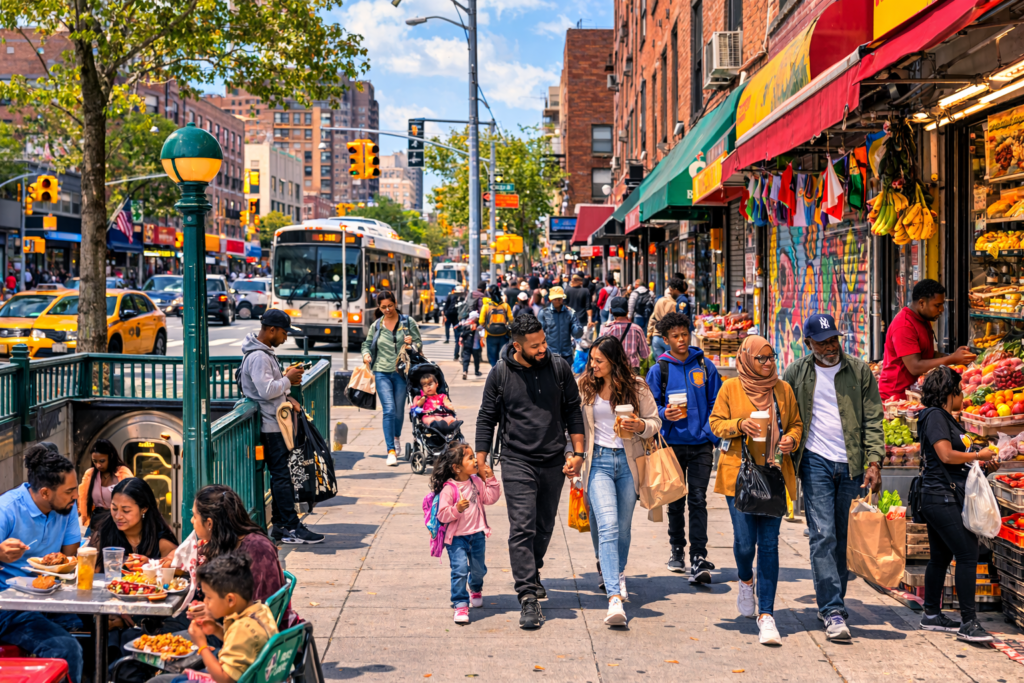
Where you live in NYC determines your rent, commute, safety and overall quality of life. Here is an honest breakdown by budget tier:
| Budget Tier | Best Neighborhoods | Why It Works |
|---|---|---|
| Ultra-Budget ($1,400–$1,800/mo) | South Bronx, East New York (Brooklyn), Far Rockaway (Queens) | Lowest rents in the city; good subway access; tight-knit immigrant communities |
| Budget ($1,800–$2,400/mo) | Jamaica (Queens), Flatbush (Brooklyn), Kingsbridge (Bronx), Bay Ridge (Brooklyn) | Good transit, diverse food options, established neighborhoods, relatively safe |
| Mid-Range ($2,400–$3,500/mo) | Astoria (Queens), Crown Heights (Brooklyn), Washington Heights (Manhattan), Bushwick (Brooklyn) | Great subway access, trendy without being unaffordable, good dining scenes |
| Comfortable ($3,500–$5,000/mo) | Park Slope (Brooklyn), Hoboken (NJ), Upper West Side (Manhattan), Long Island City (Queens) | Top schools, safe streets, park access, premium amenities |
| Premium ($5,000+/mo) | Tribeca, West Village, Upper East Side, DUMBO, Chelsea | Luxury finishes, doormen, elite schools, world-class dining |
Pro tip for families: Jackson Heights, Flushing, and Sunnyside in Queens offer excellent value strong school options, incredible food diversity, major subway lines, and communities where dozens of languages are spoken. For recent immigrants, Queens is frequently called the most diverse urban place on Earth, and it genuinely lives up to that.
New York City Apartments: How to Rent & What to Expect in 2026
NYC’s housing market is notoriously competitive. Landlords routinely require income verification showing you earn 40–45x the monthly rent annually. That means if your rent is $2,000/month, you need to demonstrate $80,000–$90,000/year in income in writing. Here is what you need to know before you start hunting:
- Credit Score: NYC landlords typically require a 650+ credit score. Some luxury buildings want 700+. No credit history (common for new immigrants and international students) is a major barrier — get a guarantor or pay 3–6 months upfront.
- Guarantors: If your income or credit doesn’t qualify, a guarantor (someone who co-signs) must typically earn 80x the monthly rent annually. Third-party guarantor services like Insurent or TheGuarantors charge 5–10% of annual rent for their service.
- Broker Fees: NYC law changed — landlords now pay broker fees in most cases. However, some landlords still shift this cost to tenants. Always clarify before signing.
- Security Deposit: Capped at one month’s rent by NYC law (as of recent tenant protections).
- Rent-Stabilized Apartments: Over 1 million NYC apartments are rent-stabilized, meaning annual rent increases are capped (typically 2–4% per year). Getting one of these is golden — never let it go.
- NYCHA Public Housing: New York City Housing Authority manages over 177,000 public housing units. Waitlists are extremely long (sometimes 5–10 years), but it is the most affordable option for low-income families.
- Section 8 / Housing Choice Vouchers: Apply through the NYC Housing Preservation and Development (HPD). Waitlists are currently closed to new applicants but check back — they open periodically via lottery.
Read Also : Orem, Utah Cost of Living, Jobs & Housing (2026): Is It Worth Moving?
STUDENT LIFE IN NEW YORK CITY: UNIVERSITIES, COSTS & PART-TIME JOBS (2026)
New York City is arguably the best college city in America. The sheer density of world-ranked universities, combined with the internship and networking opportunities of being in the largest job market on Earth makes NYC a uniquely powerful place to study.

| University | Type | Avg. Annual Tuition (2026) | Notable Programs |
|---|---|---|---|
| New York University | Private | $60,000–$62,000 | Business, Law, Film, Medicine, Arts |
| Columbia University | Ivy League / Private | $65,000–$68,000 | Engineering, Journalism, Law, Medicine |
| City College of New York | Public | $7,500–$10,000 (in-state) | Engineering, Education, Architecture |
| Baruch College | Public | $7,500–$10,000 (in-state) | Business, Finance, Accounting |
| Brooklyn College | Public | $7,500–$10,000 (in-state) | Liberal Arts, Education, Sciences |
| Fordham University | Private | $57,000–$59,000 | Law, Business, Social Work |
| The New School | Private | $50,000–$52,000 | Design, Social Research, Media |
| Pace University | Private | $44,000–$46,000 | Business, Nursing, Computer Science |
For international students on F-1 visas: NYC is one of the top OPT/CPT destinations in the country. Employers are experienced with visa sponsorship, particularly in tech and finance. CUNY’s in-state tuition is a massive financial advantage for New York State residents if you can establish residency the savings are enormous versus private universities.
Part-time student jobs pay NYC’s minimum wage of $16.50/hour. On-campus jobs, restaurant work retail, delivery driving (via apps), and tutoring are the most common student income sources. A student working 20 hours/week earns approximately $1,320/month before taxes enough to meaningfully offset living costs in a shared apartment in the outer boroughs.
IS NEW YORK CITY SAFE IN 2026? CRIME, NEIGHBORHOODS & WEATHER REALITY
Safety & Crime
New York City’s crime reality is dramatically more nuanced than the national media suggests. Overall crime rates in NYC are significantly lower than comparably sized American cities like Chicago Philadelphia, or Houston. The NYPD’s CompStat data shows that major crime categories murder, rape, robbery, and burglary have all declined substantially since the 1990s and remain far below peak levels.
However, crime is intensely neighborhood-dependent. High-crime areas in 2026 include parts of the South Bronx (Mott Haven, Hunts Point), East New York (Brooklyn), and certain pockets of Far Rockaway (Queens). Lower-crime neighborhoods include virtually all of Staten Island, most of Queens, Park Slope and Bay Ridge in Brooklyn, and the Upper East and West Sides of Manhattan.
Subway crime is a legitimate concern especially late-night attacks and platform incidents. The NYPD has significantly increased subway patrols since 2023, but travelers should stay alert, stand away from platform edges, and avoid empty cars late at night. For women, solo late-night subway rides in certain boroughs carry real risk and many residents use rideshare apps (Uber/Lyft) after midnight.
| Borough | Overall Safety Rating | Best Areas | Areas to Research Before Renting |
|---|---|---|---|
| Manhattan | Good–Excellent | Upper East Side, Upper West Side, Tribeca, Midtown | East Harlem (110th–125th St), parts of Washington Heights north |
| Brooklyn | Good (varies) | Park Slope, Bay Ridge, Carroll Gardens | East New York, Brownsville, Canarsie (research first) |
| Queens | Very Good | Forest Hills, Flushing, Astoria, Bayside | Far Rockaway, Jamaica (research specific blocks) |
| The Bronx | Mixed | Riverdale, Pelham Bay, Morris Park | South Bronx, Highbridge, Fordham Road area |
| Staten Island | Excellent | St. George, Tottenville, Snug Harbor | Port Richmond, Stapleton (minor concerns) |
Weather Reality
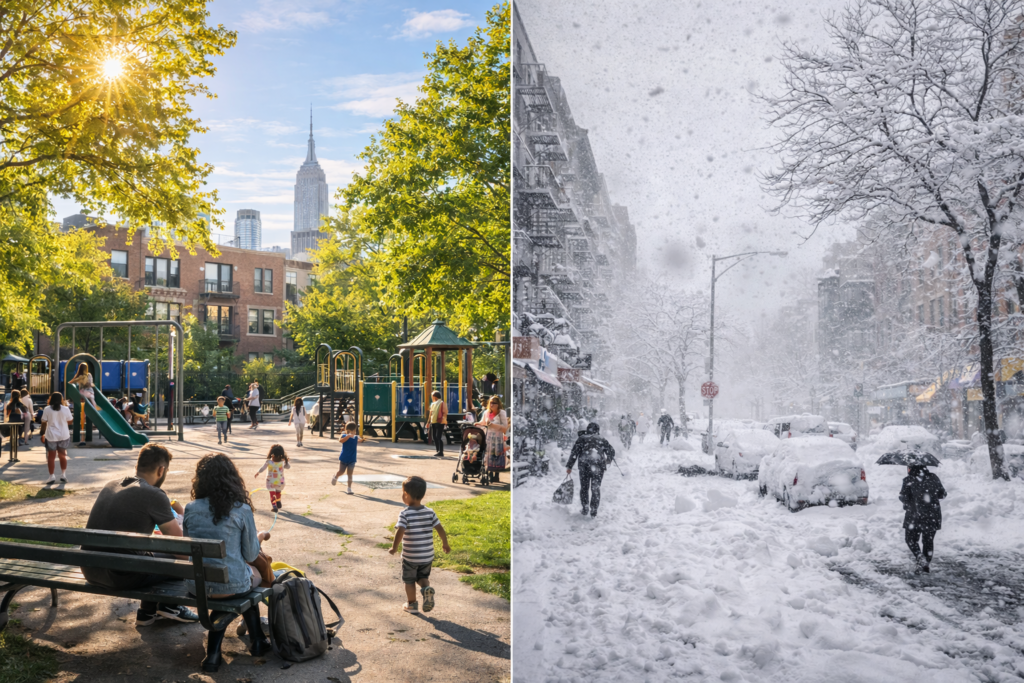
NYC experiences all four seasons with genuine intensity. Summers are hot and brutally humid July and August temperatures regularly hit 88–95°F with humidity that makes it feel like 100°F+. Air conditioning is non-negotiable from June through September, which spikes electricity bills. Winters are cold and unpredictable: January averages 32–38°F, with snowstorms delivering 6–18 inches multiple times per winter. Spring and fall are genuinely beautiful. Hurricane season (June–November) occasionally sends major storms (Hurricane Sandy in 2012 caused $19 billion in damage to the NYC area), and the city’s flood infrastructure is still being rebuilt.
Read Also : University of Pennsylvania Tuition Fees, Acceptance Rate, Admission, and Campus Life 2026
SHOULD YOU MOVE TO NEW YORK CITY? HONEST 2026 REALITY CHECK
Move Here If You:
- Are in finance, tech, media, fashion, law, or healthcare and want maximum career acceleration
- Are an immigrant seeking the most diverse, immigrant-friendly large city in America
- Are a student targeting elite universities with world-class internship pipelines
- Have $5,000–$10,000 in savings minimum and at least a part-time job lined up
- Thrive in density, noise, energy, and around people constantly — 24/7/365
- Want to build a network in your field faster than anywhere else in the country
- Can manage without a car and are comfortable with public transit as your primary transportation
Do NOT Move Here If You:
- Expect a quiet, slow-paced lifestyle — NYC is relentless and exhausting if you are not built for it
- Cannot afford at least $1,800–$2,000/month in rent or have zero savings
- Work remotely in a field with no NYC wage premium — your lower salary will not stretch here
- Have young children and prioritize space, a yard, and suburban school systems
- Are sensitive to crowds, noise pollution, and urban stress — anxiety rates in NYC are notably higher than national averages
- Expect large apartment spaces for low prices — NYC apartments are famously small
Read Also : Risk Analyst Jobs in 2026: The Ultimate Guide to US Laws, Sanctions, and Career Success
NEW YORK CITY 2026 — FINAL VERDICT: IS IT WORTH MOVING TO?
New York City in 2026 is still the greatest city of opportunity in America but it demands more from you than almost any other place on the continent. The cost of living will drain you fast if you are not prepared. A single person realistically needs $4,500–$5,500/month take-home income to live comfortably without roommates. A family of four needs a household income of at least $120,000–$150,000/year to live without constant financial pressure.
That said, the income ceiling in NYC is equally unmatched anywhere in America:
• Software engineer: $140,000–$200,000+
• Finance analyst (first-year): $90,000–$120,000 base plus bonus
• Skilled tradespeople through union work: $85,000–$110,000 annually
• Nurse (NYC hospital): $85,000–$110,000
For immigrants: NYC is one of the most immigrant-supportive cities in the world. The sanctuary city policy, the IDNYC municipal ID card available to all residents regardless of status, the multilingual school system, and the depth of ethnic community networks make it more navigable than any other large American city. The challenge is purely financial in year one — survive that period and NYC rewards you.
For students: CUNY is one of the best financial decisions you can make. Baruch College’s business program and City College’s engineering school are ranked nationally at a fraction of private tuition. Add NYC’s internship market and you graduate with experience that many private school graduates pay $250,000 in tuition to access.
BOTTOM LINE: Come with a plan. Come with 4–6 months of expenses saved. Build your network on arrival day. If you do that — New York City will give you back more than you put in. If you arrive hoping the city will figure itself out for you, New York will humble you fast.
FREQUENTLY ASKED QUESTIONS — NEW YORK CITY 2026
What is the minimum salary needed to live comfortably in New York City in 2026?
A single adult needs approximately $75,000–$85,000/year gross income to live comfortably in NYC with a decent 1-bedroom apartment (not necessarily Manhattan), routine expenses, and modest savings. With a roommate sharing a 2-bedroom, that threshold drops to $55,000–$65,000/year. A family of four needs a combined household income of $120,000–$150,000/year minimum for financial stability.
Is New York City worth moving to for immigrants in 2026?
Yes for most immigrants, NYC remains the single most advantageous destination in America. The combination of a sanctuary city policy, the IDNYC program, over 200 spoken languages, massive ethnic community networks, and a labor market that actively recruits diverse talent makes NYC uniquely immigrant-friendly. The challenge is the high cost of living in the first 1–2 years before establishing financial footing.
What is the cheapest borough to live in New York City?
The Bronx consistently has the lowest average rents in New York City, with studios starting around $1,400–$1,600/month and 1-bedrooms from $1,700–$2,000/month. Outer Brooklyn neighborhoods like East New York and Canarsie, and outer Queens areas like Jamaica and Springfield Gardens, are also among the most affordable. All have subway access to Midtown Manhattan.
How does the NYC job market look for recent college graduates in 2026?
The NYC job market for recent graduates is strong in finance, technology, healthcare, and media the city’s four dominant industries. Entry-level salaries in tech average $85,000–$105,000/year; finance entry-level averages $75,000–$95,000/year plus bonus; healthcare is actively hiring at all levels. The job market is tighter for arts, journalism, and nonprofit sectors. Networking and internship experience are critical differentiators in NYC’s competitive hiring environment.
Do I need a car to live in New York City?
Absolutely not — and in most cases, having a car in NYC is a financial burden, not an asset. The MTA subway and bus network covers virtually every corner of the five boroughs. A $132/month unlimited MetroCard gives you unlimited subway and bus access. Car ownership adds $500–$900/month in insurance, parking, tolls, and maintenance. The only exception is Staten Island, which is less transit-connected, and commuters who regularly travel to New Jersey or Long Island.
What should I know about renting an apartment in NYC as a first-timer?
NYC’s rental market moves extremely fast — good apartments in desirable areas get rented within 24–72 hours of listing. You need to have your documents ready before you start looking: government-issued ID, 2–3 recent pay stubs, last 2 years of tax returns (or a strong bank statement), and a reference letter from your employer. Income requirements are strict: most landlords require you earn 40x the monthly rent annually. If you do not meet this threshold, prepare a guarantor or consider a co-signer service.
Is New York City safe for families and newcomers?
Overall, yes — NYC is significantly safer than its media reputation suggests, with lower violent crime rates than Chicago, Houston, and Philadelphia. Safety varies sharply by neighborhood. Families should research specific neighborhoods on block-by-block level using the NYPD’s CompStat crime map before signing a lease. The safest family-friendly areas for value include most of Queens, Bay Ridge (Brooklyn), and the north Bronx neighborhoods like Riverdale and Pelham Bay Park.
: How hard is it to find a rent-stabilized apartment in NYC?
Rent-stabilized apartments are highly coveted and rarely advertised. Most become available through word-of-mouth, older apartment buildings (pre-1974 construction), and occasionally through housing lotteries. Websites like NYC.gov Housing Connect list affordable housing lotteries for income-qualified applicants. Once you have a rent-stabilized unit, your annual rent increases are capped by the NYC Rent Guidelines Board (historically 2–4%), making long-term affordability vastly better than market-rate apartments.