

This is not a motivational article. It is a data-driven analysis of the plumbing trade in the United States for the 2026 fiscal year.
The plumber salary in the USA is not a uniform figure. It is dictated by three primary variables geographic location the strength of local labor unions and the specific sector of the industry (residential service vs. industrial construction). Furthermore for immigrants and foreign nationals it is critical to understand that plumbing is not a high-access visa career. While the demand for labor is high the legal pathways for foreign workers are restrictive and require specific strategies.
The following analysis details the financial reality necessary skills hiring companies and visa limitations for plumbers in the USA in 2026.
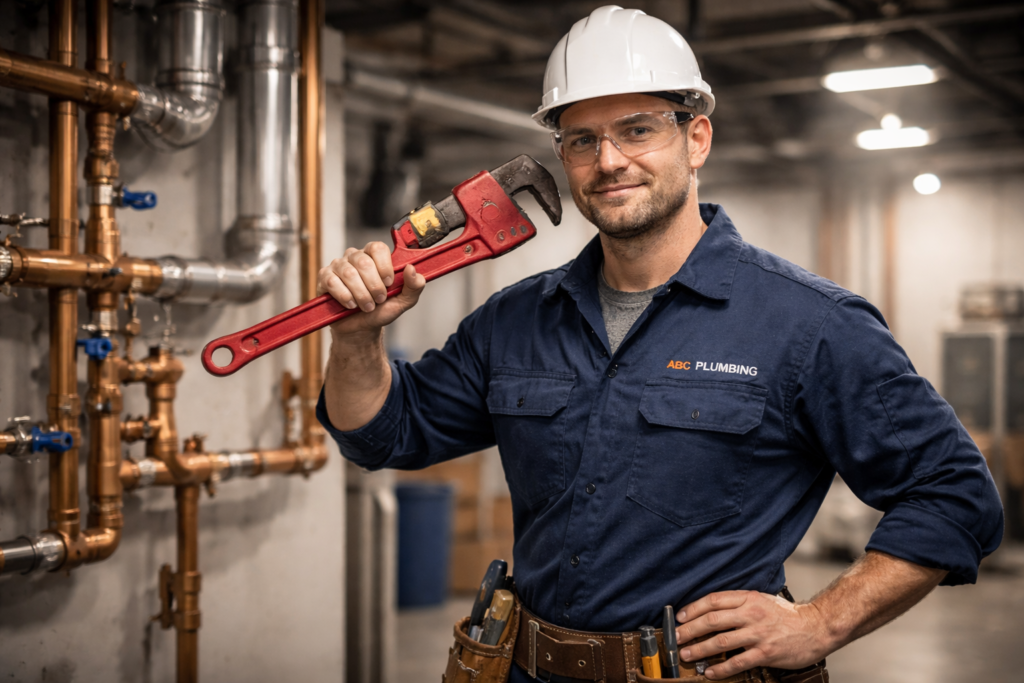
Why Plumbing Pays (Or Doesn’t) in the USA
The financial compensation for plumbers is determined by economic barriers and physical requirements.
Supply vs. Demand
The USA faces a chronic shortage of skilled tradespeople. As the older generation of tradespeople retires the influx of new apprentices has not kept pace. This supply gap drives wages up particularly in specialized sectors. However, this demand is regional. States with booming construction cycles see higher wages; areas with economic stagnation see wage stagnation.
Physical & Hygiene Barrier
Plumbing is physically demanding and often unpleasant. Working in raw sewage crawl spaces and extreme temperatures acts as a natural filter for the labor pool. This “revulsion factor” and physical toll ensure that the labor supply remains lower than office-based sectors sustaining higher wages for those willing to do the work.
Aging Infrastructure
The American Society of Civil Engineers consistently gives U.S. infrastructure a low grade. In 2026, massive capital is being allocated to upgrading water systems hospitals and municipal facilities. This requires licensed plumbers, specifically those with industrial skills, driving up the “prevailing wage” rates on government projects.
Union vs. Non-Union Pay Gap
The wage gap is significant. Union plumbers (members of the United Association) generally earn 30% to 50% more in hourly wages and benefits (pension, health insurance) compared to non-union counterparts. However union entry is competitive and geographically limited. Right to-work states in the South and Midwest offer lower wages but often have lower barriers to entry.
Read Also :Electrician Jobs in the USA: Salary, Apprenticeship & How to Get Hired 2026.
Exact Skills Employers Pay For
Employers in 2026 do not pay for general “handiness.” They pay for specific, verifiable technical competencies that reduce liability and increase efficiency. Possessing these skills directly impacts the starting salary and negotiation power.
- Gas Piping: Certification in natural gas and propane systems is mandatory for many residential and commercial roles. It carries higher insurance liability, resulting in higher pay.
- Medical Gas (NFPA 99): This is a high-value specialization. Installing medical gas lines in hospitals requires strict adherence to NFPA 99 standards and certification. Plumbers with this credential work on high-budget government or healthcare contracts.
- Hydronic / Radiant Heating: Knowledge of steam and hot water heating systems, including boilers and radiant floor heating, is in high demand in colder climates (Northeast and Midwest).
- Blueprint & Isometric Reading: The ability to read complex architectural and isometric drawings is the dividing line between a service technician and a commercial plumber. Commercial contractors require this skill for new construction projects.
- Brazing / ProPress: Soldering ( brazing) copper pipes is standard. However, proficiency with modern joining systems like Viega ProPress (press-fit technology) is increasingly preferred on commercial job sites for speed and reliability.
- Service Diagnosis: Residential service companies pay for speed. The ability to quickly diagnose drain blockages, leak locations, and water heater failures directly correlates to billable hours and commission.
- OSHA 10 / 30: For any commercial or industrial work, an OSHA 30-hour card is often a non-negotiable requirement for site entry.
Read Also : Customer Service Representative Jobs in USA: The 2026 High-Paying Guide
Lowest vs Highest Paying States for Plumbers (2026)
Lowest Paying States (Low ROI)
| State / Region | Average Salary (USD) | Why Pay is Low | Cost of Living Reality |
|---|---|---|---|
| Mississippi | $38,000 – $48,000 | Weak unions, low commercial demand | Low cost, but salary ceiling fixed |
| Alabama | $40,000 – $50,000 | Residential-heavy work, non-union dominance | Low living cost, limited savings |
| Arkansas | $39,000 – $49,000 | Limited infrastructure projects | Low cost, few high-pay contracts |
| West Virginia | $41,000 – $52,000 | Declining industrial base | Moderate cost, job scarcity |
| Rural Kentucky | $40,000 – $55,000 | Non-union market, small demand | Low cost, minimal growth |

Highest Paying States (Top Income)
| State / Metro Area | Average Salary (USD) | Main Income Drivers | Hidden Cost Factor |
|---|---|---|---|
| Illinois (Chicago) | $78,000 – $105,000 | Strong unions, hospitals, high-rise projects | High rent & taxes |
| New York | $75,000 – $110,000 | Commercial retrofits, strict union rules | Extremely high housing |
| California | $72,000 – $102,000 | Prevailing wage laws, public projects | High taxes, insurance |
| Massachusetts | $80,000 – $115,000 | Healthcare construction, union density | Expensive housing |
| Washington | $78,000 – $108,000 | Tech campuses, infrastructure work | Rising cost of living |
The Verdict on Location: The highest salary does not always mean the highest savings. A plumber earning $95,000 in New York City may have a lower disposable income than a plumber earning $65,000 in Texas due to tax burden and rent. For maximum savings, seek “high wage / medium cost” states like Illinois or Washington.
Which Companies Hire Plumbers in the USA?
Hiring is split between high-volume residential service and industrial/commercial construction.
National Plumbing Companies (High Volume Hiring)
These companies focus on residential service and repair. They hire frequently but generally offer lower pay and benefits compared to union shops.
- Roto-Rooter: The largest name in drain cleaning. They hire apprentices and experienced techs nationwide. Compensation is often base + commission.
- Mr. Rooter Plumbing: A franchise-based model. Pay varies by owner but generally targets the middle-residential market.
- Benjamin Franklin Plumbing: Focuses on “premium” residential service. Technicians are expected to upsell maintenance contracts.
- ARS / Rescue Rooter: Large-scale residential and light commercial service.
- Service Experts: HVAC and plumbing conglomerate.
Reality Check: These companies prioritize sales ability. You are often paid based on how much you can sell the homeowner, not just your technical skill. Visa sponsorship is virtually non-existent here.
Commercial & Industrial Contractors (Higher Pay)
These firms handle large projects: hospitals airports power plants, and skyscrapers.
- EMCOR Group: A Fortune 500 company specializing in mechanical and electrical construction. They hire for large institutional projects.
- Comfort Systems USA: A leading building and services company.
- Large City-Based Contractors: Examples include McCarthy Building Companies or Turner Construction (though these are general contractors, they hire mechanical subcontractors)
Reality Check: These employers prefer union status or verifiable experience in industrial piping. They offer better benefits and stable hours compared to residential service.
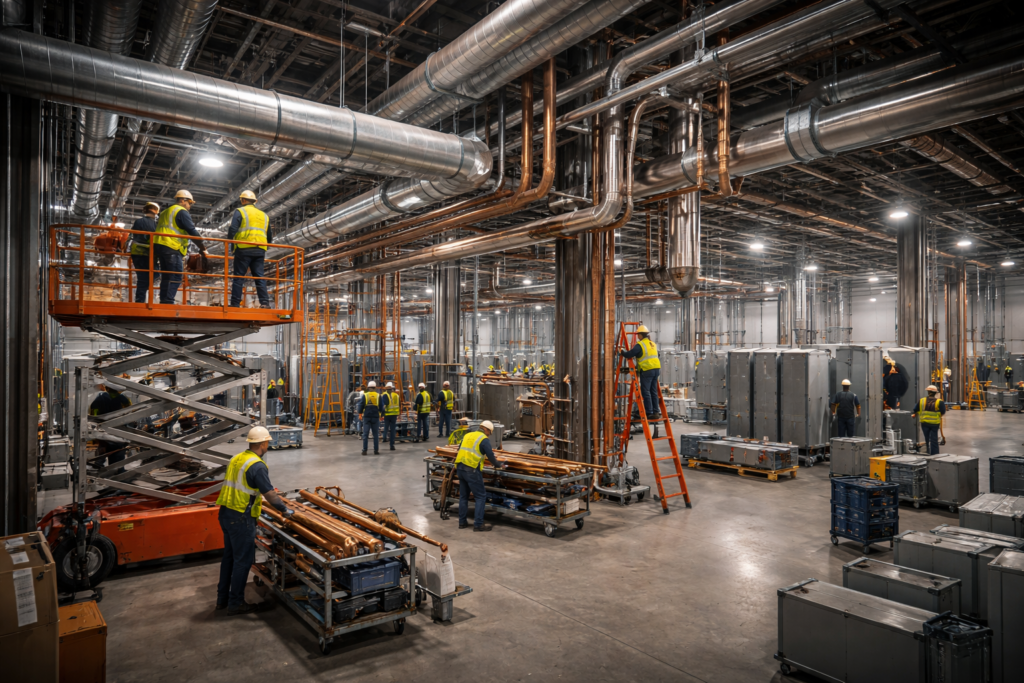
Union Hiring (UA – United Association)
The United Association of Journeymen and Apprentices of the Plumbing and Pipe Fitting Industry is the primary path to high income.
- Apprenticeship Entry: You apply to a local union hall. If accepted, you earn a wage while attending night school. Wages increase incrementally over 4-5 years.
- Competitive Selection: In high-paying states, acceptance is difficult. Waitlists can be long.
- Long-Term Pay: This is the only sector where a plumber can realistically earn over $100,000 annually with standard overtime and a pension that rivals white-collar careers.
Visa Sponsorship Reality: 99% of US plumbing companies, including major nationals like Roto-Rooter do NOT sponsor H1B visas. They view the administrative cost and legal risk as too high for a trade role. Union halls generally require proof of citizenship or permanent residency (Green Card) for admission due to security clearance requirements on government jobs.
Read Also : Medical Assistant Job in the USA: Salary, Jobs, Certification & Career Path(2026)
Salary by State & Experience (Table)
The following table represents annual base salary estimates for 2026. Overtime can push these figures 20% to 30% higher.
| Experience Level | Low Pay States (MS, AR, AL) | Average Pay States (TX, FL, OH) | High Pay States (IL, NY, CA) |
|---|---|---|---|
| Apprentice (Year 1-2) | $30,000 – $38,000 | $35,000 – $45,000 | $45,000 – $55,000 |
| Apprentice (Year 3-4) | $38,000 – $48,000 | $45,000 – $58,000 | $55,000 – $75,000 |
| Journeyman | $45,000 – $58,000 | $55,000 – $75,000 | $75,000 – $95,000 |
| Master Plumber | $55,000 – $70,000 | $70,000 – $90,000 | $90,000 – $115,000+ |
| Cost of Living Note | Housing is affordable, but savings are low. | Balanced. Best ROI for middle class. | High rent/taxes. High gross, lower net savings. |

Education, Licensing & ROI
Apprenticeship vs. Trade School
- Apprenticeship (High ROI): You are paid to learn. The “cost” is a lower wage for 4-5 years. This is the standard path in the USA.
- Trade School (Low/Negative ROI): Private technical colleges charge $15,000–$40,000 for certificates. Employers generally do not value these certificates over a union card or direct experience. Graduates often start at the same wage as apprentices who were paid to learn.
Licensing Timeline
The USA does not have a national plumbing license. Licensing is state-specific.
- Years Required: Typically 4 to 7 years of verified experience.
- Exams: All states require a written exam (code and business/law). Some require a practical exam.
- Reciprocity: Very few states recognize licenses from other states. Moving states often requires retesting or paying a fee for an endorsement.
College Degree ROI
For the plumbing trade, a 4-year university degree generally has a negative ROI. A plumber enters the workforce at age 20/21 with zero debt. A college graduate enters at age 22/23 with significant debt. Over a 10-year period, the plumber often has a higher net worth.
Visa Reality for Plumbers (Clear YES / NO)
This section is critical for immigrants. The “skilled labor shortage” in the USA does not translate to easy visa access for plumbers.
- H1B Visa (Specialty Occupations) NO: Plumbing is classified as a “trade” not a “specialty occupation” that usually requires a university degree. USCIS almost universally rejects H1B petitions for plumbers.
- H2B Visa (Temporary Non-Agricultural Workers) TEMPORARY: This is possible but difficult. It is for seasonal or peak-load work.
- Constraint: The employer must prove there are no able US workers available.
- Duration: Temporary (max 10-12 months).
- Reality: Used mostly for landscape or resort maintenance, rarely for long-term plumbing careers due to the cap on visas.
- TN Visa (NAFTA Professionals) YES (Canadians/Mexicans): Under the USMCA (formerly NAFTA) Canadian and Mexican citizens can work in the USA as “Plumbers.”
- Requirement: Proof of citizenship and credentials (journeyman certificate/license).
- Pros: Relatively easy renewal.
- Cons: You are tied to the specific employer sponsoring you.
- EB-3 Green Card (Skilled Workers) YES (Possible but Slow): This is the only path to permanent residency for non-NAFTA plumbers.
- Process: An employer must file a PERM Labor Certification proving they cannot find a US worker.
- Timeline: Extremely slow. Backlogs can range from 2 to 10+ years depending on the country of birth.
- Reality: Very few plumbing companies will wait 5 years for an employee to get a work permit.
- OPT (Optional Practical Training) NO: OPT is for STEM (Science, Technology, Engineering, Math) graduates. Plumbing degrees (if offered at all) are usually CIP codes not classified as STEM, making you ineligible for the 3-year OPT extension.
Summary: If you are not Canadian or Mexican, and you do not already have a Green Card, plumbing is a very difficult career path to access legally in the USA.

Hiring Process & Resume Filters
The hiring process in the USA is rigorous and involves specific filters.
- Work Authorization: You must pass an E-Verify check immediately. Any discrepancy results in immediate disqualification.
- Driving Record: A clean driving record is mandatory for almost all plumbing jobs. You will drive a company vehicle. DUIs or reckless driving histories are automatic disqualifiers for insurance reasons.
- Drug Testing: Pre-employment drug screening is standard. Many commercial sites also require random testing. Cannabis use, even if legal in the state, can be a disqualifier for federally funded projects or companies with federal contracts.
- Background Check: Felony convictions involving theft or violence are difficult to overcome. However, unions are sometimes more forgiving of past records than private residential companies.
- Technical Interview:
Risks & Job Market Reality
Physical Damage
Plumbing destroys the body over time. Knees, back, and shoulders are the primary casualties. “Plumber’s butt” is a joke; plumber’s hip replacement is a reality. By age 50 many field plumbers must transition to roles like estimation or inspection to avoid disability.

Recession Layoffs
Construction is cyclical. During economic downturns (2008, 2020) new construction halts immediately. Residential service is more recession-proof than commercial new construction. Union members often have better unemployment protection and job placement assistance during downturns.
Automation Impact
While robots cannot yet crawl under houses to fix leaks, “above ground” plumbing in factories and commercial sites is seeing increased automation in fabrication (spooling pipes off-site). This reduces the number of laborers needed but increases the demand for skilled fitters who can install prefabricated systems.
Legal Liability
Working without a license is illegal in most states and carries heavy fines. If an unlicensed plumber causes water damage or a gas explosion, they face criminal charges and civil lawsuits that cannot be discharged by bankruptcy.
Who Should Enter & Who Should Avoid Plumbing
Avoid Plumbing If:
- You have a criminal record or poor driving history.
- You have chronic back, knee, or respiratory issues (asthma is a risk with soldering fumes and sewage).
- You are seeking a career that offers easy remote work or relocation.
- You are a foreign national without a clear path to a Green Card (unless Canadian/Mexican).
- You dislike sales (residential service requires sales).
Enter Plumbing If:
- You have a high mechanical aptitude and problem-solving skills.
- You want to start earning immediately without university debt.
- You are physically resilient.
- You are a Canadian or Mexican citizen seeking TN visa access.
- You live in or can move to a strong union state (IL, NY, WA).
Final Verdict (2026)
Plumbing in the USA remains a viable, stable career for those who can pass the physical and legal barriers. The “Plumber Salary USA” is deceptive if viewed as a national average; it is a tale of two economies. The union commercial plumber in Illinois earns a six-figure income with a pension, while the non-union residential plumber in rural Arkansas struggles to break $45,000.
For immigrants, the TN visa is a viable loophole, but for most others, the visa door is shut. The ROI for a US resident is high, provided they avoid the trap of expensive private trade schools and pursue registered apprenticeships or union entry.
Read Also : Truck Driver Job in USA: Salary, CDL Cost, Visa & Best Companies Hiring (2026)
FAQ
How much does a plumber make in the USA?
In 2026, the average plumber salary in the USA ranges from $55,000 to $85,000 annually. However, this varies significantly by state. Apprentices start between $30,000 and $50,000, while Master Plumbers in high-cost states like New York or Illinois can earn over $100,000 with overtime.
Which state pays plumbers the most?
Illinois (specifically the Chicago metro area), New York, and Massachusetts consistently pay the highest wages. This is due to strong union presence and high costs of living. Union journeymen in these states often earn base hourly rates exceeding $45-$50 per hour.
Which state pays plumbers the least?
Mississippi, Arkansas, and West Virginia typically report the lowest average salaries for plumbers, often ranging from $38,000 to $52,000. These states have lower costs of living and weaker union representation in the construction trades.
Which companies hire plumbers in the USA?
Major employers include national service chains like Roto-Rooter, Mr. Rooter, and ARS/Rescue Rooter for residential work. For commercial and industrial work large contractors like EMCOR Group and Comfort Systems USA are the primary hirers. Union halls (United Association) also function as major hiring hubs for union contractors.
Can plumbers get visa sponsorship?
Generally no. 99% of plumbing companies do not sponsor H1B visas. The primary exception is for Canadian and Mexican citizens who may qualify for a TN Visa. The EB-3 Green Card is a theoretical option but involves a multi-year wait that most employers will not support. H2B visas are temporary and rarely used for permanent plumbing staff.
Is plumbing a good career in the USA in 2026?
Yes provided you are physically fit and located in a high-wage region. It offers a high Return on Investment compared to college due to the lack of student debt and immediate earning potential. However it is not a suitable career for those seeking visa sponsorship or those unable to perform physically demanding labor.