

You see the ads everywhere: “Be your own boss” “Make $25/hour” “Cash out instantly.” It sounds like the perfect solution for a new immigrant needing quick cash an international student on a tight budget or a career switcher tired of the corporate grind. But before you download the app and hit the road you need to know what the gig economy actually looks like in 2026.
The market has shifted. Post-pandemic boom times have flattened fuel prices remain volatile and the algorithm has gotten stricter. Driving for Uber Eats is no longer just about driving it is about data, strategy, and cost management.
This is an insider’s breakdown of what it really takes to make money as an Uber Eats driver in the USA in 2026 stripped of the marketing fluff.
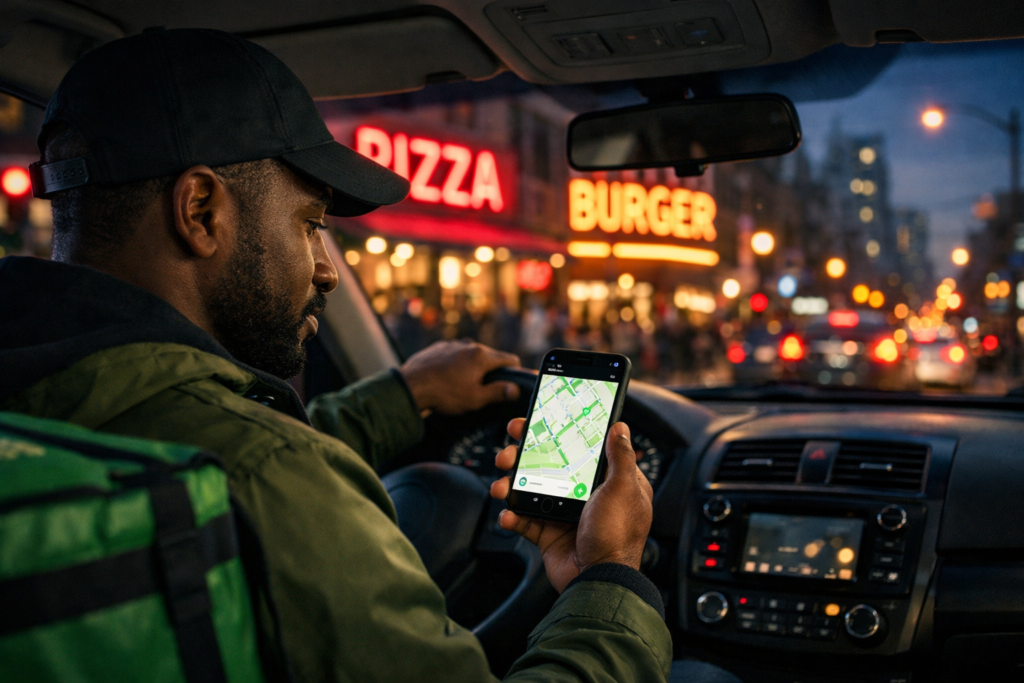
What an Uber Eats Driver Really Does (USA Market)
If you think this job is just delivering food you are already setting yourself up for failure. In the 2026 USA market an Uber Eats driver is a logistics manager a customer service representative, and a financial risk-taker all in one.
The Daily Work Reality
The romanticized view of cruising around listening to music is rare. The reality is:
- The Wait: You will spend 30% to 40% of your “shift” waiting for an order. You are not paid for this time. You might sit in a parking lot for 20 minutes watching your screen, burning gas but making zero dollars.
- The Restaurant Friction: You are the face of the app. If the restaurant is late, the customer yells at you. If the restaurant forgets a napkin, your rating drops. You are the middleman taking the heat for corporate mistakes.
- The “Last Mile” Grind: Navigating apartment complexes with broken gate codes finding parking in downtown districts and climbing four flights of stairs because the elevator is broken is the norm, not the exception.
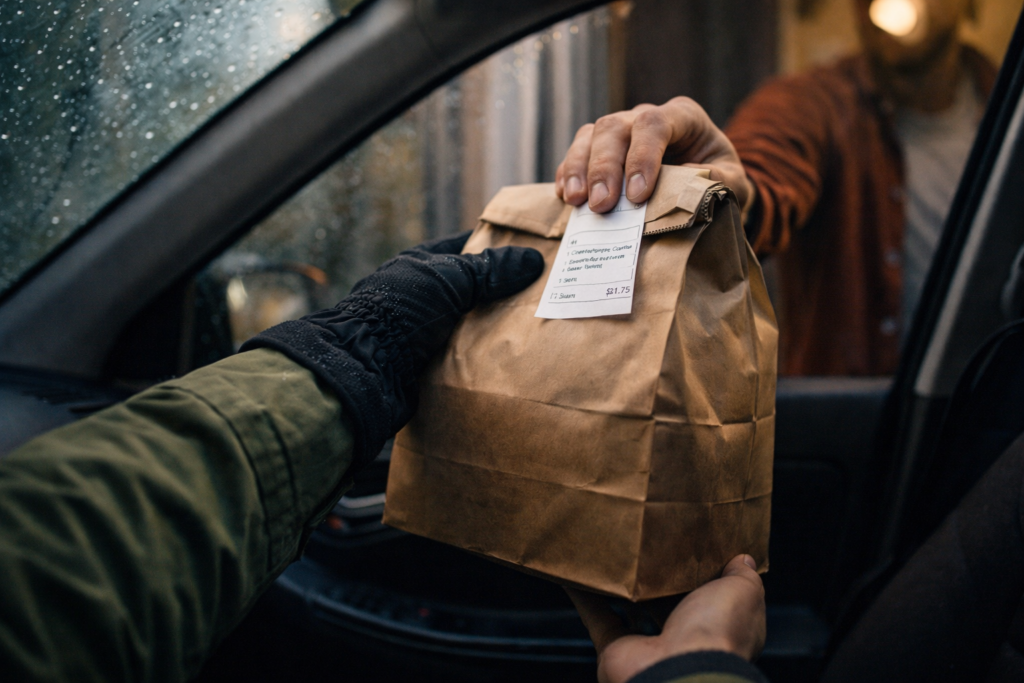
Demand Level (2026 Projection)
Demand for food delivery is stable but has normalized. During the 2020-2022 pandemic peak drivers could name their price. In 2026, the market is saturated with drivers. While people still order food they are price-sensitive. This means fewer tips and higher expectations for speed. The “surge” pricing (multipliers) still exists during lunch and dinner rushes, but it is less frequent and less dramatic than in previous years.
Read Also : Solar Panel Installer Jobs in USA (2026) — Salary Companies & Hiring Cities
Skills Required for an Uber Eats Driver
To survive and thrive you need a specific skill set. You are not just hired; you are “activated” based on your ability to perform.
Must-Have Skills
- Defensive Driving & Spatial Awareness: You will be driving in unfamiliar areas, often in rush hour. One accident or ticket can deactivate you instantly.
- Time Management: You have a strict window to pick up and drop off. You must calculate if a detour for a second order will make you late for the first.
- Emotional Regulation: Customers can be rude. Restaurants can dismiss you. You cannot lose your cool. A “cancellation” because you argued with a staff member hurts your acceptance rate and standing.
- Smartphone Literacy: The app is complex. You need to be able to navigate the interface, troubleshoot GPS glitches and handle support chats while stationary (never while driving).
Good-to-Have Skills
- Bilingualism: In diverse hubs like Miami, Houston or Los Angeles speaking Spanish or Chinese can help you communicate with restaurant staff, leading to faster pickup times.
- Basic Mechanics: Changing a flat tire or jump-starting a car keeps you on the road when others are stuck waiting for AAA.
- Tax Literacy: Understanding write-offs (mileage, depreciation, phone bills) is the difference between profit and loss at tax time.
Read Also : Plumber Salary in the USA (2026): Highest & Lowest Paying States, Hiring Companies, Visa Reality
Uber Eats Driver Salary Breakdown (USA)
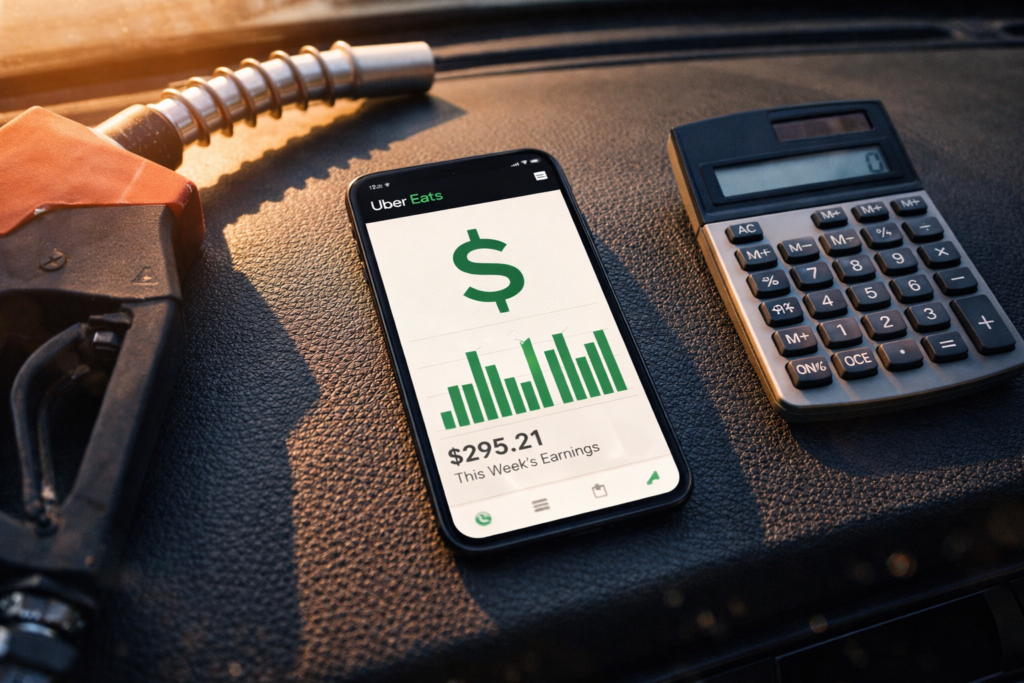
Let’s talk money. Uber Eats does not pay an hourly wage. You are paid per offer. The pay structure usually includes a pickup fee, a drop-off fee, and a mileage fee. Tips are separate.
Important Note: All figures below are Gross Earnings. Your Net Income (profit) will be 25% to 35% lower after gas, insurance, maintenance, and taxes.
Entry-Level (New Driver)
- Hourly Gross: $15 – $19/hour
- Reality: New drivers often make the mistake of accepting every order (“chicken feed”). You might drive 5 miles to earn $6. After gas you lost money.
- Annual Potential: $20,000 – $30,000 (part-time/full-time hybrid).
Mid-Level (Strategic Driver)
- Hourly Gross: $22 – $28/hour
- Reality: You know your city. You only take orders paying $1+ per mile. You “stack” orders (two deliveries in one trip). You work the lunch (11:00 AM – 1:30 PM) and dinner (5:00 PM – 8:30 PM) blocks.
- Annual Potential: $35,000 – $45,000 (treated as a full-time job).
Experienced (The “Gig Hustler”)
- Hourly Gross: $30 – $40+/hour
- Reality: This is rare and usually reserved for drivers in high-density cities (NYC, Chicago) during bad weather or holidays. These drivers often use a bicycle or moped to eliminate gas costs and bypass traffic.
- Annual Potential: $50,000+ (requires 60+ hours/week and high-efficiency strategies).
Education & Certification for an Uber Eats Driver
The barrier to entry is low, which is why competition is high.
Education: None required. No High School Diploma or GED is checked.
Certifications:
- Driver’s License: A valid US-issued license is mandatory.
- Insurance: You must have personal auto insurance in your name. Note: Most personal policies do not cover commercial activity. You may need a “Rideshare Endorsement” or a commercial policy (check with your insurer).
- Background Check: Uber conducts a federal and state background check. This looks at your driving record (moving violations) and criminal history. Certain felonies or recent DUIs will disqualify you.
- Food Handler’s Permit: Some cities (like San Diego or parts of Texas) require delivery drivers to carry a food handler’s card. It costs about $10-$20 online and takes an hour.
Job Market Reality for an Uber Eats Driver
Competition:
In 2026, the gig economy is crowded. Layoffs in tech and other sectors have driven many professionals to gig work temporarily. This means you are competing with people who know their cities well. During slow hours you will see dozens of other drivers sitting in parking lots waiting for the same ping.
Layoffs / Growth Risk
You cannot be “laid off” in the traditional sense because you are not an employee. However you can be Deactivated. This is the gig equivalent of being fired. It happens if:
- Your rating falls below a certain threshold (usually 4.6 stars).
- You commit contract violations (accepting orders and not completing them).
- You have too many customer complaints.
- Your fraud detection algorithm flags you (e.g., manually marking orders delivered early).
There is zero job security. If Uber changes the pay structure tomorrow your income drops instantly, and there is no union to negotiate for you (yet).
Visa & Work Authorization for an Uber Eats Driver
This is the most critical section for immigrants and international students. Do not drive if you are not authorized.
- Citizens & Green Card Holders: You are clear to work.
- Work Visas (H1B, L1, etc.): Generally, NO. Most employment-based visas restrict you to working only for the specific employer that sponsored your visa. Driving for Uber Eats is considered “unauthorized work” and is a violation of your visa status. It can lead to deportation and permanent bans from the US.
- F-1 Students (OPT/CPT):
- Curricular Practical Training (CPT): Only if the driving is an integral part of your curriculum (extremely rare).
- Optional Practical Training (OPT): Generally, OPT requires the work to be related to your major of study. Unless you are a Logistics or Urban Planning major and can argue this is relevant, driving for Uber Eats is risky. Furthermore, it is “self-employment,” which creates complex tax and reporting issues for OPT students. USCIS views self-employment skeptically.
- Dependents (H4, F2): If you have an Employment Authorization Document (EAD) card, you can drive. If you do not have the EAD card you cannot.
The “1099” Trap: As an independent contractor, you will receive a 1099-K form (if you earn over $20,000 and have 200 transactions though thresholds are changing). This creates a paper trail. If you are on a visa that doesn’t allow side work, this paper trail is evidence of violation.
Best States & Cities for an Uber Eats Driver
Not all markets are created equal. The math only works if the density is high.
- Top Tier (High Earnings Potential):
- New York City, NY: Extremely high demand high mandatory delivery fees and high tips. However, traffic is brutal, and tolls eat into profits unless you are on a bike.
- San Francisco, CA: High order volume and generally higher tips. Very high cost of living means you need to earn more to survive.
- Boston, MA: Dense, difficult driving conditions (good for bikes/scooters), and decent pay.
- Chicago, IL: Strong downtown market and distinct neighborhoods create consistent surge pricing.
Mid Tier (Steady but Lower Pay):
- Houston, TX: Massive sprawl. You will drive long distances for low pay. Good volume, but gas costs will kill your margins.
- Atlanta, GA: Decent market, but competition is high.
- Miami, FL: Good tips from the wealthy areas, but extreme traffic and language barriers can slow you down.
- Avoid:
- Rural or Suburban Sprawl: If you have to drive 10 minutes to get to the restaurant, you are losing money.
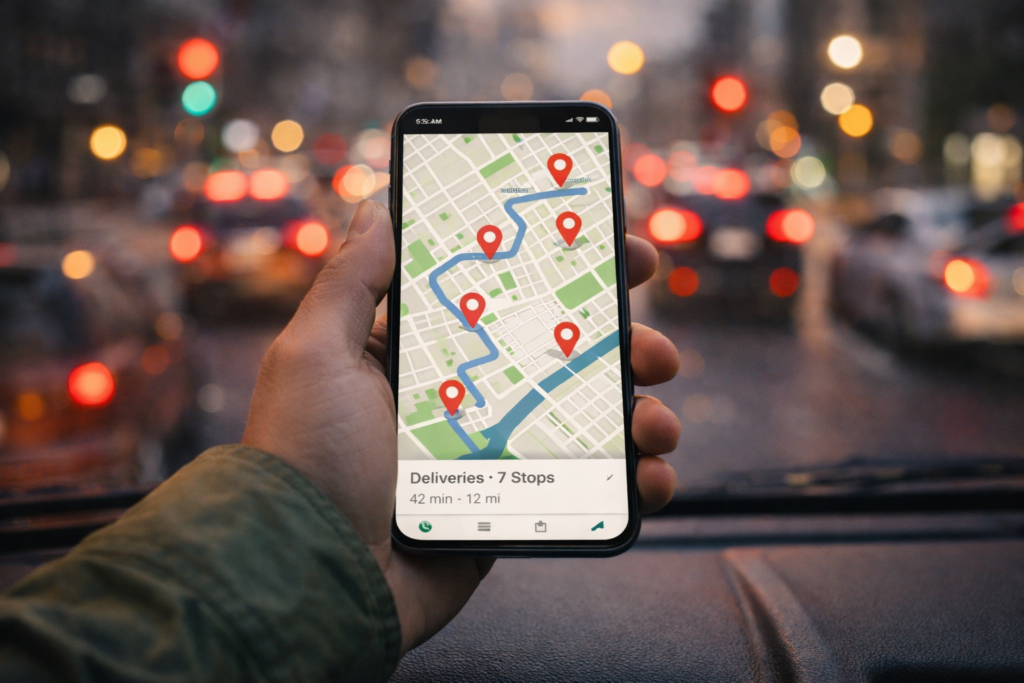
How to Get Hired Faster as an Uber Eats Driver
The signup process can take anywhere from 3 days to 2 weeks. Speed it up:
- Clean Digital Record: Ensure your driver’s license and vehicle registration are current and match the name on your profile.
- Use a Referral Code: Do not sign up with a blank slate. Search online for a current “New Driver Bonus” code. This can guarantee you an extra $200–$600 after you complete a set number of trips in your first month.
- Document Upload: Take clear, well-lit photos of your documents (insurance, license). Blurry photos are the #1 cause of delays.
- Vehicle Inspection: If your car is older (usually 10+ years, depending on the city), you may need a mechanic to sign off on a vehicle inspection form. Find a mechanic that does this for free (often promoted at Uber Green Light Hubs).
- Choose the Right Vehicle: A 4-cylinder Honda or Toyota is the gold standard. Do not use a luxury car (wear and tear) or a large SUV (gas consumption).
Common Mistakes an Uber Eats Driver Makes
- Ignoring the “Dead Mile”: This is driving to a restaurant or back from a delivery without pay. Successful drivers minimize dead miles by staying in “hot zones” (busy areas) even if it means waiting a bit between orders.
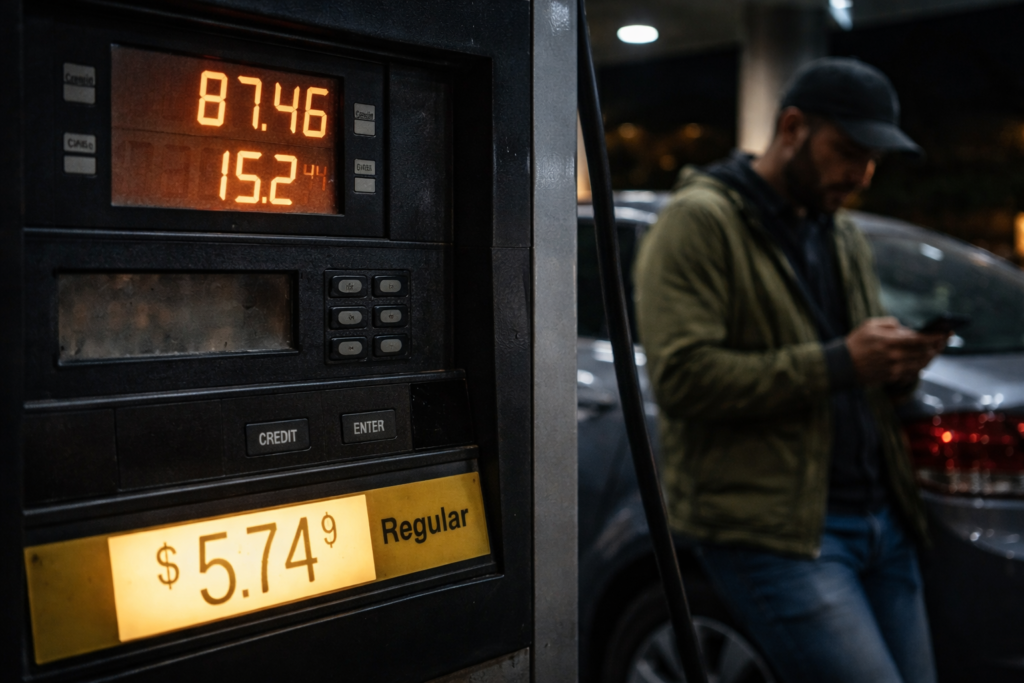
- The “Gas Tank” Fallacy: Thinking “I made $100 today” when you spent $40 on gas. You didn’t make $100; you made $60.
- Not Tracking Mileage: You must track every single mile you drive while the app is on. At tax time this deduction is your lifeline. Use an app like Everlance or Hurdlr.
- Selectivity Issues: Accepting every order lowers your average. If the offer is $5 to drive 5 miles, decline it. Let a desperate driver take it. Wait for the $12 order.
- Parking Tickets: Thinking you can “just double park for a second.” In major cities, a $65 ticket wipes out two hours of profit.
Final Reality Check (Who Should Do This Job?)
Who is this for?
- The Bridge Builder: You need money right now while you interview for a real job. It provides instant cash flow (same-day pay options exist).
- The Student (With EAD): You have classes at odd hours and need a schedule that fits around 10:00 AM to 2:00 PM.
- The Night Owl: Some people prefer working 9:00 PM to 2:00 AM when traffic is lighter and drunk people order more food (and sometimes tip better).
Who is this NOT for?
- The Long-Term Career Seeker: There is no career ladder. You will not become “Regional Manager of Deliveries.” Inflation will likely outpace your pay raises over time.
- The Visa Risk-Taker: If you are on H1B or F1 without explicit work authorization, the risk of destroying your future immigration status for $15/hour is idiotic.
- The Car Lover: If you care about your vehicle’s resale value, stop now. 20,000 miles of city driving a year destroys value.
The Verdict for 2026:
Driving for Uber Eats in the USA is a valid survival mechanism and a flexible side hustle. It is not a career. It requires an entrepreneurial mindset to actually turn a profit. If you can treat it like a business calculating costs rejecting bad offers and tracking data it can keep the bills paid. If you treat it like just driving you will end up working for free.
Read Also : Living in Bloomington Indiana (2026): Cost ,Jobs, Apartments & Salary Reality
FAQs
1. How much do Uber Eats drivers make in the USA?
Most earn $10–$22/hour before expenses but real income is lower after costs.
2. Can international students do Uber Eats?
Usually no, unless they have special work authorization.
3. Is Uber Eats a full-time career?
No, it’s better as a side income.
4. Do drivers get tips?
Yes, and tips can make up 30–50% of earnings.
5. Is it better than a regular job?
Depends. It offers flexibility but lacks stability and benefits.
6. Which city pays the most?
Large cities like NYC, LA, and San Francisco have the highest earning potential.
7. Do I need a car?
Not always — bikes and scooters work in dense cities.
8. Is Uber Eats profitable in 2026?
Yes, but only if you manage expenses and work strategically.