
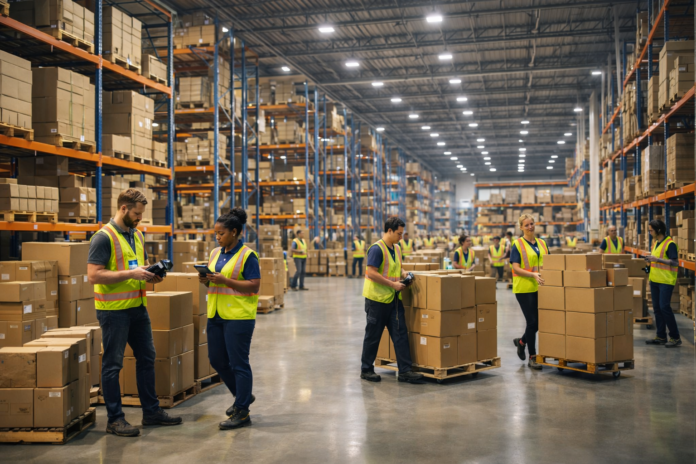
Welcome to the ground floor of the American economy. If you are looking for warehouse jobs in the USA you are likely looking for income stability or a way to get your foot on the ladder as a new immigrant or student. You aren’t looking for fluff or corporate talk you need to know if you can pay rent if your body can handle it and if they will actually hire someone with your background.
This guide is written from the perspective of someone who has navigated the US job market. We aren’t here to sell you a dream. We are here to give you the survival blueprint for working in logistics supply chains, and distribution centers across the United States.
Why Warehouse Jobs in USA Are Always Hiring
If you type warehouse jobs near me into Google at 3 AM, you will see listings. Why? Because the American supply chain never sleeps. Between the explosion of e-commerce (Amazon, Walmart, Shopify) and the constant need for grocery distribution, the demand for labor is insatiable.
For new immigrants and international students the warehouse is often the first stop. It is the one place where having an American accent or knowing someone in high places matters less than your ability to show up on time and lift a box.
However, the always hiring sign is a double-edged sword. They are always hiring because people are always quitting. The turnover rate in US warehousing is notoriously high often exceeding 50-60% annually. This means they are desperate but it also means the work can be grueling. For you, this is an opportunity. High demand equals easier barriers to entry.
Read Also : Customer Service Representative Jobs in USA: The 2026 High-Paying Guide
What Warehouse Workers Actually Do
Before you apply, you need to understand the language of the floor. “Warehouse work” is a broad term. Depending on your assigned role your daily reality changes drastically.
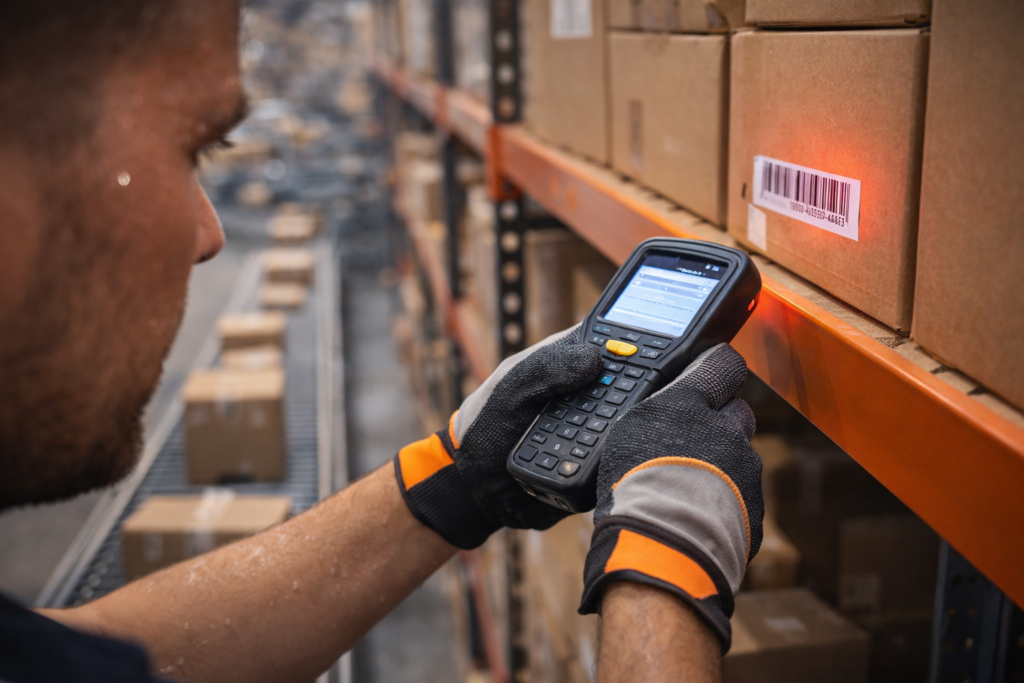
Picking (The Walker): This is the most common entry-level role. You are given a handheld scanner (RF scanner) that tells you exactly which aisle bay, and shelf to go to. You find the item, scan it, and place it in a tote or bin. You are not walking; you are power-walking 10 to 15 miles a day on concrete.
Packing (The Stuffer): You stand at a station. A conveyor belt brings items to you. You must box them tape them, and label them. It sounds easy, but you are timed. If the system expects you to pack 150 boxes an hour and you pack 140 you might get flagged.
Receiving/Shipping (The Muscle): This happens at the docks. Semi-trucks back up, and you unload pallets or boxes using a forklift, pallet jack, or your hands. This is heavy physical work. It requires attention to detail because you have to count every single box that enters the building.
Returns (The Garbage Picker): Online shopping returns are a nightmare. Workers in this department open returned boxes to decide if the item can be resold or needs to be thrown away/destroyed. This is dirty work; you will see opened food used clothes, and broken electronics.
READ ALSO : University of Kentucky Fees, Acceptance Rate, Housing & Job Opportunities
Who Can Apply (US Citizens, Immigrants & Students)
The beauty of the warehouse industry is its relative inclusivity compared to corporate office jobs. However legal status still dictates where and how you can apply.
US Citizens & Green Card Holders
You have the run of the mill. You can apply directly to UPS, FedEx, Amazon, or local logistics companies. You are eligible for full benefits (health, 401k) and leadership tracks (Team Lead, Area Manager).
Foreign Students (F-1 Visa)
This is a critical survival area. You cannot work off-campus without authorization. However, warehouse jobs are goldmines for students who qualify for:
- CPT (Curricular Practical Training): If your internship course allows it, you can work full-time or part-time.
- OPT (Optional Practical Training): After graduation, you can work for 12 months (STEM majors get 36 months). Many students take night shifts at warehouses because the pay is often $5-$8 higher than on-campus library jobs.
Work Permit (EAD) Holders
If you are waiting for your Green Card or are on an H4 visa, L2 visa or have an approved Employment Authorization Document (EAD), warehouses are a top choice. They process EADs regularly and understand the paperwork.
TPS / Asylum Applicants / Refugees
Warehouses are often sanctuaries for those with Temporary Protected Status (TPS) or pending asylum cases. Agencies that staff warehouses are often willing to hire on a “case-by-case” basis if you have a valid work permit or a receipt notice that allows you to work while the application is pending. Note: Smaller “mom-and-pop” warehouses are more flexible here than giant giants like Amazon initially.
No Experience Workers
95% of entry-level warehouse jobs require zero experience. They train you on Day 1. They care more about your physical ability and your background check than your resume.

Warehouse Jobs Salary in USA (State Wise Table)
Salaries vary wildly based on the cost of living and the strength of the local unions. Below is a realistic breakdown of hourly wages for general laborers (pickers/packers) as of 2024. Note that night shifts often get a $1.00 to $3.00 differential.
| State / Region | Hourly Wage (Entry) | Hourly Wage (Exp.) | Estimated Weekly (40 hrs) | Notes |
|---|---|---|---|---|
| California | $18.00 – $20.00 | $22.00 – $25.00 | $720 – $1,000 | High cost of living; many offer overtime. |
| New Jersey / NY | $17.00 – $19.50 | $21.00 – $24.00 | $680 – $960 | Fast pace; strong union presence in some. |
| Texas | $15.50 – $18.00 | $19.00 – $22.00 | $620 – $880 | No state tax; massive hub for logistics. |
| Illinois (Chicago) | $17.00 – $19.00 | $20.50 – $23.00 | $680 – $920 | Very busy rail hubs; winter is harsh. |
| Florida | $15.00 – $17.00 | $18.00 – $21.00 | $600 – $840 | High competition; A/C is rare. |
| Ohio / Pennsylvania | $15.50 – $17.50 | $19.00 – $21.00 | $620 – $840 | Lower cost of living, money goes further. |
| Georgia (Atlanta) | $16.00 – $18.00 | $19.50 – $22.00 | $640 – $880 | Rapidly growing southeast hub. |
Note: “Amazon Flex” and independent contractor delivery gigs operate differently, where you are paid per block/route, not hourly.
READ ALSO : Truck Driver Job in USA: Salary, CDL Cost, Visa & Best Companies Hiring (2026)
Daily Life Reality Inside US Warehouses
If you have never worked in a US warehouse, the culture shock is real.
The Shift Hours:
- 1st Shift (Day): Usually 7 AM to 3:30 PM or 8 AM to 4:30 PM. Harder to get hired for these as they are coveted.
- 2nd Shift (Swing): 3 PM to 11:30 PM. Very common for students.
- 3rd Shift (Graveyard): 10 PM to 6:30 AM. This pays the most (shift differential). It is dark quiet and hard on your sleep cycle.
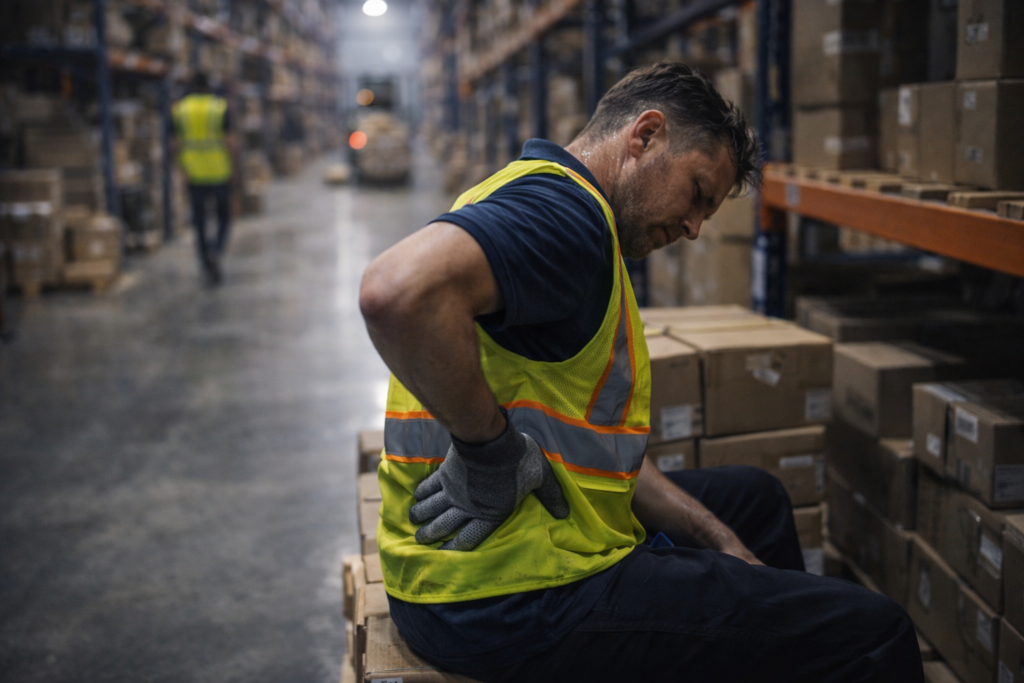
Physical Pressure: You are on your feet for 10 to 12 hours (if overtime is mandated). Concrete floors are unforgiving. After your first week, your feet will throb and your legs will feel like lead. You will lose weight initially or gain it if you rely on vending machine junk food.
AC vs. Non-AC: In the winter, warehouses are freezing because the loading dock doors are constantly opening. In the summer unless you are in a modern “fulfillment center” (like Amazon), you will likely sweat. Older warehouses often lack central air conditioning. Working in 90°F (32°C) humidity while lifting boxes is a health hazard if you don’t hydrate.
Supervisor Tracking: Big Brother is watching. At Amazon and Walmart, your scanner tracks your “Rate.” If you are “off task” (not scanning items) for more than a few minutes, a supervisor will come to find you. You cannot hide in the bathroom for 30 minutes; the system tracks idle time.
Hidden Problems Nobody Tells You
. The “Temp Agency” Trap: Many warehouses do not hire you directly. They hire you through a staffing agency (e.g., Staffmark, Robert Half, local temp agencies).
- The Problem: You earn less than direct hires. You often don’t get health insurance. The warehouse treats you like a second-class citizen.
- The Survival Tip: Temp jobs are good to get experience, but ask the agency upfront: “Is this Temp-to-Hire?” If it is, you usually become a permanent employee after 90 to 120 days if your attendance is good.
. Mandatory Overtime (and VTO): During Peak Season (November and December) overtime is mandatory. You will work 60 hours a week. It’s great money, but you will have no life. Conversely, in slow months (February, March) you might get sent home early. This is called VTO (Voluntary Time Off). If you are living paycheck to paycheck VTO is an enemy because it ruins your budget for the week.
The “Point” System: Most US warehouses use an attendance point system. If you are late, you get 0.5 points. If you miss a shift you get 1 point. If you reach 6 or 8 points you are fired automatically. Calling out because you are “sick” often still counts as a point unless you have a doctor’s note. This creates immense pressure to work even when you are ill.
Warehouse Jobs Hiring Near Me – How To Find Local Jobs
Don’t just rely on Craigslist (which is full of scams). Use these legitimate methods to find warehouse jobs hiring near me safely.
Direct Company Portals (The Safest Route): Go directly to the source. They don’t charge you a fee.
- Amazon Jobs: Search “Amazon Jobs [Your City].” They have massive hiring events often called “Amazon Day.” You can sometimes get hired and walk out with a job offer the same day.
- Walmart Careers: Walmart Distribution Centers are different from Walmart stores. The pay is higher. Search “Walmart Distribution Center Hiring.”
- FedEx Ground / UPS Supply Chain: These are often located in industrial parks on the outskirts of cities.
. Staffing Apps: Download apps like Wonolo, Instawork, or Bluecrew. These act like “Uber for warehouse jobs.” You pick a shift, you show up, you get paid. This is excellent for survival if you need money tomorrow.
Industrial Parks: Get in your car or take a bus to the industrial outskirts of your city. Look for the “Now Hiring” signs on the fences of the buildings. Walk in and ask for the application desk. This shows initiative and often bypasses the online filter.

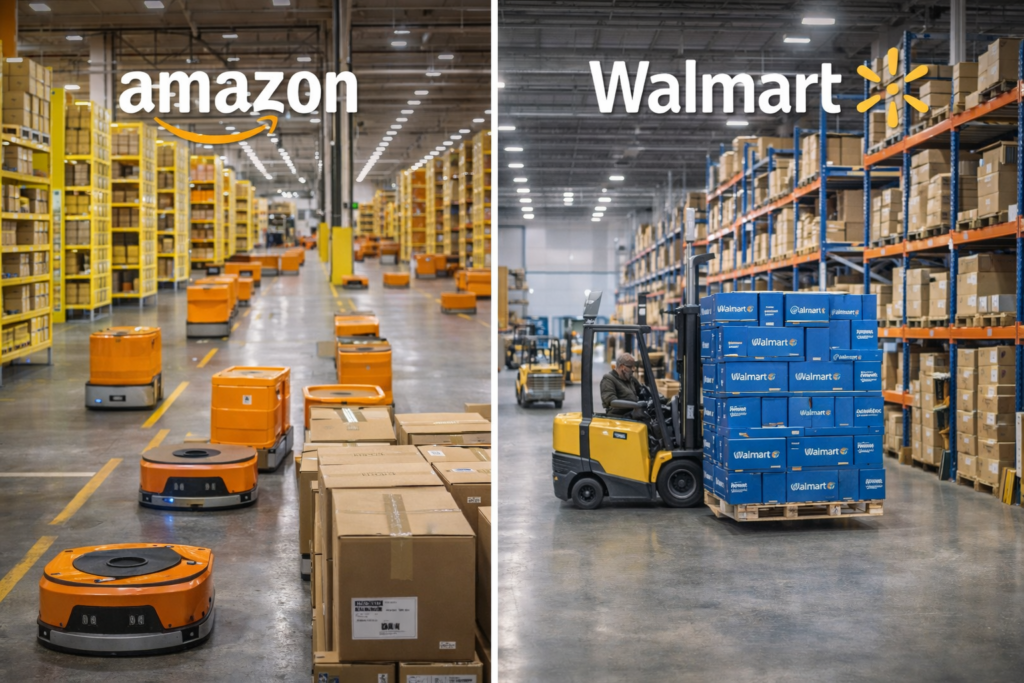
Amazon Warehouse Jobs vs Walmart Warehouse Jobs
Everyone compares the two giants. They both offer work, but the culture is different.
| Feature | Amazon Warehouse (FC) | Walmart Distribution Center (DC) |
|---|---|---|
| Pacing | Extremely fast. Robot-driven. You are a robot extension. | Fast, but feels slightly more “human.” Old-school logistics. |
| Environment | Modern, but strict. Very high tech surveillance. | Can be older buildings. More rigid management hierarchy. |
| Breaks | Strictly timed. You are clocked out the second you leave the floor. | Sometimes more lenient, depending on the specific DC manager. |
| Safety Culture | Heavy focus on “safety,” but the pressure to make rate often conflicts with it. | Strong union presence in some states (e.g., California) which protects workers. |
| Hiring Speed | Days. Very automated. | Weeks. More background checks and interviews. |
| Best For | People who want to zone out, put headphones in, and work. | People who want a more traditional “company” feel. |
Background Checks: They look back 7 years.
- Theft: If you have a theft conviction a warehouse (where you handle inventory) will likely not hire you.
- Violent Crimes: Can be disqualifying.
- Immigration: They use E-Verify. You must have valid documents to work. If your documents are expired or pending do not lie. You will be caught immediately when the social security number mismatch comes back.
Health Insurance
Health Insurance: Direct hires usually get insurance after 90 days. It is expensive in the USA. For a single person, you might pay $50-$100 per paycheck for a “Bronze” plan.
Survival Budget for Warehouse Workers (Monthly Table)
Let’s look at a realistic survival budget. We will assume a single person living in a mid-cost state (like Texas or Georgia) earning $18/hour.
Gross Income: $18 x 160 hours = $2,880 Net Income (After Tax): ~$2,250
| Expense | Monthly Cost | Reality Check |
|---|---|---|
| Rent (Shared Room/Apt) | $600 – $800 | Warehouse workers rarely live alone. Expect to share a 2-bedroom or rent a room. |
| Food (Groceries) | $250 – $300 | Cooking at home is mandatory. Eating out destroys this budget. |
| Transport | $150 – $300 | Warehouses are far from city centers. Gas/Car maintenance or Bus passes add up. |
| Phone | $50 – $80 | Mint Mobile or Boost Mobile are popular budget options. |
| Health Insurance | $0 – $150 | $0 if you decline, $150 if you take the employer plan. |
| Work Gear (Boots/Belts) | $50 | Amortized monthly. You need steel-toe boots. |
| Misc/Utilities | $100 | Electricity, water, laundry. |
| TOTAL | $1,150 – $1,680 | |
| SURPLUS | $570 – $1,100 | This is your savings money. Send it home or save for school. |
Note: In NYC or California, Rent will be $1,200+, wiping out your surplus entirely. You must work significant OT to survive in high-cost states.

READ ALSO : University of Tennessee Knoxville Student Survival Guide: Real Cost, Jobs, Housing & Safety Reality
Is This Job Good for Foreign Students?
Yes, but with conditions.
It is excellent for CPT/OPT survival because:
- Cash Flow: You earn significantly more than campus jobs ($18 vs $12).
- Networking: You see how the US economy functions.
- English: You will be forced to communicate with diverse teams.
The CPT/OPT Survival Tips:
- Night Shift is King: Take the 10 PM shift. It leaves your mornings free for classes or research.
- Academic Performance: Do not let the fatigue cause you to fail a class. If you fail out of school, your work authorization dies immediately.
- Treat it as a Job, Not a Career: Unless you want to be an Operations Manager use this job to fund your education, not define your future.
Career Growth & Certifications
Warehouses are not dead-end jobs if you have ambition. You can climb the ladder quickly because many people quit.
- Entry Level: Picker / Packer ($18/hr)
- Skill Up: Get your Forklift Certification. Often, the company will pay for this if you ask.
- Mid-Level: Forklift Operator / Inventory Control ($20-$22/hr)
- Leadership: Team Lead / Area Manager ($55k – $75k salary). You move from lifting boxes to managing spreadsheets and people.
Certifications to pursue:
- OSHA 10/30: General safety certification (looks great on a resume).
- Forklift License: Essential.
- CPR/First Aid: Helps if you want to be a Safety Manager.
Who Should Avoid Warehouse Jobs
- People with severe back or knee problems: The concrete floors will destroy you.
- People with Social Anxiety: While you work alone mostly, you are micromanaged and scrutinized constantly.
- People looking for easy money: This is hard sweaty labor. If you are lazy, you will be fired within a week for “low rate.”
Final Survival Advice
Warehouse work in the USA is a tool. It is a hammer you can use to build your life. It is not the house itself.
If you are an immigrant use this job to establish your work history learn English and save money. If you are a student use it to graduate debt-free. Protect your body by buying quality boots immediately. Protect your job by maintaining perfect attendance. And protect your future by using the money you earn to get training for something less physically demanding later in life.
The warehouse door is always open. It’s up to you to walk through it and survive

READ ALSO : Sugar Land Texas: The Ultimate Relocation, Financial Survival & Settlement Guide(2026)
1. Can I get a warehouse job in the USA without a Social Security Number (SSN)?
No. To be hired legally you must have an SSN or an EAD (Employment Authorization Document). Employers are required by law to run your information through E-Verify. Do not trust anyone who tells you they can pay you “cash under the table” for a big corporation; it is likely a scam.
2. How long is the lunch break in US warehouses?
It varies, but usually unpaid lunch breaks are 30 minutes. You also get two paid 15-minute breaks. You are timed strictly. If you are 1 minute late from lunch you can get penalized.
3. Do Amazon warehouse jobs hire felons?
Yes, Amazon has announced initiatives to hire felons and give them a second chance. However, this depends on the nature of the crime (usually excluding violent or sexual offenses) and how recent it was.
4. What shoes should I buy for warehouse work?
Do not buy cheap sneakers. You need composite-toe or steel-toe boots. Brands like Timberland PRO, Keen Utility or Wolverine are investments. Expect to spend $100-$150. It is cheaper than a doctor’s visit for foot injuries.
5. Is it true I have to walk 10 miles a day?
In a “Picker” role at a large fulfillment center (like Amazon), yes. Your pedometer will often read 12 to 15 miles a shift. Wear high-quality socks (Wigwam or Darn Tough) to prevent blisters.
6. Can I work two warehouse jobs at the same time?
It is difficult due to scheduling but some people work a morning shift at one place and a night shift at another. Be careful—this creates extreme fatigue and increases the risk of accidents. Also, check your non-compete agreements (though rare for entry-level).

