Stanford University: An Overview
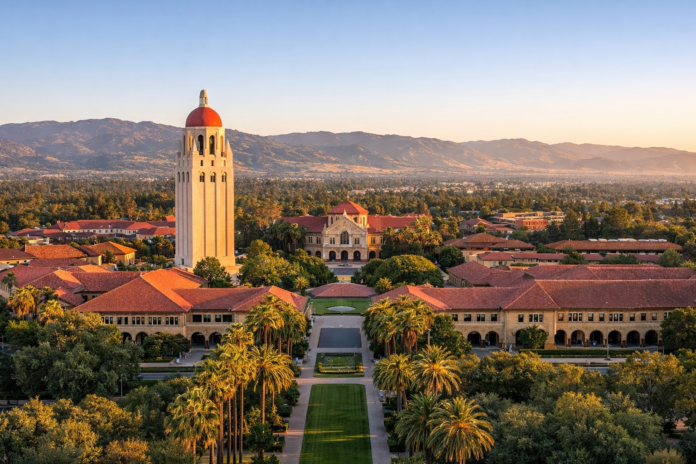
Stanford University is one of the most prestigious private research universities in the United States, consistently ranked among the top institutions in the world. Founded in 1885 and opened in 1891 by Leland and Jane Stanford in memory of their son, Stanford has grown into a global powerhouse of education, innovation, and entrepreneurship.
Located in Stanford, California on the San Francisco Peninsula near the city of Palo Alto the university benefits from its proximity to Silicon Valley, one of the world’s leading technology and innovation hubs. This geographic advantage gives Stanford students unmatched access to internships, research partnerships, and career opportunities at leading global companies.
- Type: Private research university
- Location: Stanford, California (Santa Clara County), USA
- Campus Size: Approximately 8,180 acres — one of the largest in the United States
- Research Classification: R1 Doctoral University (Very High Research Activity)
- Athletic Conference: PAC-12 (Pac-12 Conference)
- Endowment: Approximately $36.3 billion (among the largest of any university globally)
- Student Body: Over 17,000 students (undergraduate and graduate combined)
- Nobel Laureates: 85+ affiliated faculty and alumni
Stanford’s seven schools include the School of Humanities and Sciences, School of Engineering, Graduate School of Business, School of Medicine, School of Law, Graduate School of Education, and the Doerr School of Sustainability. Each school maintains a reputation for academic rigor, interdisciplinary collaboration, and real-world impact.
Read Also : Columbia University 2026: Admissions, Programs, Fees, Scholarships & Career Outcomes
Why Choose Stanford University?
Choosing the right university is one of the most important financial and career decisions a student or family will make. For both domestic and international students, Stanford University consistently delivers one of the highest returns on investment in American higher education.
Return on Investment (ROI)
Stanford graduates earn significantly above the national average. According to recent data from the U.S. Department of Education’s College Scorecard, Stanford ranks among the top universities nationwide for median earnings 10 years after enrollment. The combination of a Stanford degree, Silicon Valley networking, and the university’s entrepreneurial culture makes it an elite investment in future earning potential.
Job Outcomes and Placement
Stanford’s Career Education Office reports consistently strong employment outcomes. More than 95 percent of Stanford graduates are employed or enrolled in graduate programs within six months of graduation. Alumni have founded companies including Google, Netflix, Yahoo, LinkedIn, Hewlett-Packard, and Snapchat — collectively generating trillions of dollars in market value.
Campus Reputation and Rankings
- U.S. News & World Report: Consistently ranked #2-#4 among National Universities
- QS World University Rankings 2025: Ranked #5 globally
- Times Higher Education: Ranked among the top 5 universities worldwide
- Forbes: Among the top-ranked universities for career outcomes and alumni salary
For US students seeking top-tier private university education, Stanford competes directly with Harvard, MIT, and Princeton. For international students, a Stanford degree carries exceptional global recognition and significantly elevates career prospects across industries including technology, medicine, law, finance, and public policy.
Read Also : Harvard University Cambridge – Proven Admissions, Programs, Fees, Scholarships & Career Outcomes (2026)
Popular Academic Programs at Stanford University
Undergraduate Programs
Stanford offers over 65 major fields of study through its undergraduate programs. Students benefit from Stanford’s open curriculum, which allows flexibility in course selection and interdisciplinary exploration.
- Computer Science (BS) — One of the most competitive and sought-after programs in the country
- Human Biology (BS) — Interdisciplinary major combining biology, medicine, and social sciences
- Economics (BA/BS) — Strong pre-law and pre-business pathway
- Electrical Engineering (BS) — Highly ranked nationally, deeply connected to Silicon Valley
- Psychology (BA) — Popular among students pursuing graduate or medical education
- Political Science (BA) — Strong pipeline into law school and public policy careers
- Mechanical Engineering (BS) — Excellent for students targeting aerospace, automotive, and tech industries
- Mathematics (BS) — Foundation for careers in finance, data science, and academia

Graduate and Professional Programs
Stanford’s graduate programs are nationally and globally ranked among the very best. Key programs include:
- MBA (Graduate School of Business) — Consistently ranked in the top 3 in the USA
- MS in Computer Science — Among the most competitive master’s programs in the world
- JD (School of Law) — Ranked #1 or #2 nationally by U.S. News & World Report
- MD (School of Medicine) — Among the top 5 medical schools for research in the USA
- MS in Electrical Engineering — Strongly industry-connected, excellent career outcomes
- PhD in Bioengineering — Cutting-edge research with significant funding opportunities
- MS in Management Science & Engineering — Bridges business and technical disciplines
- MA in Education — Top program for those pursuing educational leadership and policy
Job-Oriented Majors for 2026
For students who want to maximize their employment prospects, the following Stanford majors consistently offer the highest early-career salaries and employment rates: Computer Science, Electrical Engineering, Data Science, Statistics, and Management Science & Engineering. These fields align directly with employer demand in technology, finance, and consulting sectors.
Admission Requirements for Stanford University
Stanford University admissions are highly selective, with an acceptance rate of approximately 3.68 percent as of the most recent admission cycle one of the lowest in the United States. This makes Stanford one of the most competitive universities in the world. However, students with exceptional academic profiles, meaningful extracurriculars, and compelling essays should absolutely apply.

Requirements for US Students
- High School Diploma or equivalent (required)
- SAT or ACT: Stanford has reinstated standardized testing requirements. Competitive applicants typically present SAT scores of 1500-1580 or ACT scores of 34-36
- High School GPA: Most admitted students have a 3.9+ unweighted GPA
- Advanced Coursework: AP, IB, or dual enrollment courses strongly preferred
- Letters of Recommendation: Two from teachers, one from a school counselor
- Stanford Essays: Required — personal essays and short answers unique to Stanford’s application
- Extracurricular Activities: Leadership roles, community service, research, or unique talents
- Application Platform: Common App or Coalition App
- Application Deadline (Restrictive Early Action): November 1
- Regular Decision Deadline: January 2
Requirements for International Students
International applicants are evaluated through the same holistic process as domestic students, but with additional language requirements:
- TOEFL iBT: Minimum score of 100 (competitive applicants typically score 110+)
- IELTS Academic: Minimum band score of 7.0 (competitive applicants score 7.5+)
- Duolingo English Test: Score of 120 or above (accepted on a case-by-case basis)
- All other requirements (SAT/ACT, essays, recommendations) remain the same as domestic applicants
- Official transcripts must be submitted with certified English translations if documents are in another language
- Financial certification documents may be required to demonstrate ability to fund education
Note: Stanford does not offer test-optional admissions for the 2025-2026 cycle. Submitting standardized test scores is required for all applicants.
Read Also : University of Colorado Boulder – Admissions, Programs, Fees, Scholarships & Career Outcomes (2026)
Tuition and Fees at Stanford University (2025-2026)
As a private university, Stanford charges the same tuition for all students regardless of state residency. However, Stanford’s need-based financial aid program is among the most generous in the country, meaning many students particularly those from lower and middle-income families — pay significantly less than the sticker price.
| Expense Category | Amount (Per Year) |
| Undergraduate Tuition (All Students) | $62,484 |
| Room and Board (On-Campus) | $21,894 |
| Student Fees | $687 |
| Books and Supplies (Estimated) | $1,200 |
| Personal Expenses (Estimated) | $3,000 |
| Total Cost of Attendance (Est.) | $89,265 |
| Student Type | Tuition | Total COA (Estimated) |
| US Students (In-State) | $62,484 | $89,265 |
| US Students (Out-of-State) | $62,484 | $89,265 |
| International Students | $62,484 | $89,265 + Health Insurance (~$4,500) |
| Graduate Students (per unit) | Varies by program | $18,491–$21,432 per quarter (full-time) |
Note: Stanford is a private university there is no in-state vs. out-of-state tuition difference. All domestic students pay the same rate. International students should budget an additional $3,000-$5,000 for visa fees, travel, and health insurance beyond the standard COA.
Read Also : University of Pennsylvania Tuition Fees, Acceptance Rate, Admission, and Campus Life 2026
How to Apply to Stanford University as an International Student
Applying to Stanford University as an international student in 2026 requires a highly structured approach, and missing even one step can reduce your chances significantly. The Stanford University international application process starts with choosing the Common Application or Coalition Application, followed by submitting strong academic records, standardized test scores (SAT 1500–1580 or ACT 34–36), and proof of English proficiency such as TOEFL (100+), IELTS (7.0+), or Duolingo (120+). One of the most important parts of the Stanford admission criteria for international students is demonstrating academic excellence with a GPA above 3.9 along with advanced coursework like AP or IB. Beyond academics, Stanford heavily evaluates extracurricular activities, leadership experience, and unique achievements such as research, Olympiads, or impactful projects. Applicants must also submit recommendation letters, Stanford-specific essays, and financial documents showing the ability to fund education. The Stanford University application steps for foreign students are highly competitive, with an acceptance rate of around 3.6%, making it essential to build a standout profile rather than relying only on marks.
Stanford University International Application & Criteria
| Step / Criteria | Details |
|---|---|
| Application Platform | Common App or Coalition App (submit only one) |
| Academic Requirement | GPA 3.9+ (top 1–2% of class preferred) |
| Standardized Tests | SAT: 1500–1580 / ACT: 34–36 (mandatory) |
| English Proficiency | TOEFL: 100+ / IELTS: 7.0+ / Duolingo: 120+ |
| Transcripts | Official academic records (translated to English if needed) |
| Recommendation Letters | 2 teachers + 1 counselor |
| Essays | Stanford-specific essays (very important for selection) |
| Extracurricular Activities | Leadership, national/international achievements, projects |
| Unique Profile Requirement | Research, Olympiad, startup, or social impact work |
| Application Fee | ~$90 (fee waiver available) |
| Financial Documents | Proof of funds or financial aid documents |
| Deadlines | Early Action: Nov 1 / Regular: Jan 2 |
| Acceptance Rate | ~3.6% (extremely competitive) |
Read Also : University of Arizona Tuition Fees, Acceptance Rate, Admission, and Campus Life 2026
Scholarships and Financial Aid at Stanford University
Stanford University has one of the most generous financial aid programs in the United States. The university meets 100 percent of demonstrated financial need for all admitted students both domestic and international through grants that do not require repayment. Stanford does not include loans as part of its standard financial aid packages.
Key Financial Aid Highlights
- Families earning under $75,000 per year pay no tuition and typically no room and board
- Families earning under $150,000 pay no tuition
- Families earning under $230,000 may still qualify for significant financial aid
- The average financial aid package exceeds $60,000 per year
| Scholarship / Aid Program | Eligibility | Award Amount |
| Stanford Need-Based Grant | All admitted students with demonstrated need | Up to full tuition + room & board |
| Knight-Hennessy Scholars | Graduate students globally | Full funding + stipend (100+ annually) |
| Stanford Centennial Teaching Fellowship | PhD students in teaching fields | Varies |
| National Merit Scholarship | US students with PSAT/NMSQT scores | $2,000–$8,000 (renewable) |
| QuestBridge National College Match | Low-income high-achieving students | Full 4-year scholarship |
| External Scholarships (Gates, Coca-Cola, etc.) | Varies by scholarship | Varies |
| Stanford Graduate Fellowships | PhD and select Master’s students | Full tuition + $38,000+ stipend |
| Federal Pell Grant | US undergraduates with financial need | Up to $7,395 (federal max) |
Stanford’s financial aid is entirely need-based; the university does not offer merit-only scholarships. However, students from mid-to-high-income families who do not qualify for need-based aid may pursue external scholarships, graduate research assistantships, or teaching assistantships.
Read Also : Iowa State University Cost of Attendance 2026: Tuition Fees, Admission, Jobs, Salary & Living in Ames Iowa
Campus Life and Student Facilities
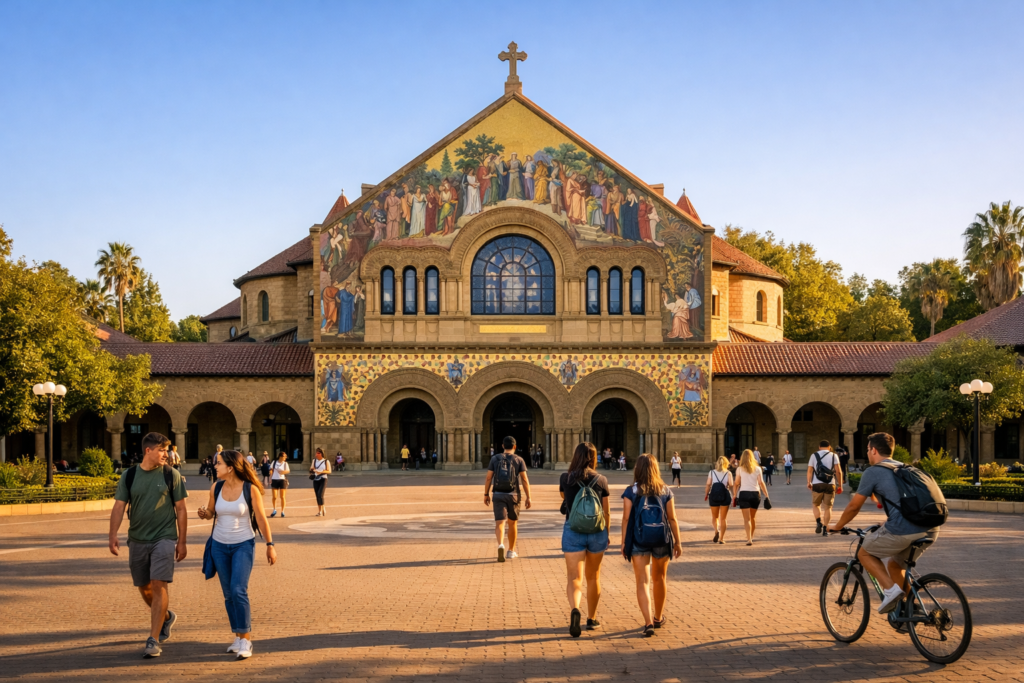
Stanford’s 8,180-acre campus is one of the most beautiful and resource-rich environments in American higher education. Students at Stanford have access to world-class facilities, a vibrant residential community, and a culture that emphasizes both academic excellence and personal well-being.
Academic Facilities
- Cecil H. Green Library — Main university library with over 9 million volumes
- Lane Medical Library — One of the largest medical libraries in the Western US
- d.school (Hasso Plattner Institute of Design) — A hub for design thinking and innovation
- Stanford Linear Accelerator Center (SLAC) — National research laboratory on campus
- Research labs across engineering, medicine, humanities, and sustainability
Student Life and Wellness
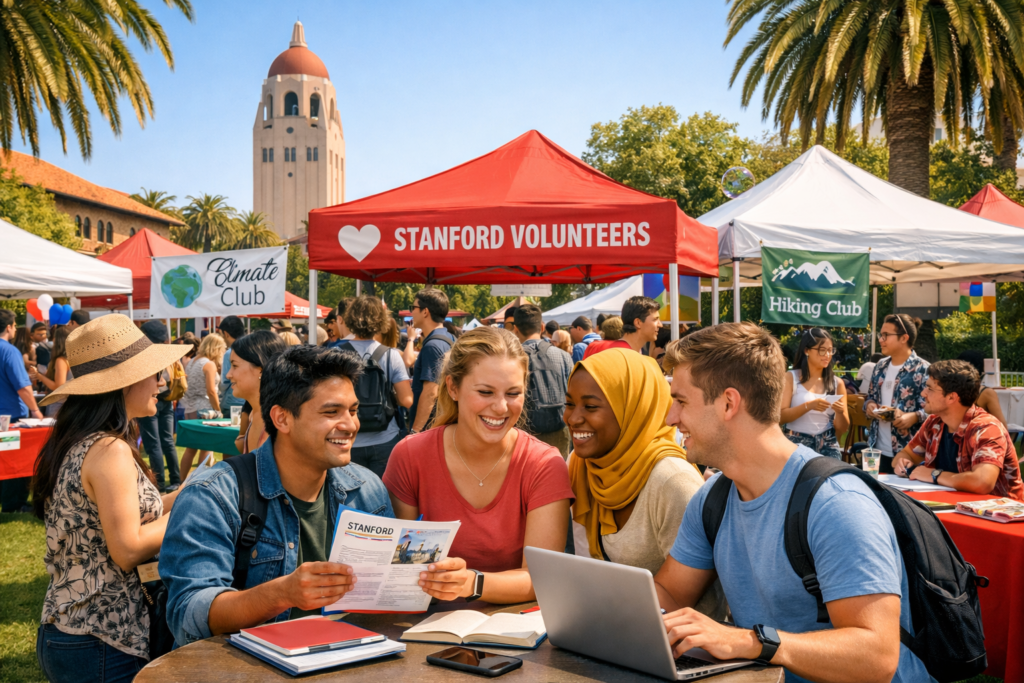
- Over 650 student organizations and clubs
- 30+ varsity sports and extensive intramural programs
- Vaden Health Center — Comprehensive on-campus health services
- Counseling and Psychological Services (CAPS) — Free mental health support
- Student Union, coffee shops, dining halls, and recreation centers
Residential Life
- Over 90 percent of undergraduates live on campus all four years
- Stanford guarantees housing for all four undergraduate years
- 98 residential communities including houses, co-ops, and themed dorms
- Graduate students have access to on-campus family housing and apartments
Read Also : University of Kansas (2026): Tuition, Acceptance Rate, Ranking, Scholarships & Is It Worth the Cost?
Stanford University Career Outcomes and Internships
Stanford University consistently produces graduates who go on to lead top organizations, found successful companies, and drive innovation across every major industry. The university’s proximity to Silicon Valley and its strong alumni network are key differentiators that translate directly into career outcomes.

Employment and Placement Statistics
- 95%+ of graduates employed or in graduate school within 6 months of graduation
- The Stanford Career Education office works with over 400+ employers annually
- Stanford alumni network spans 220+ countries and territories
- Stanford startups raise billions in venture capital every year
Average Starting Salaries by Field
| Field / Major | Average Starting Salary (USA) |
| Computer Science | $130,000–$175,000 |
| Electrical Engineering | $110,000–$150,000 |
| Economics | $85,000–$120,000 |
| MBA (Graduate) | $175,000–$210,000 |
| Law (JD) | $190,000+ (BigLaw firms) |
| Medicine (MD) | $55,000–$85,000 (residency); $250,000+ post-residency |
| Mechanical Engineering | $90,000–$130,000 |
| Human Biology / Pre-Med | $50,000–$75,000 (early career, before MD) |
Top Recruiters at Stanford
- Technology: Google, Apple, Meta, Microsoft, Amazon, Salesforce, Oracle
- Finance & Consulting: Goldman Sachs, McKinsey, Bain, Boston Consulting Group, JPMorgan Chase
- Healthcare & Biotech: Johnson & Johnson, Genentech, Pfizer, Kaiser Permanente
- Government & Nonprofits: U.S. Department of State, RAND Corporation, World Bank
- Startups: Hundreds of Silicon Valley startups recruit directly from Stanford’s campus
Read Also : University of Nebraska Lincoln (UNL): Complete Overview for US & International Students (2025–26)
Housing and Living Costs for Students
One of the most important budget considerations for prospective Stanford students particularly those relocating from other states or countries — is the cost of living in the San Francisco Bay Area, which ranks among the most expensive regions in the United States.

| Expense | On-Campus (Est.) | Off-Campus (Est.) |
| Housing (monthly) | $1,000–$1,500 (included in room & board) | $2,000–$3,500 (Palo Alto/Menlo Park area) |
| Meals (monthly) | $700–$900 (meal plan) | $500–$900 (groceries + dining out) |
| Transportation | Minimal (free shuttles on campus) | $100–$300/month (car or transit) |
| Utilities | Included in dorm costs | $100–$200/month |
| Health Insurance | ~$4,500/year (required if not covered) | Same |
| Personal/Miscellaneous | $300–$500/month | $400–$600/month |
| Estimated Monthly Budget | $2,000–$3,000 (on campus) | $3,500–$5,500 (off campus) |
On-campus housing is strongly recommended for undergraduates due to cost savings, safety, and community. Stanford guarantees housing for all four undergraduate years, which provides significant budget stability. Graduate students may find off-campus housing necessary due to limited on-campus availability, but should budget accordingly for Bay Area rental rates.
Read Also : Oklahoma State University 2026: Fees Jobs After Graduation & OPT for International Students
Final Verdict: Who Should Apply and Who Should Think Twice
Who Should Apply to Stanford University
- Students with a 3.9+ unweighted GPA and SAT/ACT scores in the top 1-2 percentile nationally
- Aspiring entrepreneurs, researchers, engineers, and medical professionals who want Silicon Valley proximity
- Students from families earning under $150,000 per year who qualify for free or deeply reduced tuition through need-based aid
- International students seeking a globally recognized US degree with strong career placement
- Students with exceptional extracurriculars, research experience, or demonstrated leadership
- Graduate students in STEM, law, business, or medicine seeking the highest-tier program available in the USA
Who Should Think Twice
- Students who prefer large lecture-based state university environments over Stanford’s research-intensive culture
- Students from mid-to-high-income families who do not qualify for financial aid and are not prepared for $90,000+ annual costs without scholarships
- Students who are not comfortable with an extremely high-pressure, competitive academic environment
- Those seeking a broad variety of on-campus social life centered around large public university events; Stanford’s culture is more innovation and research-focused
Ultimately, Stanford University is the right choice for highly motivated, academically exceptional students who are prepared to compete at the very highest level and want to be at the center of technology, research, and entrepreneurship in America. For students who qualify — and especially those who qualify for need-based aid Stanford may be the most valuable educational investment available in the United States.
Frequently Asked Questions — Stanford University 2026
What is the Stanford University acceptance rate in 2026?
Stanford University’s acceptance rate for the 2024-2025 admissions cycle was approximately 3.68 percent, making it one of the most selective universities in the United States. For 2026 entry, a similarly low acceptance rate is expected. Applicants should present exceptional academic records, standardized test scores, extracurricular achievements, and compelling personal essays to be competitive.
Does Stanford University offer full scholarships for international students?
Yes. Stanford University meets 100 percent of demonstrated financial need for all admitted students, including international students. This means international students who are admitted and demonstrate financial need may receive grants that cover tuition, room, board, and fees. Additionally, the Knight-Hennessy Scholars program provides full funding for select graduate students from around the world. Stanford does not offer merit-based scholarships, so all aid is based on demonstrated financial need as assessed through the CSS Profile.
What GPA and SAT score do I need for Stanford University admissions?
The middle 50 percent of admitted Stanford undergraduates typically have an SAT score between 1500 and 1580, and an ACT composite score between 34 and 36. Regarding GPA, most admitted students have an unweighted GPA of 3.9 or above, with significant AP, IB, or honors coursework. However, Stanford uses a holistic admissions process, meaning no single metric guarantees admission or rejection.
Is Stanford University worth the tuition cost for US students?
For most students — particularly those who qualify for financial aid — Stanford University is an exceptional value. Families earning under $75,000 pay no tuition and typically no room and board. Even for students who pay full cost, the average starting salary for Stanford graduates in computer science exceeds $130,000, providing a strong return on the educational investment. Stanford’s alumni network, employer relationships, and brand recognition continue to deliver career benefits decades after graduation.
What are the TOEFL and IELTS requirements for international students at Stanford?
International students whose primary language is not English must demonstrate English proficiency. Stanford University requires a minimum TOEFL iBT score of 100, though competitive applicants typically score 110 or above. For the IELTS Academic test, a minimum band score of 7.0 is required, with competitive applicants often scoring 7.5 or higher. Some applicants may submit Duolingo English Test scores (120+), though this is evaluated on a case-by-case basis.
What is the cost of living for students near Stanford University?
Stanford University is located in Palo Alto, California — one of the most expensive cities in the United States. Students living on campus can expect to pay approximately $21,894 per year for room and board (included in Stanford’s standard cost of attendance). Off-campus students in the surrounding Palo Alto or Menlo Park area should budget between $2,000 and $3,500 per month for rent alone. Overall monthly living costs for off-campus students range from $3,500 to $5,500 depending on lifestyle and location.
What are the best programs at Stanford University for career-focused students?
For students prioritizing career outcomes and earning potential, the highest-performing programs at Stanford include Computer Science (average starting salary $130,000-$175,000), Electrical Engineering ($110,000-$150,000), the MBA program from the Graduate School of Business ($175,000-$210,000), and the JD from Stanford Law School ($190,000+ at top law firms). Data Science, Statistics, and Management Science & Engineering also deliver strong employment and salary outcomes in the current job market.
When is the Stanford University application deadline for 2026 admission?
For the 2025-2026 admissions cycle (for students entering in fall 2026), Stanford’s Restrictive Early Action (REA) deadline is November 1. The Regular Decision deadline is January 2. Stanford does not offer a standard Early Decision process. REA applicants receive their decisions in mid-December, while Regular Decision applicants receive their results in late March. Note that Stanford’s Restrictive Early Action program requires that students apply to Stanford as their only private early-action institution.
Read Also : University of Kentucky Fees, Acceptance Rate, Housing & Job Opportunities

