

If you are planning to build a high-paying career in the USA financial sector, Sanctions Analyst jobs can be one of the smartest choices in 2026. With salaries crossing $120,000 and strong demand across banks, fintech companies, and consulting firms, this role offers long-term stability, job security, and global career opportunities. But the real question is — how do you actually get a sanctions analyst job in the USA, especially if you are a beginner or an international candidate?
In the modern global financial ecosystem, regulatory compliance has become one of the most critical pillars of banking and financial operations. With rising geopolitical tensions, increasing financial crimes, and stricter enforcement by United States regulatory authorities, the demand for Sanctions Analysts has grown significantly. Financial institutions are under constant pressure to ensure that they do not process transactions involving sanctioned countries, blacklisted individuals, or high-risk entities.
A Sanctions Analyst plays a crucial role in protecting the financial system from risks such as money laundering, terrorist financing, fraud, and sanctions violations. Every day, banks and fintech companies process millions of transactions, and even a single mistake can lead to heavy penalties or regulatory action. This is why companies invest heavily in compliance teams and hire skilled professionals who can identify and prevent financial risks.
Many job seekers struggle to understand how to enter the compliance field, what skills are required, and whether companies in the USA hire foreign candidates. They are often confused about concepts like AML, KYC, OFAC, and sanctions laws. In 2026, as regulations continue to evolve and financial crimes become more complex, the demand for compliance professionals is increasing rapidly, creating massive opportunities for students, job seekers, and working professionals.
This complete guide will help you understand everything you need to know about Sanctions Analyst jobs in USA, from basic concepts to advanced US laws, salary expectations, certifications, tools, interview questions, and step-by-step career strategies to get hired.
What Is a Sanctions Analyst Jobs in USA Role and Real Responsibilities
A Sanctions Analyst is a compliance professional responsible for monitoring financial transactions and ensuring that they comply with sanctions laws imposed by governments, especially the United States.
In simple terms, a Sanctions Analyst ensures that a company does not do business with restricted countries blacklisted individuals terrorist organizations or entities listed on government watchlists.
Every financial transaction processed by a bank or fintech company is checked through compliance systems. These systems generate alerts if there is a potential match with a sanctioned entity. A Sanctions Analyst investigates these alerts and decides whether the transaction is legitimate or should be blocked.
Daily responsibilities include screening transactions against sanctions lists investigating alerts escalating suspicious cases blocking or approving transactions, and maintaining records for audits. This role requires strong analytical skills, attention to detail, and a deep understanding of financial regulations.
What Are Sanctions in Sanctions Analyst Jobs in USA
Sanctions are economic or financial restrictions imposed by governments to control international activities and protect national interests. These restrictions are used to limit the activities of countries, organizations, or individuals involved in illegal or harmful activities.
Sanctions can include freezing assets blocking bank accounts, restricting financial transactions, and banning trade activities.
A real world example is when the United States and its allies imposed sanctions on Russia during geopolitical conflicts restricting banks from accessing global financial systems and freezing assets.
For a Sanctions Analyst, understanding sanctions is essential because every transaction must be checked to ensure compliance with these rules.
Read Also :
What Is the Purpose of Sanctions in Sanctions Analyst Jobs in USA
Sanctions are used as a strategic tool by governments to achieve specific objectives such as protecting national security enforcing foreign policy, preventing terrorism, and controlling illegal financial activities.
Sanctions help governments stop funding of terrorism prevent illegal trade control geopolitical risks, and influence international behavior.
A Sanctions Analyst ensures that these objectives are achieved by monitoring financial transactions and preventing violations.
Key US Laws You Must Know for Sanctions Analyst Jobs in USA
Understanding US laws is one of the most important aspects of becoming a Sanctions Analyst. These laws form the foundation of compliance frameworks in financial institutions.
The International Emergency Economic Powers Act (IEEPA) gives the US government authority to regulate financial transactions during national emergencies. This law is commonly used to impose sanctions.
The USA PATRIOT Act focuses on preventing terrorism and money laundering by requiring financial institutions to implement strong compliance systems.
The Trading with the Enemy Act allows the government to restrict trade with hostile nations.
The Anti-Terrorism Act targets financial activities linked to terrorism.
The Foreign Narcotics Kingpin Designation Act focuses on drug trafficking organizations.
The Clean Diamond Trade Act regulates the trade of diamonds to prevent conflict funding.
What Is OFAC in Sanctions Analyst Jobs in USA
OFAC, or the Office of Foreign Assets Control, is the primary US authority responsible for administering and enforcing economic sanctions.
OFAC maintains several sanctions lists, including the Specially Designated Nationals (SDN) list, which contains individuals and entities that US persons are prohibited from dealing with.
Financial institutions are required to screen customers and transactions against OFAC lists. If a match is found, the institution must take immediate action, which may include freezing assets or reporting the transaction.
For a Sanctions Analyst, OFAC compliance is one of the most critical responsibilities, as violations can result in heavy penalties.
Read Also :
Who Must Comply with OFAC Rules in Sanctions Analyst Jobs in USA
OFAC regulations have a broad scope and apply not only to US citizens and companies but also to foreign entities under certain conditions.
The rules apply to:
- US citizens, regardless of location
- US-based companies and their foreign branches
- Individuals and entities operating within the US
- Non-US companies involved in transactions using US dollars
This means that even foreign companies must comply with US sanctions if their transactions pass through the US financial system.
AML Process in Sanctions Analyst Jobs in USA Placement, Layering, Integration
Money laundering is the process of disguising illegal money to make it appear legitimate.
The first stage is placement, where illegal funds are introduced into the financial system.
The second stage is layering, where funds are moved through multiple transactions to hide their origin.
The third stage is integration, where funds are reintroduced into the economy as legitimate money.
A Sanctions Analyst must understand these stages to identify suspicious activities and prevent financial crimes.

What Is Terrorist Financing in Sanctions Analyst Jobs in USA
Terrorist financing involves providing funds to support terrorist activities. The source of funds can be legal or illegal, which makes it difficult to detect.
Funds can come from donations businesses, or criminal activities such as fraud and drug trafficking.
Unlike money laundering, which focuses on hiding illegal money, terrorist financing focuses on funding future illegal activities.
Difference Between Sanctions, AML, and KYC in Sanctions Analyst Jobs in USA
In the compliance and financial crime prevention domain, understanding the difference between Sanctions, AML, and KYC is extremely important. Many candidates preparing for interviews often confuse these three concepts, but in reality, they serve different purposes within a financial institution.
A Sanctions Analyst must clearly understand how each of these frameworks works because in real-world banking operations, all three are interconnected. KYC is used to identify the customer, AML is used to monitor the customer’s transactions, and Sanctions is used to restrict transactions involving prohibited entities.
To help you understand clearly, below is a detailed comparison table.
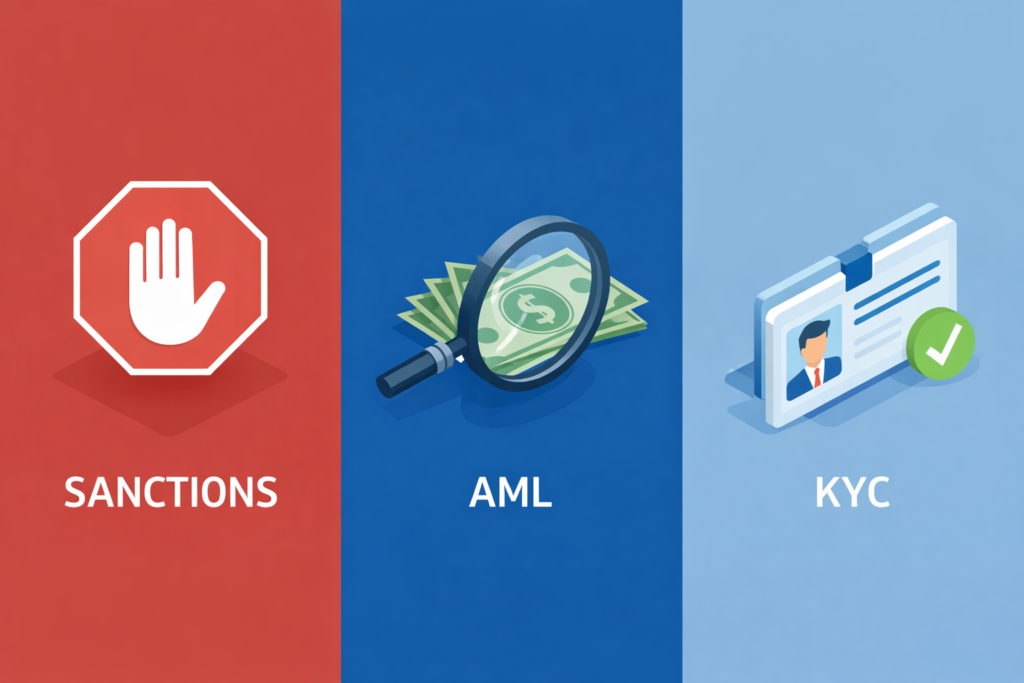
Sanctions vs AML vs KYC – Detailed Comparison Table
| Factor | Sanctions | AML (Anti-Money Laundering) | KYC (Know Your Customer) |
|---|---|---|---|
| Definition | Sanctions are restrictions imposed by governments to prevent transactions with specific countries, individuals, or entities. | AML is a regulatory framework designed to detect and prevent money laundering and financial crimes. | KYC is a process used to verify the identity of customers before establishing a business relationship. |
| Purpose | To enforce national security and foreign policy by restricting financial activities. | To detect suspicious activities and prevent illegal financial transactions. | To ensure that the customer is genuine and not involved in fraud or illegal activities. |
| Focus Area | Countries, individuals, entities listed on sanctions lists. | Financial transactions and behavior patterns. | Customer identity and background verification. |
| Example | Blocking a transaction with a sanctioned entity on the OFAC SDN list. | Reporting suspicious transactions through SAR. | Collecting ID proof before opening an account. |
| Authority | OFAC (Office of Foreign Assets Control). | FinCEN and global AML regulators. | Required under the USA PATRIOT Act and banking regulations. |
| Process | Screening customers and transactions against watchlists. | Monitoring transactions and reporting suspicious activities. | Collecting and verifying customer data. |
| Risk Type | Sanctions risk. | Financial crime risk. | Identity and fraud risk. |
| Output | Transaction blocked or escalated. | Suspicious Activity Report. | Customer verification and risk classification. |
| Stage | Applied during transactions. | Applied continuously. | Applied at onboarding. |
What Is Terrorist Financing in Sanctions Analyst Jobs in USA
Terrorist financing involves providing funds to support terrorist activities. Unlike money laundering which focuses on hiding illegal money, terrorist financing can involve both legal and illegal funds.
Sources of terrorist financing include:
- Donations and charities
- Business operations
- Criminal activities such as fraud or drug trafficking
One of the challenges in detecting terrorist financing is that the transactions may appear legitimate, making it harder to identify suspicious activities.
Read Also : University of Arizona Tuition Fees, Acceptance Rate, Admission, and Campus Life 2026
Difference Between Money Laundering and Terrorist Financing
This is one of the most common interview questions.
Money laundering involves hiding the proceeds of a crime that has already occurred. The goal is to make illegal money appear legal.
Terrorist financing, on the other hand, involves funding activities that may occur in the future. The source of funds can be legal or illegal.
While money laundering is typically a circular process, terrorist financing often follows a linear path from donor to recipient.

What Is CTR in Sanctions Analyst Jobs in USA
A Currency Transaction Report (CTR) is a regulatory requirement for financial institutions. It must be filed whenever a customer conducts cash transactions exceeding $10,000 in a single day.
CTR helps authorities track large cash movements and detect potential money laundering activities.
When CTR Must Be Filed in Sanctions Analyst Jobs in USA
CTR must be filed in several scenarios, including:
- When a single transaction exceeds $10,000
- When multiple transactions in a day total more than $10,000
- When transactions are conducted by or on behalf of the same individual
Financial institutions must file CTRs within 15 days of the transaction and retain records for five years.
What Information Is Required for CTR in Sanctions Analyst Jobs in USA
To file a CTR, financial institutions must collect detailed information about the individuals involved in the transaction.
This includes:
- Name and address
- Account details
- Social Security Number (SSN) or Employer Identification Number (EIN)
- Date of birth
- Occupation
- Identification documents
Accurate data collection is essential to ensure compliance and prevent regulatory violations.
What Is CIP (Customer Identification Program)
The Customer Identification Program (CIP) is a requirement under the USA PATRIOT Act. It ensures that financial institutions verify the identity of their customers before opening accounts.
At a minimum, institutions must collect:
- Name
- Date of birth
- Address
- Identification number
This process helps prevent identity fraud and financial crimes.
How Identity Is Verified in Sanctions Analyst Jobs in USA
Identity verification can be done using documentary and non-documentary methods.
Documentary verification involves checking official documents such as passports, driver’s licenses, or business registration certificates.
Non-documentary verification includes checking credit reports public databases, and other sources to confirm identity.
Institutions may also verify identity by contacting customers or checking references.
What Happens If Identity Cannot Be Verified
If a financial institution cannot verify a customer’s identity, it must take appropriate action.
This may include:
- Refusing to open the account
- Closing an existing account
- Restricting transactions
- Filing a Suspicious Activity Report (SAR)
These actions help reduce the risk of fraud and financial crime.
Recordkeeping Requirements in Sanctions Analyst Jobs in USA
Financial institutions are required to maintain records of customer information and transactions for at least five years.
These records include:
- Customer identity information
- Documents used for verification
- Methods of verification
- Any discrepancies and how they were resolved
Proper recordkeeping is essential for audits and regulatory compliance.
Watchlist Screening in Sanctions Analyst Jobs in USA
One of the core responsibilities of a Sanctions Analyst is screening customers against government watchlists.
These lists include:
- OFAC sanctions list
- Specially Designated Nationals (SDN) list
- Other government watchlists
If a match is found, the analyst must investigate and take appropriate action which may include blocking transactions or reporting the case.
Job Opportunities for Sanctions Analyst Jobs in USA
The demand for Sanctions Analysts is highest in major financial centers.
Top cities include:
- New York
- Washington DC
- Chicago
- San Francisco
- Dallas
- Austin
These cities offer the most opportunities due to the presence of banks, financial institutions, and regulatory bodies.
Top Companies Hiring Sanctions Analyst Jobs in USA
| Category | Top Companies | Key Advantages |
|---|---|---|
| Banks | JPMorgan Chase, Citi Bank, Bank of America, Wells Fargo | High job stability, structured career growth, strong compliance frameworks |
| Consulting Firms | Deloitte, EY, PwC, KPMG | Exposure to multiple clients, fast career progression, high learning curve |
| Fintech Companies | PayPal, Stripe, Coinbase | Higher salaries, modern tech environment, faster promotions |
Salary for Sanctions Analyst Jobs in USA
Salaries vary based on experience and location.
Entry-level analysts can earn between $65,000 and $85,000 per year. Mid-level professionals earn between $90,000 and $120,000, while senior analysts can earn up to $160,000 or more. Managers and senior compliance professionals can earn over $200,000 annually.
Bonuses and incentives can further increase earnings.
How Foreigners Can Get Sanctions Analyst Jobs in USA
Foreign candidates can work in the US through various visa options.
Common visas include:
- H1B visa for skilled workers
- L1 visa for internal company transfers
- OPT for international students
- Employer-sponsored Green Card
The best strategy is to gain experience in multinational companies and apply for internal transfers to the US.
Read Also :
Tools Used in Sanctions Analyst Jobs in USA
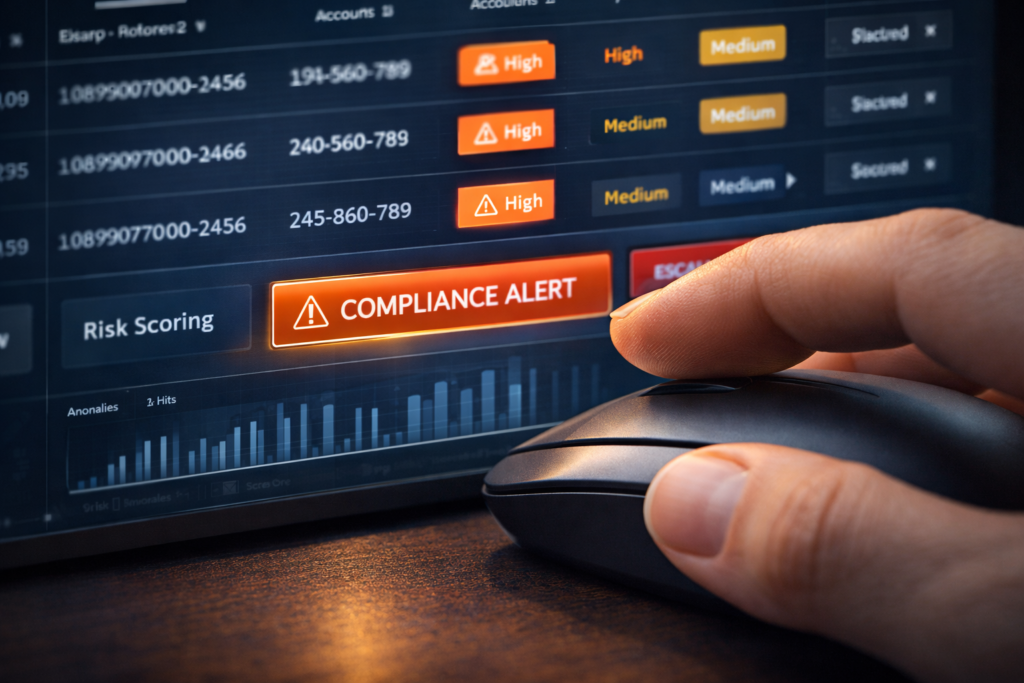
In the United States financial industry Sanctions Analysts rely heavily on advanced compliance and screening tools to detect suspicious activities and ensure regulatory compliance. These tools are designed to handle large volumes of transactions and identify potential risks in real time. Understanding these tools is essential not only for job performance but also for clearing interviews for Sanctions Analyst jobs in USA.
Some of the most commonly used tools include Fircosoft, NICE Actimize World-Check, LexisNexis, and Dow Jones Risk & Compliance. Fircosoft is widely used for sanctions screening and payment filtering, while NICE Actimize is used for transaction monitoring and fraud detection. World-Check is a global database used for customer risk profiling and identifying politically exposed persons (PEPs).
Employers in the USA prefer candidates who have hands-on experience or knowledge of these tools because it reduces training time and increases efficiency. Learning these tools can significantly increase your chances of getting hired and can also lead to higher salary packages.
Skills Required for Sanctions Analyst Jobs in USA
To succeed in Sanctions Analyst jobs in USA candidates need a combination of technical knowledge and analytical skills. This is not a routine job; it requires critical thinking, attention to detail, and the ability to make risk-based decisions.
Analytical skills are the most important because analysts must review complex transactions and identify suspicious patterns. Attention to detail is critical because even a small mistake can lead to regulatory penalties. Knowledge of AML, KYC, and sanctions regulations is essential for understanding compliance requirements.
Communication skills are also important because analysts must document their findings clearly and communicate with internal teams. Problem-solving skills help analysts make decisions when dealing with complex cases.
In the USA job market candidates who have both technical knowledge and soft skills are more likely to get higher-paying roles.
Certifications That Increase Salary in Sanctions Analyst Jobs in USA
Certifications play a major role in boosting salary and career growth in the compliance field. Many US employers prefer candidates who have professional certifications because it shows expertise and commitment to the field.
The most popular certification is CAMS (Certified Anti-Money Laundering Specialist). This certification is recognized globally and is highly valued in banks and financial institutions. Another important certification is CGSS (Certified Global Sanctions Specialist) which focuses specifically on sanctions compliance.
The CFE (Certified Fraud Examiner) certification is also useful for professionals who want to work in fraud investigation and financial crime.
Candidates with these certifications often earn higher salaries and have better job opportunities in the USA.

Read Also :
Sanctions Analyst Interview Questions in USA
Preparing for interviews is a critical step in getting a job in the USA. Employers test both theoretical knowledge and practical understanding.
Common interview questions include:
- What is OFAC and why is it important?
- What is the difference between AML and sanctions?
- What is a false positive in sanctions screening?
- Explain the stages of money laundering.
- What is CTR and when is it filed?
- What is KYC and why is it important?
Candidates should also be prepared to answer scenario-based questions, where they are given a case and asked how they would handle it. Practicing these questions can significantly improve interview performance.
Resume Tips for Sanctions Analyst Jobs in USA
A strong resume is essential for getting shortlisted for Sanctions Analyst jobs in USA. Recruiters in the USA prefer resumes that are clear, concise, and focused on relevant skills.
Your resume should highlight your knowledge of AML, KYC, sanctions, and compliance tools. If you have experience with tools like Fircosoft or Actimize, make sure to mention it clearly.
Use keywords such as “sanctions screening”, “transaction monitoring risk assessment”, and “compliance analysis” because many companies use Applicant Tracking Systems (ATS) to filter resumes.
Also, include measurable achievements, such as the number of alerts handled or reduction in false positives. This makes your profile more attractive to employers.
Career Growth Path in Sanctions Analyst Jobs in USA
The career path in sanctions compliance is well structured and offers significant growth opportunities. Most professionals start as KYC Analysts or AML Analysts and then move into Sanctions Analyst roles.
With experience, they can become Senior Analysts, Compliance Managers, or Financial Crime Specialists. At higher levels, professionals can move into roles such as Compliance Director or Head of Financial Crime.
Some professionals also transition into consulting roles, where they advise companies on compliance strategies and risk management.
This career path offers both vertical and lateral growth opportunities, making it a long-term career option.
Read Also : Uber Eats Driver in the USA – Salary, Skills, Visa, and Reality Check (2026)
Future Scope of Sanctions Analyst Jobs in USA
The demand for Sanctions Analysts is expected to grow significantly in the coming years. With increasing financial crime, digital payments, and cryptocurrency transactions, the need for compliance professionals is rising.
Governments are also introducing stricter regulations, which means companies will need more compliance staff. This makes sanctions compliance a future-proof career.
Automation and AI are being used to assist analysts, but they cannot replace human judgment. This ensures that Sanctions Analyst jobs will continue to exist and grow.
For job seekers, this means long-term job security and career growth.
Common Mistakes to Avoid in Sanctions Analyst Jobs in USA
Many beginners make mistakes that can affect their career growth. One common mistake is ignoring documentation. Every decision must be properly documented because regulators may review it.
Another mistake is not understanding the difference between true matches and false positives. This can lead to incorrect decisions.
Lack of knowledge about regulations is another major issue. Analysts must stay updated with changing laws and compliance requirements.
Avoiding these mistakes can help you build a successful career in sanctions compliance.
Final Verdict – Should You Choose Sanctions Analyst Jobs in USA in 2026
Sanctions Analyst jobs in USA are one of the most stable, high-paying and future-proof careers in the financial sector. With increasing regulations and global financial risks, the demand for compliance professionals is continuously growing.
For USA residents, this career offers strong job security high salaries and growth opportunities. For international candidates, it provides a realistic pathway to enter the US job market.
For content creators and bloggers, this niche offers extremely high CPM due to finance and legal keywords, making it one of the best niches for monetization.
If you are looking for a long-term career or high income blogging niche, Sanctions Analyst jobs in USA is a powerful option.
Read Also : Forklift Operator Jobs in USA 2026: High Paying Career Guide, Salary, Visa & Future Trends
Sanctions Analyst Jobs – Top 8 SEO FAQs
What does a Sanctions Analyst do?
A Sanctions Analyst reviews financial transactions and customer data to ensure companies do not deal with sanctioned individuals, organizations, or countries. They investigate alerts and ensure regulatory compliance.
What is the salary of a Sanctions Analyst in the USA?
The average salary of a Sanctions Analyst in the USA ranges from $60,000 to $110,000 per year, with senior roles earning $120,000 or more.
What skills are required for a Sanctions Analyst?
Key skills include analytical thinking, attention to detail AML/KYC knowledge, risk assessment, and experience with compliance tools.
What qualifications are needed for a Sanctions Analyst job?
Most roles require a bachelor’s degree in finance, business, or law. Certifications in AML or sanctions compliance can improve job opportunities.
. What is sanctions screening?
Sanctions screening is the process of checking customers and transactions against global sanctions lists to identify restricted or banned entities.
What is the difference between AML Analyst and Sanctions Analyst?
An AML Analyst focuses on detecting money laundering, while a Sanctions Analyst ensures compliance with sanctions laws and prevents dealings with restricted entities.
. Is Sanctions Analyst a good career in the USA?
Yes, it is a high-demand and stable career due to strict financial regulations, offering good salaries and growth opportunities.
How can I become a Sanctions Analyst?
Start with a degree in finance or a related field, gain AML/KYC knowledge, apply for entry-level compliance roles, and consider certifications for career growth.

