Harvard University Cambridge: An Overview
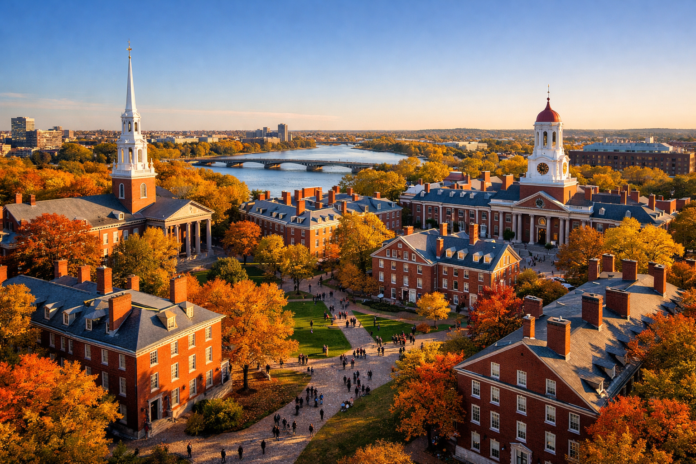
Harvard University, located in Cambridge, Massachusetts is widely regarded as one of the most prestigious institutions of higher learning in the world. Founded in 1636, it holds the distinction of being the oldest university in the United States. For any student asking where is Harvard University Cambridge, the answer is straightforward: the main campus sits in Cambridge MA, directly across the Charles River from downtown Boston, at the address 86 Brattle Street, Cambridge, MA 02138.
Harvard University Cambridge MA is a private Ivy League research university operating at the R1 doctoral classification, the highest research activity level recognized by the Carnegie Classification of Institutions of Higher Education. The university spans more than 200 acres, encompasses 12 degree-granting schools and enrolls approximately 23,000 students across undergraduate graduate, and professional programs.
Key Institutional Facts
| Category | Details |
| Type | Private Ivy League Research University |
| Founded | 1636 |
| Location | Cambridge, Massachusetts (Cambridge MA) |
| Address | Massachusetts Hall, Cambridge, MA 02138 |
| Endowment | Approximately $50.9 billion (2023) |
| Total Enrollment | ~23,000 students |
| Athletic Conference | Ivy League (NCAA Division I – no athletic scholarships) |
| Research Classification | R1: Doctoral University – Very High Research Activity |
| Accreditation | New England Commission of Higher Education (NECHE) |
| Website | harvard.edu |
A common question students ask is: is Harvard University in Boston or Cambridge? The answer is Cambridge. While Boston is only minutes away and the two cities share a metro area, Harvard’s main campus is situated in Cambridge, Massachusetts. A smaller portion of the university, including Harvard Medical School and Harvard School of Public Health, is located in Boston’s Longwood Medical Area.
Why Choose Harvard University Cambridge MA
For US students and international applicants alike choosing a university is one of the most consequential financial and academic decisions of their lives. Harvard University Massachusetts offers a combination of academic prestige network access research resources, and career outcomes that is difficult to match anywhere in the world.
Return on Investment (ROI)
Harvard ranks consistently among the top universities in the United States for graduate earnings. According to data from the U.S. Department of Education College Scorecard the median annual earnings of Harvard graduates ten years after enrollment exceed $92,000. For professional school graduates in law, medicine, and business, those figures climb considerably higher. When weighed against Harvard’s robust financial aid program the net cost for many families is significantly lower than the sticker price suggests.
Job Outcomes and Employer Recognition
Harvard’s name carries enormous weight with employers across every sector. The Harvard brand opens doors in finance, consulting, technology, government medicine law, and academia. The university’s alumni network spans more than 371,000 living graduates in over 190 countries, providing students with unparalleled professional connections.
Campus Reputation and Global Standing
Harvard University Cambridge consistently ranks among the top three universities globally in the QS World University Rankings, Times Higher Education World University Rankings and Academic Ranking of World Universities (Shanghai Rankings). Its faculty includes more than 160 Nobel Prize winners and Fields Medal recipients. The university library system, the largest academic library in the world with over 20 million volumes, and 100+ research centers and institutes support cutting-edge scholarship across every field.
Why Cambridge Massachusetts Harvard University Is an Ideal Base
The city of Cambridge, Massachusetts is one of the most intellectually vibrant places in the United States. Sharing a city with MIT and surrounded by a dense ecosystem of biotechnology firms, financial institutions, startups, and hospitals, Cambridge offers Harvard students extraordinary opportunities for internships, research collaborations, and employment. Boston, reachable within 15 to 20 minutes, adds a major city’s full range of cultural, professional, and social resources.
Read Also : University of Colorado Boulder – Admissions, Programs, Fees, Scholarships & Career Outcomes (2026)
Popular Academic Programs at Harvard University Cambridge
Harvard University Massachusetts offers programs across virtually every academic discipline through its 12 schools and the Harvard Radcliffe Institute. Below is a guide to the most in-demand programs for both undergraduate and graduate students.

Undergraduate Programs (Harvard College)
Harvard College offers the A.B. (Bachelor of Arts) and S.B. (Bachelor of Science) degrees. Students concentrate in one of more than 50 fields of study. The most popular concentrations include:
- Computer Science – One of the fastest-growing programs at Harvard, with strong ties to the tech industry and leading research labs.
- Economics – Consistently one of the most chosen concentrations; prepares graduates for careers in finance, consulting, policy, and graduate study.
- Applied Mathematics – A rigorous quantitative degree with applications in data science, engineering, and finance.
- Government – Ideal for students pursuing careers in politics, international relations, public policy, or law.
- Molecular and Cellular Biology – A gateway to medical school and biomedical research careers.
- History – One of Harvard’s oldest and most distinguished programs, excellent for students interested in law, media, or academia.
- Psychology – Combines experimental science with social insight, with strong placement into clinical, research, and organizational roles.
- Social Studies – An interdisciplinary program integrating political theory, economics, history, and sociology.
Graduate and Professional Programs
- Harvard Business School (MBA, Executive Education) – Consistently ranked among the top two business schools globally; case-method curriculum; strong placement in consulting, finance, and entrepreneurship.
- Harvard Law School (J.D., LL.M., S.J.D.) – One of the oldest and most influential law schools in the United States; graduates include sitting U.S. Supreme Court justices and heads of state.
- Harvard Medical School (M.D., Ph.D.) – Located in Boston’s Longwood Medical Area; affiliated with world-class teaching hospitals including Massachusetts General Hospital and Brigham and Women’s Hospital.
- Harvard Kennedy School (MPA, MPP, Ph.D.) – The leading public policy school in the U.S., with deep government and nonprofit sector connections.
- Harvard Graduate School of Arts and Sciences (Ph.D., A.M.) – Houses doctoral programs across the humanities, social sciences, and natural sciences.
- Harvard School of Engineering and Applied Sciences (S.M., Ph.D.) – Growing rapidly with strengths in computer science, data science, robotics, and bioengineering.
- Harvard T.H. Chan School of Public Health (MPH, Sc.D.) – A top-ranked public health school with global research impact.
- Harvard Graduate School of Education (Ed.M., Ed.D.) – Prepares leaders in education policy, teaching, and administration.
Read Also : University of Pennsylvania Tuition Fees, Acceptance Rate, Admission, and Campus Life 2026
Admission Requirements for Harvard University Cambridge MA
Harvard University Cambridge is among the most selective universities in the world. For the Class of 2028, Harvard admitted approximately 3.6% of applicants, making it one of the most competitive undergraduate admissions processes in the United States.
Undergraduate Admissions: US Students
- Application Platforms: Common Application, Coalition Application, or QuestBridge Application
- Application Deadlines: Restrictive Early Action (REA) – November 1; Regular Decision – January 1
- SAT/ACT: Test-optional policy extended; when submitted, admitted students typically score 1580–1600 (SAT) or 35–36 (ACT)
- GPA: No minimum, but nearly all admitted students rank at or near the top of their high school class
- Essays: Harvard requires the Common App essay plus Harvard supplemental essays including a ‘Why Harvard’ component
- Letters of Recommendation: Two teacher recommendations and one counselor recommendation required
- Extracurriculars: Harvard values sustained leadership, community impact, and intellectual curiosity in activities
- Application Fee: $85 (waivers available for eligible students)
Undergraduate Admissions: International Students
International students at Harvard University Cambridge MA are held to the same academic standards as domestic applicants. Additional requirements include:
- English Proficiency: TOEFL iBT minimum score of 100 (Harvard has no official minimum but competitive applicants typically score 110+); IELTS minimum overall band of 7.0 is generally expected
- Secondary School Transcripts: Official transcripts from all secondary schools attended, with certified English translations if applicable
- Financial Documentation: International students must demonstrate ability to fund education; however, Harvard meets 100% of demonstrated financial need for admitted international undergraduates
- CSS Profile: Required for financial aid consideration in addition to the FAFSA (for eligible students)
- Credential Evaluation: International credentials evaluated directly by Harvard’s admissions office without requiring a third-party evaluation service
Graduate Admissions Requirements
Graduate program requirements vary by school and department. General expectations across most Harvard graduate programs include:
- Bachelor’s degree from an accredited institution with strong academic performance
- GRE or GMAT scores (requirement varies by program; many programs have made these optional post-COVID)
- Statement of purpose, letters of recommendation (typically three), and writing samples where applicable
- TOEFL iBT of 80 minimum for most programs; many programs require 100 or above; IELTS of 6.5 to 7.0 minimum depending on program
- Professional work experience is required for MBA, MPP, MPA, and several professional master’s programs
Tuition and Fees at Harvard University Cambridge (2025–2026)
Harvard University is a private institution and does not differentiate between in-state and out-of-state tuition rates for US students. All students pay the same tuition regardless of their state of residence.
Harvard College Undergraduate Costs (2025–2026 Academic Year)
| Cost Category | Amount (USD) |
| Tuition | $59,320 |
| Student Services Fee | $4,195 |
| Room (on-campus) | $12,040 |
| Board (meal plan) | $7,268 |
| Personal Expenses (estimated) | $3,500 |
| Books and Supplies (estimated) | $1,000 |
| TOTAL Cost of Attendance | ~$87,323 |
Note: Harvard does not have separate in-state or out-of-state tuition. All undergraduate students, whether from Massachusetts, another US state, or an international country, pay the same tuition rate.
Graduate and Professional School Tuition (2025–2026 Estimated)
| School / Program | Annual Tuition (USD) |
| Harvard Business School (MBA) | ~$76,800 |
| Harvard Law School (J.D.) | ~$72,000 |
| Harvard Medical School (M.D.) | ~$69,100 |
| Harvard Kennedy School (MPP/MPA) | ~$59,000 |
| Harvard School of Engineering & Applied Sciences (S.M.) | ~$56,000 |
| Harvard T.H. Chan School of Public Health (MPH) | ~$59,000 |
| Harvard Graduate School of Education (Ed.M.) | ~$57,000 |
| Harvard Graduate School of Arts & Sciences (Ph.D.) | Typically Fully Funded |
Ph.D. students admitted to Harvard’s Graduate School of Arts and Sciences typically receive full tuition coverage plus a stipend as part of their funding package. This makes doctoral programs at Cambridge Massachusetts Harvard University significantly more accessible than professional master’s degrees.
Read Also : University of Arizona Tuition Fees, Acceptance Rate, Admission, and Campus Life 2026
Scholarships and Financial Aid at Harvard University Cambridge MA
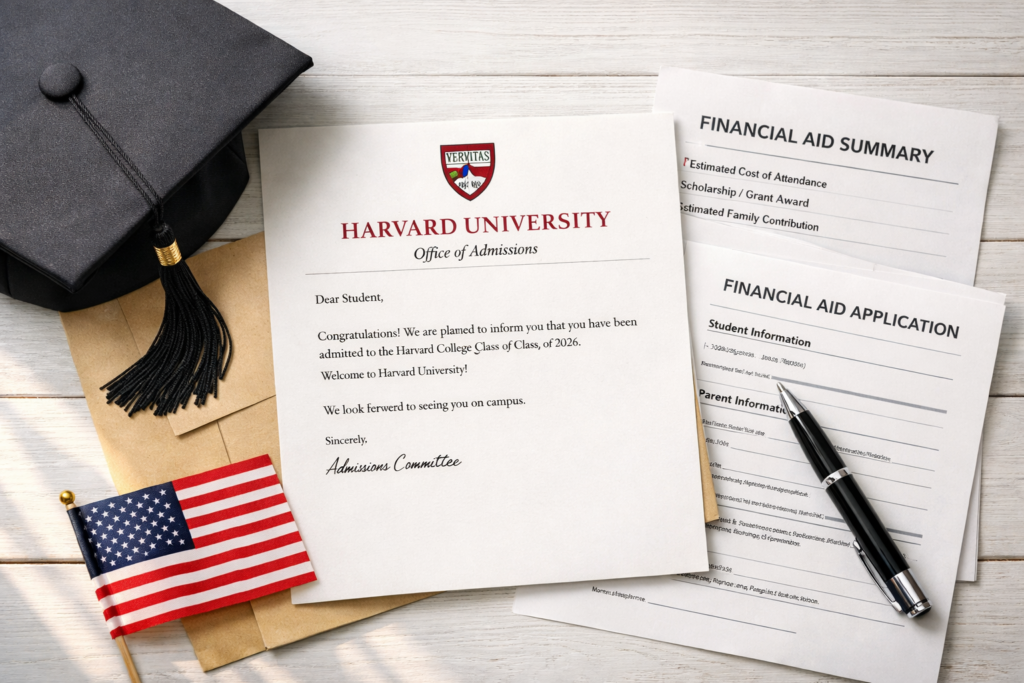
Harvard University operates one of the most generous need-based financial aid programs in the United States. The university meets 100% of demonstrated financial need for all admitted undergraduate students, including international students, with no loans required in its financial aid packages (as of 2023, Harvard replaced all loans with grants).
Harvard Undergraduate Financial Aid Summary
| Family Income Range | Estimated Harvard Contribution | Key Notes |
| Under $85,000/year | $0 (families pay nothing) | Full grant coverage; no tuition, room, or board expected |
| $85,000 – $150,000/year | Up to 10% of income | Significantly subsidized; grants cover most costs |
| $150,000 – $200,000/year | Varies; still substantial aid | Aid available based on assets and family circumstances |
| Above $200,000/year | Merit + need analysis | Aid available based on full financial review |
| International Students | Same need-based formula | Harvard meets 100% of need for all admitted internationals |
Key Scholarships and Aid Programs
| Scholarship / Program | Type | Value | Eligibility |
| Harvard Financial Aid Initiative | Need-Based Grant | Up to full COA | All admitted undergrads; families under $85K pay $0 |
| Harvard Scholarship | Need-Based Grant | Varies | Awarded to ~55% of undergraduates |
| QuestBridge National College Match | Need-Based Full Scholarship | Full 4-year scholarship | Low-income high-achieving students; US citizens/residents |
| Harvard Graduate Fellowship | Fellowship | Tuition + Stipend | Ph.D. students in GSAS; highly competitive |
| Harvard Kennedy School Fellowship | Need + Merit | Partial to Full | MPP/MPA students; varies by program and need |
| Harvard Business School Fellowship | Need-Based | Partial | MBA students with demonstrated financial need |
| External Scholarships (e.g., Fulbright) | Merit-Based | Varies | International and US students; government-sponsored |
The average Harvard financial aid grant for the 2024–2025 year was approximately $62,650, bringing the average net cost for aided students to around $15,000 or less. Students and families are encouraged to use Harvard’s Net Price Calculator on the admissions website to estimate their personalized cost.
Read Also : Iowa State University Cost of Attendance 2026: Tuition Fees, Admission, Jobs, Salary & Living in Ames Iowa
Campus Life and Student Facilities at Harvard University Cambridge
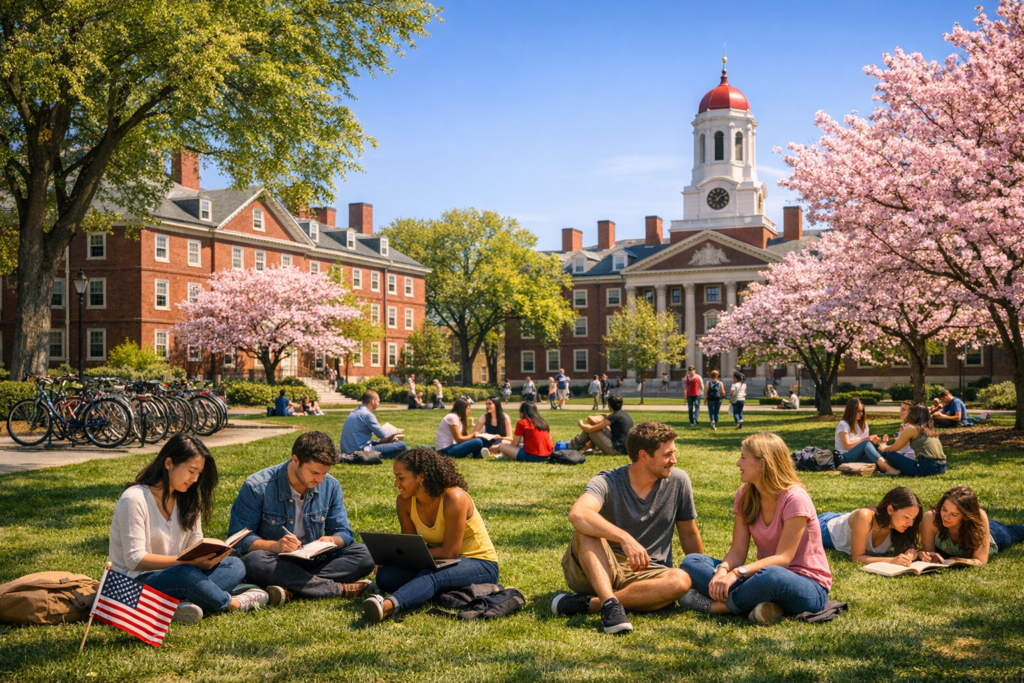
Harvard University Cambridge offers one of the richest campus experiences in American higher education. The main campus in Cambridge MA covers approximately 209 acres and is distinguished by historic red-brick buildings, green quads, and world-class academic and cultural facilities.
Housing and Residential Life
All Harvard College freshmen are housed together in the Yard, the historic central campus. After freshman year, students are assigned to one of 12 residential Houses through the House lottery. Each House is a self-contained community with its own dining hall, library, fitness facilities, and Master (Faculty Dean). This residential model fosters deep community ties and is a defining feature of the Harvard undergraduate experience.
Academic Facilities
- Harvard Library System: Over 70 libraries with more than 20 million volumes; includes Widener Library, one of the most famous academic libraries in the world
- Science Center and Laboratories: State-of-the-art research facilities used by both undergraduates and graduate researchers
- Harvard Art Museums: Houses over 250,000 works of art in three interconnected museums (Fogg, Busch-Reisinger, Arthur M. Sackler)
- Harvard Museum of Natural History: Features world-renowned collections including the Glass Flowers
- Cabot Science Library and Gordon McKay Library: Dedicated STEM research spaces
Student Life and Activities
- Harvard has over 450 student organizations covering academics, arts, athletics, culture, politics, and community service
- The Harvard Crimson is the student newspaper; the Lampoon is the nation’s oldest humor magazine
- Club and varsity sports are offered across 42 varsity sports teams; Harvard competes in the Ivy League in NCAA Division I
- The Harvard Square neighborhood surrounding the campus is a vibrant commercial and cultural district with restaurants, bookstores, cinemas, and performance venues
- Boston and the greater Cambridge MA metro area provide access to world-class museums, music, sports, and professional networking
Health and Wellness
Harvard University Health Services (HUHS) provides comprehensive medical, mental health, and wellness services to students on the Cambridge campus. Mental health counseling, crisis support, and preventive care are available. Graduate students have access to additional health resources through their respective schools.
Read Also : University of Kansas (2026): Tuition, Acceptance Rate, Ranking, Scholarships & Is It Worth the Cost?
Career Outcomes and Internships: Harvard University Cambridge MA
One of the most compelling reasons to attend Harvard University Cambridge is the extraordinary career trajectory of its graduates. Harvard’s Office of Career Services (OCS) and individual school career centers provide robust support for students seeking employment, internships, and graduate school placement.

Employment and Placement Outcomes
| Metric | Data |
| Employment Rate (within 6 months of graduation) | ~94–97% for undergraduates |
| Median Starting Salary (undergraduate) | ~$80,000–$95,000/year |
| MBA Graduate Median Base Salary | ~$175,000–$185,000/year |
| Law School Graduate Median Starting Salary | ~$215,000 (Big Law) / $65,000–$80,000 (public interest) |
| Medical School Graduates Match Rate | ~98%+ (NRMP match) |
| Percentage Pursuing Graduate Study | ~25–35% within 5 years |
Top Recruiters at Harvard University Cambridge
- Consulting: McKinsey & Company, Boston Consulting Group (BCG), Bain & Company, Deloitte
- Finance: Goldman Sachs, Morgan Stanley, JP Morgan, Blackstone, Bridgewater Associates
- Technology: Google, Microsoft, Amazon, Apple, Meta, Salesforce
- Healthcare & Biotech: Massachusetts General Hospital, Moderna, Pfizer, Genentech
- Government & Policy: U.S. State Department, World Bank, United Nations, White House Fellows Program
- Law: Sullivan & Cromwell, Cravath, Skadden Arps, WilmerHale
- Nonprofit & Social Impact: Gates Foundation, Teach for America, Bloomberg Philanthropies
Internship Ecosystem in Cambridge MA
The geographic advantage of being at Harvard University Cambridge MA cannot be overstated. Cambridge and Boston together form one of the densest concentrations of biotechnology, technology, finance, healthcare, and consulting firms in the United States. Students have access to internships at hundreds of companies within commuting distance. Harvard’s Handshake platform, employer-in-residence programs, and career fairs connect students directly with leading organizations year-round.
The Harvard alumni network further accelerates career outcomes. Harvard’s alumni database, accessible through the Harvard Alumni Association, allows current students to connect with graduates across every industry, geography, and role type. Harvard alumni actively mentor current students, refer them for positions, and hire them into their organizations.
Read Also : University of Nebraska Lincoln (UNL): Complete Overview for US & International Students (2025–26)
Housing and Living Costs for Students at Harvard University Cambridge MA
Understanding the full cost of attending Harvard University in Cambridge, Massachusetts requires accounting for both on-campus and off-campus living expenses. While Harvard’s financial aid program significantly reduces costs for eligible students, here is a realistic breakdown for planning purposes.
On-Campus Housing Costs (Harvard College)
| Housing Category | Annual Cost (Estimated) |
| Freshman Dorm (Harvard Yard) | Included in standard room cost: ~$12,040/year |
| Upperclass House (Singles) | ~$11,500–$13,000/year |
| Upperclass House (Shared/Doubles) | ~$10,000–$11,500/year |
| Meal Plan (Required for Freshmen) | ~$7,268/year |
Off-Campus Living Costs in Cambridge MA
| Expense Category | Monthly Estimate (USD) |
| Rent (Studio/1BR in Cambridge) | $2,200 – $3,500 |
| Shared Apartment (per person) | $1,200 – $2,000 |
| Groceries | $300 – $500 |
| Transportation (MBTA Pass) | $90 – $100 |
| Utilities (electricity, internet) | $100 – $200 |
| Health Insurance (if not on Harvard plan) | $200 – $400 |
| Total Estimated Monthly Budget | $2,000 – $4,700 (varies widely) |
Cambridge Massachusetts is one of the more expensive cities in the United States for renters, reflecting the high demand from Harvard, MIT, and the dense tech and biotech sector. Graduate students in professional programs, who often live off-campus, should budget carefully. Many graduate programs include housing stipends or subsidized dormitory options to help manage these costs.
Cambridge MA Harvard University provides a free shuttle system connecting the main campus to Harvard Medical School in Boston, satellite campuses, and nearby T (subway) stops, reducing commuting costs. The Harvard University address Cambridge MA is well served by the MBTA Red Line at Harvard Square, making car ownership unnecessary for most students.
Read Also : Oklahoma State University 2026: Fees Jobs After Graduation & OPT for International Students
Final Verdict: Who Should Apply to Harvard University Cambridge – and Who Should Think Twice
Who Should Apply
- High-achieving students from any background who have demonstrated intellectual curiosity, leadership, and sustained commitment to their interests
- Students who need significant financial aid: Harvard’s financial aid program is among the most generous in the U.S., and students from families earning under $85,000 per year effectively attend for free
- International students seeking a world-class English-language education with strong career access to the U.S. job market and global alumni network
- Career-focused students in law, medicine, business, public policy, or technology who want the full weight of the Harvard brand behind their credentials
- Research-oriented students seeking access to cutting-edge labs, world-renowned faculty, and a community of driven intellectual peers
- Students interested in entrepreneurship: Cambridge Massachusetts and Harvard’s i-lab (Harvard Innovation Labs) provide extraordinary resources for founders
Who Should Think Carefully Before Applying
- Students who have not researched whether Harvard’s curriculum and culture align with their specific goals: Harvard is not the best fit for every student, even highly qualified ones
- Students seeking a low-pressure academic environment: Harvard’s academic culture is demanding and competitive
- Students who need athletic scholarships: Harvard and all Ivy League schools do not award athletic scholarships; student-athletes must qualify for need-based aid independently
- Students not prepared for the realities of living in one of the most expensive metro areas in the United States without adequate financial planning
- Graduate students primarily motivated by name prestige without a clear plan for how a Harvard degree serves their specific career goals: the ROI is highest when students have a targeted plan
Summary
Harvard University Cambridge MA is a transformational institution that opens doors few other universities in the world can match. For the right student with the right preparation and goals, the combination of academic excellence, financial aid generosity, career outcomes, and network access makes it a compelling choice in 2026. The key is honest self-assessment and a thorough application that demonstrates what makes you uniquely suited to contribute to and benefit from the Harvard community.
Frequently Asked Questions About Harvard University Cambridge
Is Harvard University and Cambridge University the Same?
No. Harvard University and Cambridge University (formally the University of Cambridge) are two completely separate and independent institutions. Harvard University is located in Cambridge, Massachusetts, USA, and was founded in 1636. The University of Cambridge is located in Cambridge, England, United Kingdom, and was founded in 1209. The name similarity is not a coincidence – the Massachusetts city of Cambridge was named in 1638 in honor of the English city of Cambridge, home to the English university that many of Harvard’s early founders attended. Despite frequent confusion, the two universities have no formal institutional connection and operate as entirely distinct entities.
Is Harvard University in Boston or Cambridge?
Harvard University is in Cambridge, Massachusetts, not Boston. The main campus of Harvard University Cambridge is situated in the city of Cambridge, separated from Boston by the Charles River. However, several of Harvard’s professional schools are located in Boston. Harvard Medical School, Harvard School of Dental Medicine, and the T.H. Chan School of Public Health are all based in the Longwood Medical Area of Boston. For all practical purposes, the heart of Harvard – Harvard Yard, Harvard College, most graduate programs, and the administrative core – is firmly in Cambridge MA.
Is Harvard University in Cambridge?
Yes. Harvard University is in Cambridge, Massachusetts. The official Harvard University address Cambridge MA for the main campus is Massachusetts Hall, Cambridge, MA 02138. The Harvard Square area of Cambridge has become synonymous with the university, and the surrounding neighborhood reflects Harvard’s deep roots in the city. So when people ask is Harvard University located in Cambridge Massachusetts, the answer is an unambiguous yes.
Where Is Harvard University Cambridge?
Harvard University Cambridge is located at the heart of Cambridge, Massachusetts, in the Greater Boston metropolitan area of the United States. The main entrance to the campus is at Harvard Square, accessible via the MBTA Red Line subway. The Harvard University Cambridge address for general correspondence and admissions is: Harvard University, Massachusetts Hall, Cambridge, MA 02138. The campus spans across Cambridge with several key buildings and facilities, and extends into Boston for its medical and public health schools.
How Close Are Harvard and Cambridge University?
Harvard University in Cambridge, Massachusetts, and the University of Cambridge in Cambridge, England, are approximately 3,300 miles (5,300 kilometers) apart, separated by the Atlantic Ocean. A direct flight from Boston Logan International Airport (the nearest major airport to Harvard) to London Heathrow, followed by a train journey to Cambridge, England, takes approximately 8 to 9 hours of total travel time. So while the two universities share a name and some historical heritage, they are geographically on opposite sides of the world. There is no physical proximity between them.
Is Cambridge University Better Than Harvard?
This is a subjective question that depends heavily on the field of study, type of program, and individual student’s goals. Both institutions consistently rank among the top three universities in the world. In global rankings, Harvard and Cambridge trade positions depending on the ranking methodology used. For STEM, medicine, and economics, both are considered elite. For humanities and certain sciences, Cambridge holds particular distinction. For business (MBA), law (J.D.), and public policy, Harvard’s professional schools are often ranked first globally. For US students seeking US employment and networking, Harvard’s Cambridge MA location and its deep ties to the American professional world typically represent a stronger ROI. For UK-based careers or European academic networks, Cambridge may offer distinct advantages. The honest answer is that both institutions offer transformational educations, and the question of which is better is largely unanswerable in a universal sense.
What Is the Address of Harvard University Cambridge MA?
The main address for Harvard University is: Massachusetts Hall, Cambridge, MA 02138, United States. For undergraduate admissions, the address is: Harvard College Admissions & Financial Aid, 86 Brattle Street, Cambridge, MA 02138. For general university contact, you can also use the central Harvard University address: Harvard University, Cambridge, MA 02138. The main campus is accessed via Harvard Square, Cambridge MA 02138, and the MBTA Red Line Harvard Square station is directly adjacent to the main gate of the campus.
Is Harvard University Located in Cambridge Massachusetts?
Yes, Harvard University is located in Cambridge, Massachusetts. Cambridge is an independent city in Middlesex County, Massachusetts, situated directly north of Boston across the Charles River. Harvard’s main campus, including Harvard Yard, the 12 residential Houses, Harvard College, most graduate schools, and the central administrative buildings, is located in Cambridge MA. The university has been anchored in Cambridge since its founding in 1636, making it the oldest institution in what is now the city of Cambridge, Massachusetts.
What City Is Harvard University Located In?
Harvard University is located in Cambridge, a city in Massachusetts, USA. While Harvard is closely associated with the Boston metropolitan area and is frequently described in shorthand as a Boston university, it is technically and administratively located in Cambridge – a separate city with its own government, zip codes, and identity. Cambridge MA Harvard University has been intertwined since the city’s founding, and today the university’s presence shapes the character, economy, and culture of the entire city.
Conclusion: Harvard University Cambridge MA in 2026
Harvard University Cambridge MA remains, in 2026, one of the most consequential educational investments a student can make. Its combination of academic depth, financial aid accessibility, research infrastructure, career outcomes, and global alumni network makes it exceptional for the right applicant. Whether you are a domestic US student from any background, an international student seeking a US Ivy League education, or a parent evaluating where to guide your child’s ambitions, understanding what Harvard offers in concrete, practical terms is the first step toward an informed decision.
Use this guide as your starting point. Visit harvard.edu for the most current application requirements, financial aid calculators, and program listings. And remember: while Harvard’s acceptance rate is low, its financial aid program ensures that for students who are admitted, cost is rarely the barrier it might appear to be.

