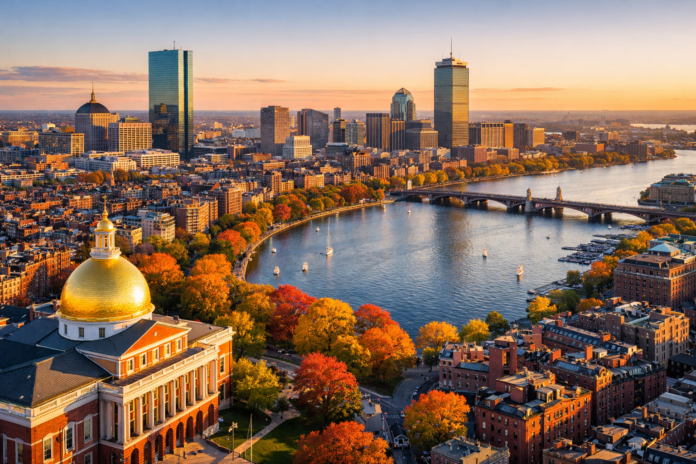
Massachusetts — the Bay State is one of the most historically rich, economically powerful, and culturally vibrant states in the entire United States. Whether you are a U.S. citizen considering a fresh start, a foreign professional eyeing world-class career opportunities, or an international tourist ready to explore revolutionary history and stunning coastlines, Massachusetts delivers on every promise.
Home to Harvard University, MIT, world-renowned hospitals, a booming tech and biotech sector, and some of the most beautiful autumn foliage on the planet, Massachusetts stands as a premier destination for ambition, education, and adventure alike. But moving or visiting any new place requires solid information and that is exactly what this guide provides.
This 2025 Massachusetts Living & Travel Guide covers everything: neighborhoods, cost of living, job market salaries, visa requirements for foreigners, public transport, top restaurants, attractions, shopping, nightlife, healthcare, mortgage options, car insurance, and practical tips. Read it all and make your Massachusetts decision with full confidence.
Massachusetts: State Overview
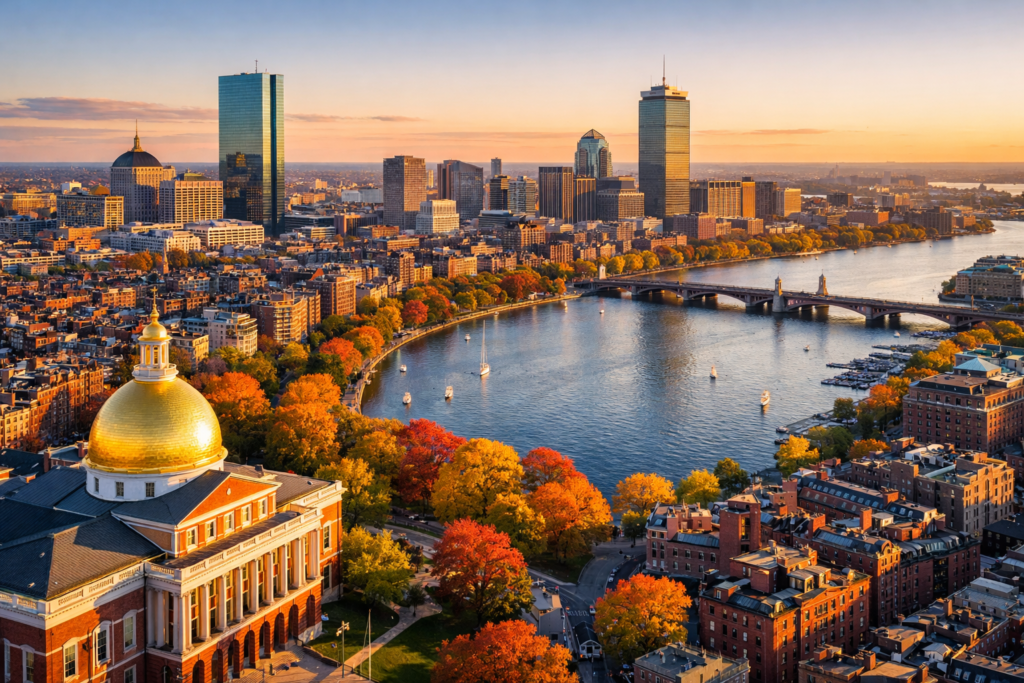
Massachusetts is a northeastern U.S. state bordered by the Atlantic Ocean to the east, New Hampshire and Vermont to the north, New York to the west, and Rhode Island and Connecticut to the south. Its capital and largest city is Boston, a global hub for education, finance, healthcare, and technology.
| Category | Details |
| Full Name | Commonwealth of Massachusetts |
| Capital City | Boston |
| Population | ~7.1 million (2025 estimate) |
| Area | 10,565 sq miles (27,363 sq km) |
| Nickname | The Bay State / The Old Colony State |
| Time Zone | Eastern Standard Time (EST / UTC-5) |
| State Bird | Black-capped Chickadee |
| State Flower | Mayflower |
| Major Cities | Boston, Worcester, Springfield, Cambridge, Lowell |
| GDP (2024) | ~$670 billion (6th largest in USA) |
| Top Universities | Harvard, MIT, Boston University, Tufts, UMass |
| Official Language | English |
Massachusetts is the 6th smallest state by area but consistently ranks among the top five states for education, healthcare quality, and median household income. It is a Democratic-leaning state with strong labor protections, progressive policies, and one of the best public school systems in the nation.
Read Also : Houston Texas: The Ultimate Guide to Living, Working & Visiting in 2026
Massachusetts Weather Guide: Best Seasons to Visit & Live
Massachusetts has a humid continental climate with four distinct seasons. This makes it appealing year-round, though each season has its unique character and considerations.
| Season | Months | Avg Temperature | What to Expect |
| Spring | March – May | 40°F – 65°F (4°C – 18°C) | Cherry blossoms, mild weather, occasional rain. Great for sightseeing. |
| Summer | June – August | 70°F – 85°F (21°C – 29°C) | Warm, humid. Beach season on Cape Cod & Martha’s Vineyard. |
| Fall | September – November | 45°F – 68°F (7°C – 20°C) | Famous fall foliage — peak colors in October. Best time to visit. |
| Winter | December – February | 20°F – 38°F (-7°C – 3°C) | Heavy snow possible. Skiing in western MA. Cold but festive. |
Best Time to Visit: September and October offer the most magical experience — crisp air, vibrant fall foliage, fewer crowds than summer, and comfortable temperatures. For beach lovers, July and August are ideal for Cape Cod. Budget travelers should consider visiting in May or November for lower hotel rates.
Read Also : Miami, Florida: The Ultimate Guide for Visitors, Expats & New Residents
Real Cost of Living in Massachusetts
Massachusetts is one of the more expensive states in the U.S., primarily due to high housing costs and the premium associated with living near top universities and hospitals. However, high salaries in the tech, biotech, finance, and healthcare sectors often offset these costs for working professionals.
| Expense Category | Estimated Monthly Cost |
| 1-Bedroom Apartment (Boston) | $2,600 – $3,500/month |
| 1-Bedroom Apartment (Suburbs) | $1,600 – $2,200/month |
| Groceries (single person) | $350 – $500/month |
| Utilities (electricity, gas, internet) | $180 – $280/month |
| Public Transportation (monthly pass) | $90 – $110/month |
| Dining Out (mid-range restaurant) | $18 – $35 per meal |
| Health Insurance (employer-based) | $150 – $400/month (employee share) |
| Gym Membership | $40 – $80/month |
| Childcare / Daycare | $1,800 – $2,500/month |
| Car Insurance | $130 – $220/month |
Pro Tip for Newcomers: If you are relocating on a budget, consider cities like Worcester, Lowell, or Springfield where rent is 30–40% cheaper than Boston while still offering good employment access and public transit connections.
Read Also : Living in Atlanta Georgia: The Unfiltered Truth Nobody Tells You Before You Move
Best Places to Live in Massachusetts: Neighborhood & City Guide
Choosing the right neighborhood is critical. Massachusetts offers everything from historic urban districts to quiet suburban towns and scenic coastal communities. Here is a breakdown of the most popular areas:
| Neighborhood / Area | City | Best For | Avg Rent (1BR) |
| Back Bay | Boston | Professionals, luxury lifestyle | $3,200 – $4,500 |
| South End | Boston | Young professionals, LGBTQ+ community | $2,800 – $3,800 |
| Jamaica Plain | Boston | Families, artists, affordable options | $2,200 – $3,000 |
| Somerville | Greater Boston | Students, young workers, multicultural | $2,400 – $3,200 |
| Cambridge | Greater Boston | Academics, tech workers, students | $2,800 – $3,900 |
| Brookline | Greater Boston | Families, top-rated schools | $2,600 – $3,500 |
| Newton | Suburbs | Affluent families, excellent schools | $2,400 – $3,200 |
| Worcester | Central MA | Students, budget-conscious workers | $1,400 – $1,900 |
| Salem | North Shore | History lovers, tourists, commuters | $1,800 – $2,400 |
| Northampton | Western MA | Artists, nature lovers, college town feel | $1,400 – $1,900 |
For families with children, Newton, Brookline, and Lexington consistently rank among the top school districts in the entire state. For international students and first-time movers, Cambridge and Somerville offer a welcoming, diverse community with strong public transit access.
Is Massachusetts Safe? Crime Rates, Safe Cities & Areas to Avoid
Massachusetts is generally considered one of the safer states in the U.S. Overall crime rates have declined steadily over the past decade. However, like any state, safety varies significantly by neighborhood and city.
| City / Area | Safety Level | Crime Rate (per 100K) | Notes |
| Wellesley | Very Safe | ~400 | One of the safest towns in MA |
| Newton | Very Safe | ~600 | Excellent for families |
| Brookline | Safe | ~900 | Low violent crime |
| Cambridge | Moderate | ~2,100 | Safe but urban precautions advised |
| Boston (overall) | Moderate | ~3,500 | Varies widely by neighborhood |
| Roxbury (Boston) | Higher Risk | ~6,000+ | Higher violent crime rate |
| Worcester | Moderate | ~3,800 | Improving in recent years |
| Springfield | Higher Risk | ~6,500+ | Elevated crime, exercise caution |
Safety Tips: Avoid walking alone late at night in unfamiliar neighborhoods. Boston’s downtown, Back Bay, Beacon Hill, Cambridge, and the waterfront areas are generally very safe for tourists and residents. Always use ride-sharing apps (Uber/Lyft) after midnight in unfamiliar areas.
Read Also : New York City Cost of Living 2026: Survival Guide for Families & Immigrants
Job Market & Average Salaries in Massachusetts
Massachusetts boasts one of the strongest job markets in the United States. The Boston metro area alone is home to hundreds of Fortune 500 companies, thousands of biotech and life sciences firms, a thriving financial sector, and the world-famous Route 128 technology corridor often called America’s Technology Highway.

| Industry / Role | Average Annual Salary |
| Software Engineer | $120,000 – $175,000 |
| Biotech / Pharmaceutical Scientist | $95,000 – $145,000 |
| Registered Nurse (RN) | $80,000 – $105,000 |
| Financial Analyst | $85,000 – $130,000 |
| University Professor | $90,000 – $160,000 |
| Data Scientist | $110,000 – $160,000 |
| High School Teacher | $65,000 – $90,000 |
| Marketing Manager | $90,000 – $130,000 |
| Construction Project Manager | $85,000 – $115,000 |
| Restaurant / Hospitality (entry-level) | $35,000 – $50,000 |
Top Employers in Massachusetts include Massachusetts General Hospital, Brigham and Women’s Hospital, Harvard University, MIT, Raytheon Technologies, Biogen, Moderna, State Street Corporation, Liberty Mutual Insurance, and General Electric. The unemployment rate in Massachusetts as of 2025 sits at approximately 3.2%, well below the national average.
For part-time student workers, Massachusetts minimum wage is $15.00/hour with overtime protections that make it one of the most worker-friendly states. Students on F-1 visas are allowed to work up to 20 hours per week on campus without special authorization.
Read Also : How Much Does It Cost to Live in Fayetteville Arkansas in 2026? Full Breakdown
Visa & Work Permit Guide for Foreigners Moving to Massachusetts
If you are a foreign national planning to work or study in Massachusetts, understanding U.S. visa categories is essential. Here is a clear, structured breakdown:
| Visa Type | Purpose | Duration | Key Notes |
| F-1 Student Visa | Full-time study at accredited U.S. institutions | Duration of study + 60 days | Allows on-campus work (20hrs/wk); OPT allows post-graduation work |
| H-1B Work Visa | Specialty occupation (tech, engineering, finance, etc.) | 3 years (extendable to 6) | Employer-sponsored; annual lottery cap applies |
| L-1 Intracompany Transfer | Transfer from foreign office of same company | 1–3 years | Good for multinational professionals |
| O-1 Visa | Extraordinary ability in science, arts, business | Up to 3 years + extensions | High standard of proof required |
| EB-2 / EB-3 Green Card | Permanent residence via employment | Permanent | Long processing times; requires employer sponsorship |
| TN Visa (Canada/Mexico) | NAFTA/USMCA professional categories | 3 years + renewable | Easier process for Canadian and Mexican professionals |
| J-1 Exchange Visitor | Research, internship, au pair, teacher exchange | Program-dependent | Requires sponsor organization; subject to 2-year home return rule |
OPT (Optional Practical Training): F-1 students can apply for 12 months of OPT work authorization after graduation. STEM graduates (Science, Technology, Engineering, Math) may receive a 24-month STEM OPT extension, giving up to 3 full years of work experience in the U.S. — making Massachusetts an ideal destination for international STEM talent.
Green Card through Massachusetts Employers: Many large MA employers including hospitals, universities, and tech companies actively sponsor qualified foreign workers for permanent residency. Fields with fastest processing include nursing, biotech research, and software engineering.
Read Also : Living in Bloomington Indiana (2026): Cost ,Jobs, Apartments & Salary Reality
Getting Around Massachusetts: Public Transport, Roads & Daily Commute
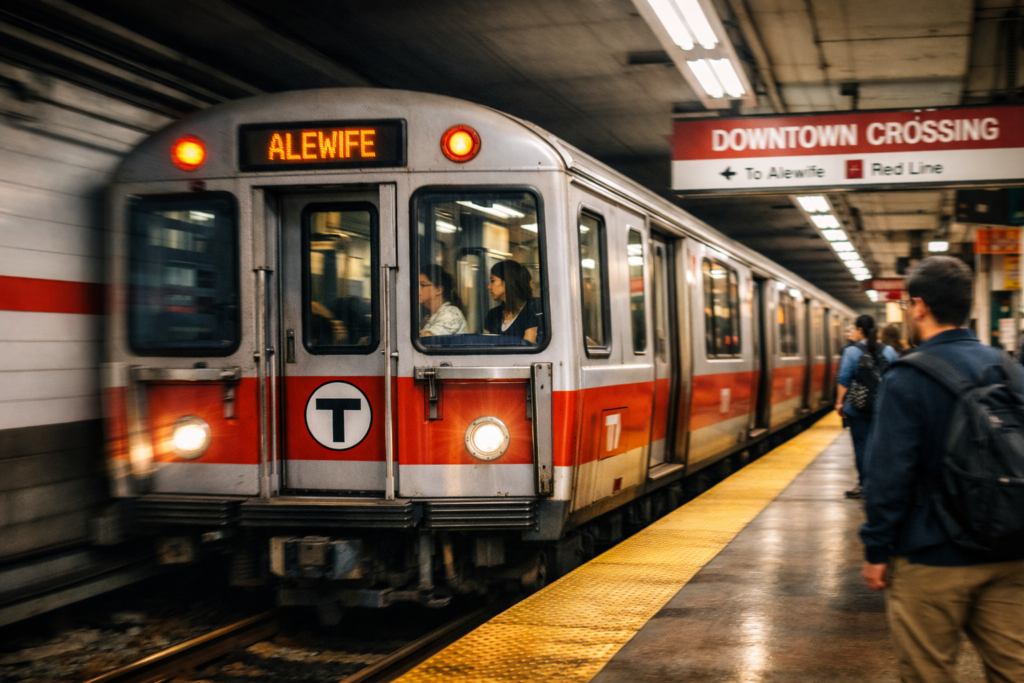
Massachusetts has one of the best public transportation systems in the United States, managed by the Massachusetts Bay Transportation Authority (MBTA), locally known as The T. For tourists and new residents in Boston and surrounding areas, the MBTA provides excellent coverage.
| Transport Mode | Coverage Area | Cost | Best For |
| MBTA Subway (The T) | Boston & inner suburbs | $2.40 per ride / $90 monthly | Daily commuting within Boston |
| MBTA Commuter Rail | Greater Boston to 70+ stations | $2.40 – $13.25 per ride | Suburb-to-city commuting |
| MBTA Bus | Boston metro area | $1.70 per ride | Local neighborhood travel |
| Ferry | Boston Harbor, Hingham, Hull | $3.70 – $9.75 per ride | Scenic water commuting |
| Amtrak | Statewide & interstate | Varies ($25 – $150+) | Boston to NYC, Providence, etc. |
| Uber / Lyft | Statewide | Varies | Late nights, suburban areas |
| Zip Car / Car Rental | Major cities | Hourly / daily rates | Occasional car needs without ownership |
Driving in Massachusetts: Outside Boston, a personal vehicle is highly recommended. Massachusetts has an extensive highway network including I-90 (Mass Pike), I-93, and Route 128. Be aware that Boston drivers are famously aggressive — locals call them Massholes with affectionate pride. Speed limits are enforced strictly, and all drivers must carry valid auto insurance at all times by state law.
Read Also : Moving to Naperville Illinois? Your Complete Guide to Cost of Living Jobs & Best Hotels
Best Hotels, Apartments & Places to Stay in Massachusetts
From luxury five-star hotels in downtown Boston to charming B&Bs on Cape Cod and boutique inns in the Berkshires, Massachusetts has accommodation for every budget and taste.
| Accommodation Type | Price Range (per night) | Best Areas | Best For |
| Luxury Hotels | $350 – $700+ | Back Bay, Seaport, Cambridge | Business travelers, special occasions |
| Mid-Range Hotels | $150 – $300 | Downtown Boston, Newton, Brookline | Tourists, short-term visitors |
| Budget Hotels / Motels | $80 – $140 | Route 128 corridor, North Shore | Budget travelers, road trippers |
| Airbnb / VRBO | $90 – $400+ | Statewide | Families, long stays, groups |
| B&Bs & Inns | $120 – $250 | Cape Cod, Nantucket, Salem, Berkshires | Romantic getaways, cultural tourism |
| Hostels | $45 – $80/bed | Boston (Fenway, Downtown Crossing) | Solo backpackers, international students |
Top Hotel Picks: The Mandarin Oriental Boston (Back Bay) for luxury; The Verb Hotel near Fenway Park for music lovers; The Lenox Hotel for historic charm; and Chatham Bars Inn on Cape Cod for a spectacular seaside escape.
Read Also :Orem, Utah Cost of Living, Jobs & Housing (2026): Is It Worth Moving?
Must-Try Restaurants & Famous Food Spots in Massachusetts
Massachusetts has a world-class dining scene anchored by Boston’s internationally recognized restaurant culture. Seafood is king clam chowder, lobster rolls, oysters, and fresh fish are staples. But you will also find exceptional dining from dozens of international cuisines thanks to the state’s diverse immigrant communities.

| Restaurant | Cuisine | Location | Price Range | Must Try |
| Oleana | Mediterranean | Cambridge | $$$ | Mezze plates, wood-roasted lamb |
| Legal Sea Foods | Seafood | Multiple MA locations | $$-$$$ | New England clam chowder, lobster |
| Toro | Spanish Tapas | South End, Boston | $$$ | Corn with aioli, bone marrow |
| Pammy’s | Italian-American | Cambridge | $$$ | Handmade pasta, seasonal dishes |
| Row 34 | Oyster Bar & Seafood | Fort Point, Boston | $$$ | Fresh oysters, fish and chips |
| Sarma | Middle Eastern Mezze | Somerville | $$-$$$ | Hummus, lamb meatballs |
| Regina Pizzeria | Classic Pizza | North End, Boston | $$ | Pepperoni pizza — a Boston legend since 1926 |
| Eastern Standard | American Brasserie | Kenmore Square | $$$ | Cocktails, oysters, steak frites |
Street Food & Quick Eats: Do not miss Mike’s Pastry or Modern Pastry in Boston’s North End for cannoli, lobster rolls from James Hook & Co., or a classic Fenway Frank at a Red Sox game. For international food, the Dorchester neighborhood offers incredible Vietnamese, Haitian, and Cape Verdean cuisine at budget prices.
Read Also : Overland Park Kansas – Complete Guide to Living, Jobs, Cost of Living & Lifestyle
Top Tours & Attractions in Massachusetts
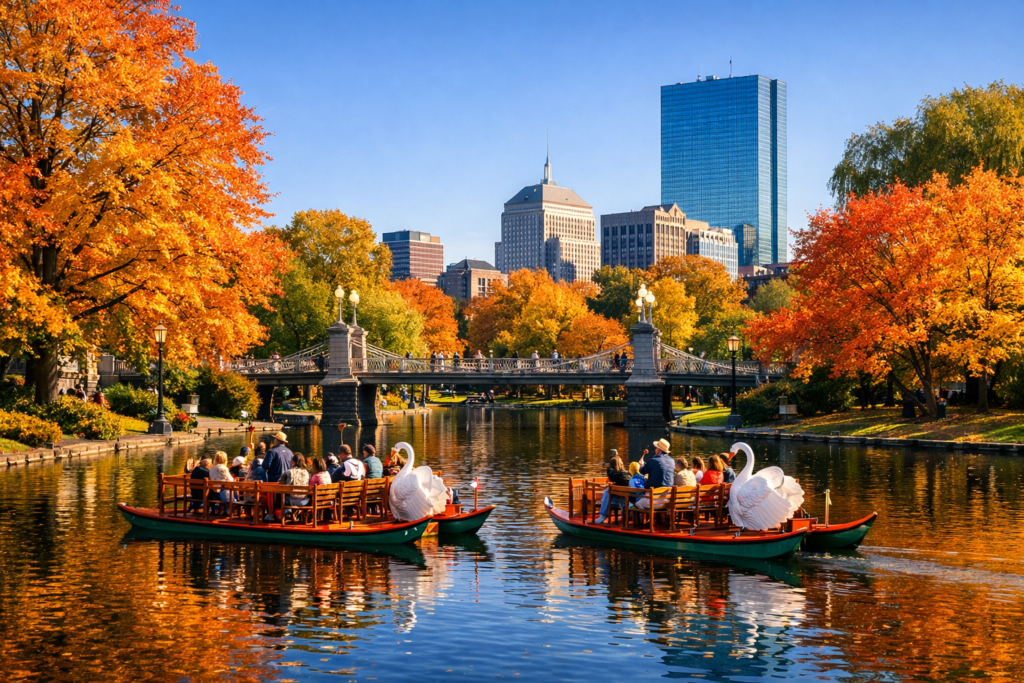
Massachusetts is America’s living history museum. From the birthplace of the American Revolution to the beaches of Cape Cod and the cultural treasures of the Berkshires, there is truly no shortage of incredible things to see and do.
| Attraction | Location | Type | Entry Cost | Best Time |
| Freedom Trail | Boston | Historic Walking Tour | Free (guided tours $15–$20) | Spring/Fall |
| Fenway Park | Boston | Baseball / Culture | $20 – $350+ (game tickets) | April – October |
| Harvard University Campus | Cambridge | Education / History | Free (tours available) | Year-round |
| Cape Cod National Seashore | Cape Cod | Nature / Beach | Free – $25 (vehicle) | Summer |
| Salem Witch Museum | Salem | History / Culture | $14 – $17 | Year-round; Oct is peak |
| Plimoth Patuxent (Pilgrim History) | Plymouth | Living History Museum | $29 – $39 | Spring – Fall |
| Martha’s Vineyard | Islands | Island / Nature | Ferry from $9.50 | Summer/Fall |
| Tanglewood Music Festival | Lenox, Berkshires | Music / Arts | $20 – $100+ | July – August |
| Museum of Fine Arts | Boston | Art & Culture | $27 | Year-round |
| Walden Pond | Concord | Nature / Literary History | Free – $8 (parking) | Spring – Fall |
For first-time tourists, the Boston CityPASS ($74) or Go City Boston All-Inclusive Pass offers bundled entry to multiple top attractions at a significant discount. The 2.5-mile Freedom Trail is the single best starting point it takes you past 16 historically significant sites including Paul Revere’s House, the USS Constitution, and Bunker Hill Monument.
Read Also : Cary North Carolina – Living Cost, Jobs, Apartments, Student Housing & Real Survival Guide (2026)
Shopping in Massachusetts: Malls, Outlets & Local Markets
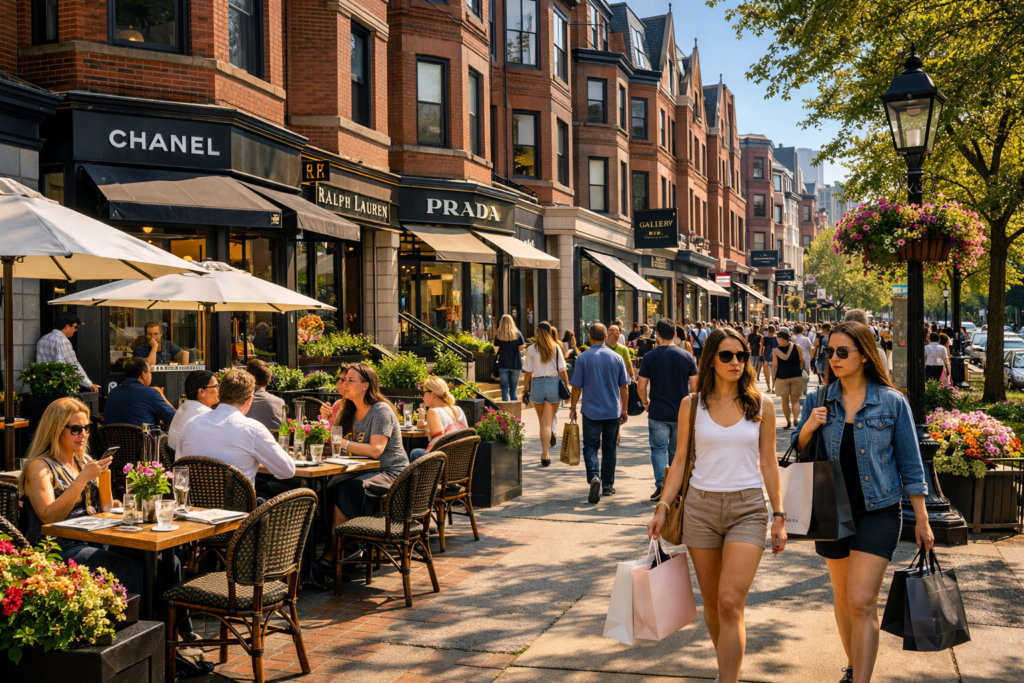
Massachusetts offers exceptional shopping from luxury boutiques in Boston’s Back Bay to massive outlet malls, charming antique stores, and vibrant local markets.
| Shopping Destination | Type | Location | Highlights |
| Newbury Street | Luxury & Boutique | Back Bay, Boston | Designer brands, galleries, cafes — Boston’s Rodeo Drive |
| Faneuil Hall Marketplace | Historic Market | Downtown Boston | Local crafts, tourist gifts, food stalls |
| Copley Place | Upscale Mall | Back Bay, Boston | Louis Vuitton, Neiman Marcus, Tiffany & Co. |
| Wrentham Village Premium Outlets | Outlet Shopping | Wrentham | 150+ brand outlet stores — 40-70% off retail |
| Assembly Row | Mixed-Use Retail | Somerville | H&M, REI, Nike, restaurants, cinema |
| Harvard Square | Eclectic / Independent | Cambridge | Bookstores, record shops, specialty stores |
| Quincy Market | Food & Specialty | Boston | New England products, fresh seafood, souvenirs |
Note: Massachusetts has a 6.25% state sales tax but NO tax on clothing purchases under $175. This makes it a shopping destination for savvy consumers — especially for apparel and footwear.
Read Also : Sugar Land Texas: The Ultimate Relocation, Financial Survival & Settlement Guide(2026)
Massachusetts Nightlife Guide: Bars, Clubs, Music & Entertainment
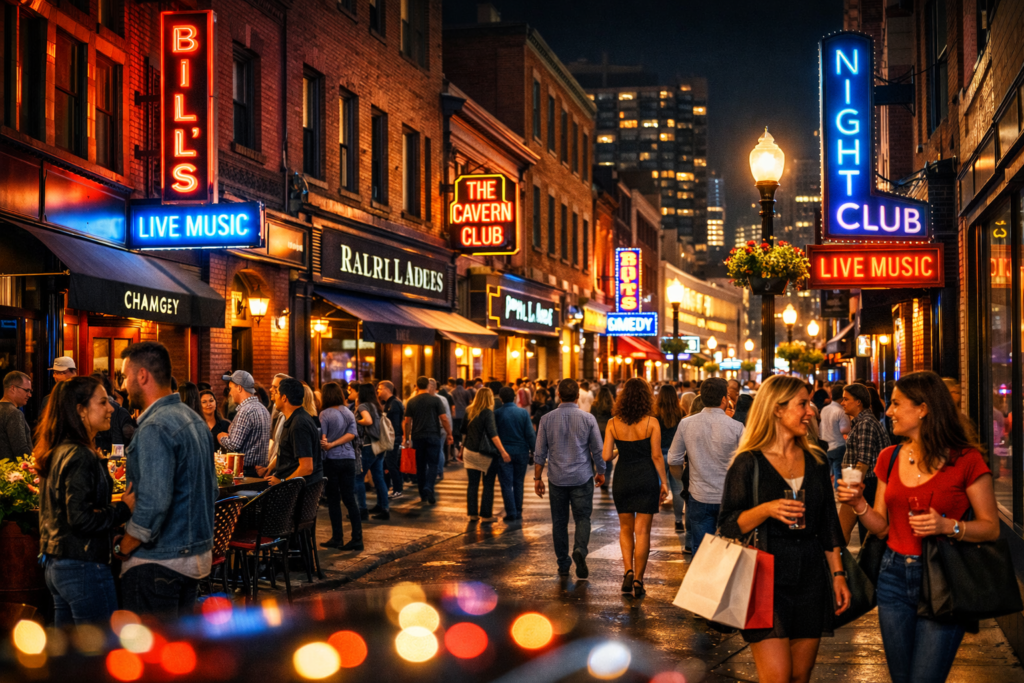
Boston’s nightlife is vibrant, diverse, and surprisingly world-class for a city of its size. From live jazz clubs and Irish pubs to rooftop bars, dance clubs, comedy venues, and concert arenas, Massachusetts offers entertainment options that rival much larger American cities.
| Venue / Area | Type | Location | Vibe |
| Lansdowne Street / Fenway | Bar District | Boston | Sports bars, live music — legendary post-game scene |
| The Sinclair | Live Music | Cambridge | Indie, rock, and pop — excellent sound system |
| Howl at the Moon | Dueling Piano Bar | Faneuil Hall | High energy, sing-along, great for groups |
| Club Café | LGBTQ+ Bar | South End, Boston | Welcoming, great cocktails, live performances |
| Boston Symphony Orchestra | Classical Music | Back Bay | World-class performances year-round |
| Improv Asylum | Comedy | North End, Boston | Hilarious improv comedy shows nightly |
| Paradise Rock Club | Live Rock Venue | Allston, Boston | Historic venue — legendary artists have played here |
| Whiskey Saigon | Night Club | Downtown Boston | EDM, hip-hop — one of Boston’s biggest clubs |
Last Call Info: Massachusetts bars close at 2:00 AM. The MBTA runs until around 12:30 AM on weekdays (later on weekends). Plan your Uber/Lyft home in advance, especially on weekends when surge pricing is common. The legal drinking age is 21.
Healthcare in Massachusetts: Best Hospitals, Clinics & Medical Services
Massachusetts consistently ranks in the United States for healthcare quality. The state is home to some of the most prestigious hospitals and medical research institutions in the world, attracting patients from across the globe for specialized treatments.
| Hospital | Specialty | Location | National Rank |
| Massachusetts General Hospital (MGH) | All specialties — trauma, cancer, neurology | Boston | Top 5 in USA |
| Brigham and Women’s Hospital | Heart, cancer, women’s health | Boston | Top 10 in USA |
| Boston Children’s Hospital | Pediatric care | Boston | #1 Children’s Hospital in USA |
| Dana-Farber Cancer Institute | Cancer research & treatment | Boston | Top 5 Cancer Center in USA |
| Lahey Hospital & Medical Center | General surgery, orthopedics | Burlington | Top Regional Hospital |
| UMass Memorial Medical Center | General care, trauma | Worcester | Leading Central MA Hospital |
| Tufts Medical Center | Cardiology, oncology, research | Boston | Top-Ranked Academic Medical Center |
Emergency Services: Call 911 for all medical emergencies. Urgent care clinics (like MinuteClinic or CityMD) are available statewide for non-emergency situations at lower cost than emergency rooms. Wait times at major Boston hospitals can be long use urgent care for minor issues
Health Insurance in Massachusetts: Costs, Plans & Coverage Explained
Massachusetts is unique among U.S. states — it has its OWN individual health insurance mandate, meaning most residents are required by state law to have health insurance or face a tax penalty. This pioneering law (Chapter 58 of 2006, the model for the Affordable Care Act) ensures very high insurance coverage rates in the state.
| Insurance Option | Who It’s For | Avg Monthly Cost | Key Notes |
| Employer-Sponsored Insurance | Full-time employees | $200 – $600 (family) | Most common for working adults — employer pays majority |
| MassHealth (Medicaid) | Low-income individuals/families | Free or very low cost | Covers adults earning up to 133% of Federal Poverty Level |
| Health Connector (Marketplace) | Self-employed, part-time workers | $300 – $700/month | Subsidies available based on income; ConnectorCare for modest incomes |
| Student Health Insurance | College students | $300 – $600/semester | Required at most MA universities; waivers possible with comparable coverage |
| COBRA | Recently unemployed | $500 – $1,800/month | Temporary continuation of former employer’s plan |
| Short-Term Health Plans | Visitors, transitional coverage | $100 – $300/month | Limited coverage; not ACA-compliant; use for short stays only |
For Foreigners & Students: International students at Massachusetts universities are generally required to have health insurance and can purchase it through their school or the Health Connector marketplace. Many schools accept waiver requests if you already have comparable international coverage — always check with your university’s student health office.
Mortgage & Home Loan Information for Massachusetts
Buying a home in Massachusetts is a significant investment. Home prices have risen steadily over the past decade, particularly in the Greater Boston metro area. However, strong job markets and quality of life continue to attract buyers.

| Location | Median Home Price (2025) | Avg 30-Year Fixed Rate | Typical Down Payment (20%) |
| Boston (city) | $750,000 – $1,100,000 | ~6.5% – 7.2% | $150,000 – $220,000 |
| Cambridge | $850,000 – $1,300,000 | ~6.5% – 7.2% | $170,000 – $260,000 |
| Newton / Brookline | $1,000,000 – $1,600,000 | ~6.5% – 7.2% | $200,000 – $320,000 |
| Worcester | $350,000 – $480,000 | ~6.5% – 7.2% | $70,000 – $96,000 |
| Springfield | $220,000 – $320,000 | ~6.5% – 7.2% | $44,000 – $64,000 |
| Cape Cod (seasonal area) | $550,000 – $900,000 | ~6.5% – 7.2% | $110,000 – $180,000 |
First-Time Buyer Programs: MassHousing offers down payment assistance and reduced-rate mortgages for first-time buyers. The ONE Mortgage Program through the Massachusetts Housing Partnership (MHP) provides 30-year fixed-rate mortgages with no private mortgage insurance (PMI) requirement for qualifying buyers. Income limits apply.
Foreign buyers can purchase property in Massachusetts with no legal restrictions. However, non-U.S. residents may face higher mortgage rates, larger down payment requirements (25–30%), and stricter lender requirements regarding visa type and income documentation.
Car Insurance in Massachusetts
Massachusetts is one of the few states in the U.S. that requires drivers to purchase car insurance BEFORE registering a vehicle. All drivers must carry minimum coverage under state law.
| Coverage Type | State Minimum Requirement | Avg Annual Cost | Recommended Coverage |
| Bodily Injury Liability | $20,000 per person / $40,000 per accident | Included in base premium | $100K/$300K for full protection |
| Personal Injury Protection (PIP) | $8,000 per person | Included | Keep at minimum or upgrade to $50K |
| Property Damage Liability | $5,000 | Included | Increase to $50,000–$100,000 |
| Uninsured Motorist Coverage | $20,000/$40,000 | Included | Match your liability limits |
| Collision Coverage | Optional (required for financed vehicles) | $300 – $700/year added | Strongly recommended |
| Comprehensive Coverage | Optional | $150 – $350/year added | Recommended — MA has harsh winters |
Average Annual Premium: Massachusetts drivers pay an average of $1,600 – $2,600/year for full coverage auto insurance higher than the national average due to dense urban traffic in Boston, historical claims rates, and state-mandated minimums. Shopping around with insurers like Amica, Safety Insurance, Arbella, and national providers (GEICO, Progressive, State Farm) is highly recommended.
Practical Tips for Foreigners Moving to Massachusetts
Moving to Massachusetts from another country involves more than just packing your bags. Here is a consolidated checklist of essential tasks and tips to make your transition smooth:
| Task / Tip | Details |
| Get a Massachusetts Driver’s License | Required within 30 days of establishing residency. Bring passport, visa, proof of address. REAL ID-compliant license requires additional documentation. |
| Open a U.S. Bank Account | Most banks require a passport and visa. Try Bank of America, Citizens Bank, or TD Bank — all with strong MA presence and immigrant-friendly account options. |
| Get a Social Security Number (SSN) | Required for employment. Apply at your local Social Security Administration (SSA) office after entering the U.S. on eligible work visa. |
| Apply for an ITIN if SSN Not Available | Individual Taxpayer Identification Number (ITIN) available for those not eligible for SSN — allows you to file taxes and open some bank accounts. |
| Register with Your Country’s Consulate | Notify your home country’s nearest consulate of your U.S. address for emergency assistance and documentation services. |
| Understand State Income Tax | Massachusetts has a flat 5% state income tax on most income. File state taxes separately from federal taxes each year by April 15. |
| Get Your Foreign Credentials Evaluated | Use services like World Education Services (WES) or Josef Silny & Associates if you need your foreign degree evaluated for employment or further education in MA. |
| Know Your Tenant Rights | Massachusetts has strong tenant protections. Landlords must provide habitable conditions, return security deposits within 30 days, and give proper notice before entry. |
Final Verdict: Is Massachusetts Right for You?
Massachusetts stands out as a premier destination in the United States, offering a high quality of life that appeals to almost everyone. Here is our straightforward take:
For U.S. Citizens Considering a Move: If your priorities include access to world-class education, a thriving economy, top-tier healthcare, and distinct seasonal changes, Massachusetts is an exceptional place to call home. While the cost of living is steep, it is offset by high salaries and an unmatched standard of living. For those seeking more affordable options, cities like Worcester, Lowell, and Springfield provide a lower cost of entry while keeping you connected to the state’s robust opportunities.
For International Professionals & Students: Few states are as welcoming to global talent as Massachusetts. With its roster of elite universities, insatiable demand for STEM workers, and major employers who frequently sponsor H-1B visas, the state offers career acceleration that is hard to find elsewhere. The transition from an F-1 student to an H-1B professional and eventually a Green Card holder is a common path here, supported by a diverse and highly educated community.
For Tourists: Massachusetts is an essential stop on any U.S. itinerary. Whether you are tracing history on the Freedom Trail, enjoying fresh seafood on Cape Cod, catching a Red Sox game at Fenway Park, soaking in the autumn atmosphere in Salem, or listening to the Boston Symphony Orchestra at Tanglewood, this state packs a massive amount of culture into a small area. We recommend planning at least a week to see it properly.
Frequently Asked Questions (FAQ) About Massachusetts
Q1. Is Massachusetts a good state to live in for families?
Yes, Massachusetts is widely regarded as one of the best states in the U.S. for families. It ranks #1 or #2 nationally in education quality, has excellent pediatric healthcare (including the #1 ranked Boston Children’s Hospital), low violent crime rates in suburban areas, and abundant cultural and recreational activities. Towns like Newton, Brookline, Lexington, and Wellesley are consistently named among the best places to raise children in America.
Q2. How much money do I need to move to Massachusetts?
For a single person moving to Boston, you should budget at least $5,000 – $8,000 in upfront costs: first and last month’s rent plus security deposit ($6,000 – $10,000 for a Boston 1BR), moving costs, setup fees, and 1–2 months of living expenses. For families, budget $15,000 – $25,000+ for initial relocation. Living in suburban cities like Worcester or Lowell reduces startup costs by 30–40%.
Q3. Is it easy for foreigners to get a job in Massachusetts?
Massachusetts actively recruits international talent, particularly in biotech, software engineering, healthcare, finance, and academia. Companies like Biogen, Moderna, Raytheon, Harvard, MIT, and hundreds of tech startups regularly sponsor H-1B visas. The key is having a specialized skill set and relevant U.S. or internationally recognized credentials. International students on F-1 visas have strong pathways through OPT and STEM OPT to gain work experience before transitioning to H-1B status.
Q4. What is the best time of year to visit Massachusetts as a tourist?
September and October are widely considered the absolute best time to visit Massachusetts. Fall foliage creates stunning natural scenery throughout the state, weather is comfortable (55–70°F), and summer crowds have thinned. July and August are ideal for beach lovers (Cape Cod, Martha’s Vineyard, Nantucket). Spring (April–May) offers blooming gardens, fewer crowds, and lower hotel rates. Even winter has charm — Boston’s Christmas markets, ski resorts in the Berkshires, and cozy restaurants make it worthwhile for cold-weather enthusiasts.
Q5. Does Massachusetts have good public transportation?
Within the Greater Boston area, public transportation is genuinely excellent. The MBTA (The T) operates four color-coded subway lines, extensive bus routes, commuter rail lines reaching up to 70 miles from Boston, and water ferries. A monthly LinkPass ($90) provides unlimited MBTA travel. However, public transit in western Massachusetts (Springfield, Northampton) and rural Cape Cod is limited — a personal vehicle is strongly recommended if you live outside the Boston metro area.
Q6. Is Massachusetts expensive compared to other U.S. states?
Yes, Massachusetts — particularly Greater Boston — is among the top 5 most expensive metro areas in the United States for housing. However, it is notably less expensive than New York City and San Francisco. The state’s high cost of living is partially offset by some of the highest average wages in the country. Additionally, Massachusetts has no sales tax on clothing under $175, no tax on groceries, and strong wage growth in the technology, healthcare, and finance sectors that tends to outpace cost-of-living increases for skilled professionals.
Q7. What are the requirements for getting a Massachusetts driver’s license as a foreigner?
Foreign nationals with valid U.S. work or student visas can obtain a Massachusetts driver’s license (not a REAL ID) by presenting: a valid passport, current U.S. visa, I-94 arrival record, two proofs of Massachusetts address (utility bill, bank statement, lease), and passing both a written knowledge test and a road skills test. The license validity is tied to your visa expiration date. REAL ID (required for domestic air travel after May 2025) requires additional documentation proving legal status.
Q8. Can international students work part-time in Massachusetts?
Yes. F-1 visa students are permitted to work on-campus up to 20 hours per week during the academic semester and full-time (40 hours) during breaks and summer. Off-campus work generally requires authorization through Curricular Practical Training (CPT) for internships related to your field of study, or through Optional Practical Training (OPT) post-graduation. Massachusetts has a $15/hour minimum wage, making even part-time work financially meaningful. Popular student employment includes university dining halls, libraries, research labs, tutoring centers, and retail positions.

