
Choosing an Ivy League university is a massive decision. It is not just about getting a degree it is about choosing a lifestyle and a financial future. Students and parents often lose sleep over tuition fees admission chances and whether the investment will pay off with a good job. The University of Pennsylvania stands out as a top choice for many ambitious students. It is famous for its business school high graduate salaries, and strong academic reputation. But is it the right fit for you? In this guide, we will break down the University of Pennsylvania tuition fees, acceptance rate, admission process, and campus life with clear, data driven facts for 2026.
University of Pennsylvania Overview and Key Facts
The University of Pennsylvania, commonly known as Penn is a private Ivy League research university located in Philadelphia. It was founded in 1740 by Benjamin Franklin. This makes it one of the oldest universities in the United States. Today, it is a hub for innovation and practical education. The university has over 28,000 students. It is divided into four undergraduate schools and twelve graduate schools. Penn is classified as an institution with very high research activity. It receives billions in funding annually, particularly in medicine, business, and engineering.
When people look at the University of Pennsylvania ranking, they consistently see it in the top 10 nationally and top 20 globally. It is respected worldwide for its rigorous academics. The university is known for producing leaders in business, law, medicine, and politics. Below is a quick snapshot of the key facts for 2026.
| Category | Details |
|---|---|
| Location | Philadelphia, Pennsylvania |
| Founded | 1740 |
| Type | Private Ivy League University |
| Enrollment | 28,000+ |
| Acceptance Rate | ~6% |
| Ranking | Top 10 USA |
| Known For | Business, Medicine, Law, Engineering |
Read Also : University of Arizona Tuition Fees, Acceptance Rate, Admission, and Campus Life 2026
University of Pennsylvania Location and Campus Environment
A common question is, “Where is the University of Pennsylvania located?” It is situated in the University City neighborhood of Philadelphia. This location is a huge advantage. Philadelphia is a major city on the East Coast. It is an economic hub with top hospitals, law firms, finance companies, and startups. For students, this means internships are just a subway ride away.
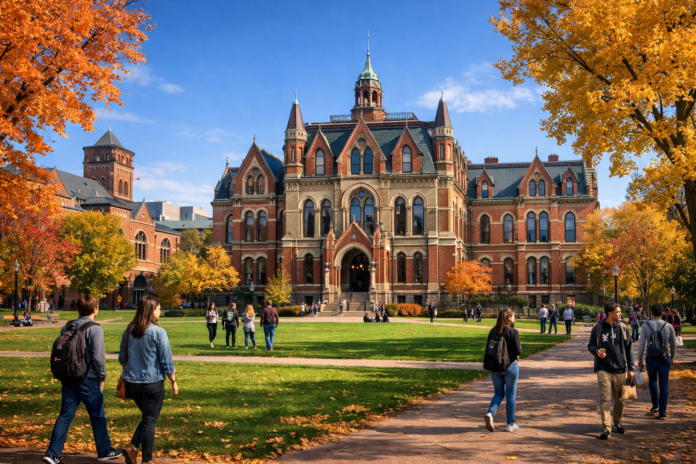
The campus itself is urban and green. It blends historic architecture with modern research labs. Students do not feel isolated like they might at a rural college. The city life connects directly to the campus. You have access to city museums, restaurants, and cultural events. The weather features cold winters and warm humid summers. Compared to New York City or Boston, Philadelphia is more affordable. This helps students manage their budgets better while still enjoying a big-city experience.
University of Pennsylvania Ranking and Academic Reputation
The University of Pennsylvania ranking is a major draw for applicants. It consistently holds a spot in the top 10 universities in the USA. Globally, it sits comfortably in the top 20. Being an Ivy League member adds a layer of prestige that employers recognize instantly.
Students often ask, “Is University of Pennsylvania a good school?” The answer is a resounding yes. It is a powerhouse in several fields. The Wharton School of the University of Pennsylvania is widely considered the best business school in the world. Beyond business, Penn is a leader in medicine (Perelman School of Medicine), law (Carey Law School), and engineering. This academic reputation opens doors. When a recruiter sees “University of Pennsylvania” on a resume, it signals excellence. This reputation directly improves internship access and job placement rates for graduates.
University of Pennsylvania Application Deadlines and Intakes
Timing is everything when applying to an Ivy League school. The University of Pennsylvania follows a standard academic calendar but offers different ways to apply. The main intake is the Fall semester which starts in late August.
There are two primary deadlines to keep in mind:
- Early Decision: Deadline is usually November 1st. This is binding. If you get in, you must attend.
- Regular Decision: Deadline is January 5th. This is non-binding.
Applying Early Decision can sometimes give students a slight statistical advantage. However, you must be 100% sure that Penn is your first choice. International students should pay close attention to these dates. Visa processing takes time, so applying earlier is smarter. Scholarship planning is also easier when you do not wait until the last minute. Missing a deadline at the University of Pennsylvania means waiting a whole year to reapply.

Read Also : Iowa State University Cost of Attendance 2026: Tuition Fees, Admission, Jobs, Salary & Living in Ames Iowa
University of Pennsylvania Programs and Top Courses for High Salary
Penn offers hundreds of programs, but some are famous for leading to high salaries. The university is organized into several schools. The main ones are the College of Arts and Sciences, the School of Engineering and Applied Science the School of Nursing, and the Wharton School.
For students focused on ROI, certain courses stand out:
- Finance: A staple at Wharton, leading to Wall Street jobs.
- Computer Science: High demand in the tech sector.
- Economics: Versatile for consulting, banking, and policy.
- Nursing: High starting salaries with strong job security.
- Engineering: Especially Bioengineering and Systems Engineering.
Graduates from these programs often enter the workforce with competitive pay packages. Business graduates from the University of Pennsylvania often start at $90,000 or more. Engineering and tech graduates can see similar figures, sometimes exceeding $100,000 in strong markets. Wharton specifically creates outsized salary outcomes because employer demand for its graduates is incredibly high.
University of Pennsylvania Tuition Fees and Total Cost for Students
Let’s talk about the numbers. The University of Pennsylvania tuition fees are high as expected for a private Ivy League. For the 2026 academic year, the costs are significant. Below is a breakdown of the estimated annual costs.
| Type | Annual Cost |
|---|---|
| Tuition | $60,000 – $65,000 |
| Housing | $12,000 – $14,000 |
| Food | $6,000 – $7,000 |
| Books and Supplies | $1,500 – $2,000 |
| Personal Expenses | $3,000+ |
When you add this up, the total annual cost of attendance often reaches $82,000 – $90,000. This is a serious investment. Compared to public universities, the University of Pennsylvania is expensive. However many families believe the career outcomes and networking opportunities justify the price tag. It is crucial to plan for these costs well in advance.

University of Pennsylvania Cost of Living in Philadelphia for Students
Your expenses will not be limited to tuition. Living in Philadelphia adds to the budget. While cheaper than New York, it is still a major city. Many students choose to live on campus for the first two years, then move off-campus.
Here is a look at the monthly cost of living in Philadelphia for a student:
| Expense | Monthly Cost |
|---|---|
| Rent | $900 – $1,800 |
| Food | $350 – $500 |
| Transport | $100 – $150 |
| Utilities | $120 – $180 |
The total monthly living cost can range from $1,500 to $2,600. Rent varies wildly based on how close you live to campus and the luxury level of the apartment. Students can save money by having roommates. The city offers a moderate cost of living compared to other East Coast hubs like Boston or NYC, but students must budget carefully to manage these expenses alongside the University of Pennsylvania tuition.
University of Pennsylvania Scholarships and Financial Aid Options
Do not let the sticker price scare you away. The University of Pennsylvania is known for its generous financial aid. Unlike many schools that focus on merit scholarships, Penn focuses on need-based aid. This means they look at your family’s financial situation.
Penn meets 100% of demonstrated need for admitted students. This is a huge deal. It means if you get in and your family cannot pay the full amount, Penn will cover the gap with grants. This money does not need to be paid back. The university has eliminated loans for most undergraduates allowing them to graduate debt-free.
For international students, the policy is “need-aware.” This means your ability to pay might be considered during admission. However, if admitted, international students can also receive aid. To get this support, you must apply early and submit all financial forms accurately. Financial aid at the University of Pennsylvania can dramatically reduce the cost, making it accessible to talented students from all backgrounds.
University of Pennsylvania Admission Process and Requirements
Getting into Penn is tough. The University of Pennsylvania admission process is holistic. They look at the whole student, not just grades. Here is what you need to submit:
- Online Application: Usually via the Common App.
- Transcripts: Showing rigorous coursework (AP, IB, Honors).
- Essays: The personal statement and the Penn-specific supplement.
- Recommendation Letters: Usually three, from teachers and a counselor.
- Test Scores: SAT or ACT (optional but recommended for many).
For international students, English proficiency is key. You must submit TOEFL, IELTS, or Duolingo scores. The essays are critical. Penn wants to know why you specifically want to attend the University of Pennsylvania. You need to be specific about your academic interests and how you will contribute to the campus community.
Read Also : Risk Analyst Jobs in 2026: The Ultimate Guide to US Laws, Sanctions, and Career Success
University of Pennsylvania Acceptance Rate and Student Profile
The competition is fierce. The University of Pennsylvania acceptance rate hovers around 6%. This means out of every 100 students who apply, only 6 get in. This low rate tells you that admission is extremely competitive.
What does a successful student look like?
- GPA: Usually near the top of their class.
- Coursework: Took the hardest classes available at their high school.
- Extracurriculars: Showed leadership and deep commitment, not just a list of clubs.
- Essays: Were compelling, intellectual, and personal.
Students with perfect grades but generic essays often struggle to get in. Penn evaluates your complete academic identity. They want to see intellectual vitality and a spark. Just having good grades is not enough to beat the low University of Pennsylvania acceptance rate.
How Many Students Study at University of Pennsylvania
The scale of the university is impressive. Many people ask, “How many students study at University of Pennsylvania?” Currently, the total enrollment exceeds 28,000 students.
- Undergraduates: 10,000+
- Graduates: 18,000+
This mix creates a vibrant campus atmosphere. You have the energy of undergraduates exploring new ideas mixed with the focus of graduate students doing advanced research. The student body is highly diverse. Students come from all 50 US states and over 100 countries. This global perspective enriches classroom discussions and campus life at the University of Pennsylvania.
University of Pennsylvania Jobs, Internships and Salary Opportunities
This is where the University of Pennsylvania really shines. The career outcomes are exceptional. The university has a powerful career services office that connects students with top employers. Because of its location and reputation, Penn is a target school for elite recruiters.
Top companies that hire Penn graduates include Google, Microsoft, Goldman Sachs, and McKinsey & Company. The alumni network is one of the strongest in the world. A “Quaker” (Penn alum) is usually willing to help another Quaker find a job.
Salary outcomes are strong:
- Entry-level average: Often $80,000 – $100,000.
- Business/Finance: Frequently $100,000+ including bonuses.
- STEM sectors: High salary growth potential over time.
The ROI for a University of Pennsylvania education is evident in these numbers. The degree acts as a passport to high-paying industries.

University of Pennsylvania Campus Life, Facilities and Student Experience
Life at Penn is intense but exciting. The campus facilities are world-class. You have access to massive research libraries, state-of-the-art gyms, and modern dining halls. The University of Pennsylvania campus life is academically rigorous, but there is plenty of fun too.
There are over 450 student clubs and organizations. Whether you are into robotics, debate, dance, or community service, there is a group for you. Greek life is popular, with about 25% of students involved in fraternities and sororities. The campus is also a cultural hub, with art galleries and museums nearby. The environment is ambitious. Everyone here is working toward a goal, which pushes you to be your best.

University of Pennsylvania Transportation, Lifestyle, and Daily Expenses
Getting around Philadelphia is easy for students. The city has a solid public transport system, including subways, buses, and trolleys. Most students use SEPTA (the local transit authority). Many places are also walkable or bikeable.
Monthly transport passes are affordable, usually around $100-$150. This keeps daily expenses lower than owning a car. The lifestyle in Philly is laid-back but professional. You can grab a famous Philly cheesesteak, visit a historic site, or study in a park. Daily expenses for food and entertainment are reasonable compared to other Ivy League cities. This balance helps students enjoy life without breaking the bank.
Read Also : How Much Does It Cost to Live in Fayetteville Arkansas in 2026? Full Breakdown
University of Pennsylvania Notable Alumni
The influence of the University of Pennsylvania can be seen in its alumni. The list of notable alumni is globally famous and diverse. It includes business leaders, politicians, and innovators.
Some well-known names include:
- Donald Trump: 45th President of the United States (Wharton School).
- Elon Musk: CEO of Tesla and SpaceX (studied at Wharton and Penn).
- Warren Buffett: Although he attended Columbia, he briefly studied at Penn’s business school.
- Noam Chomsky: Famous linguist and philosopher.
This alumni strength is a massive asset. When you graduate, you join a network that includes some of the most powerful people in the world. This long-term influence is a key reason why students choose the University of Pennsylvania.

Is University of Pennsylvania Worth It in 2026
Is it worth the high tuition and the stress of the application process? For many students in 2026, the answer is yes. The University of Pennsylvania offers a unique combination of Ivy League prestige and practical career preparation.
Strong points include the elite job outcomes, the powerful alumni network, and the high salary potential. The brand name on your diploma opens doors globally. However, the cost is high. You need to be sure you are ready to take full advantage of the resources. If you plan to dive into the internships, networking events, and academic rigor, the ROI is undeniable. If you are unsure about your career path, the cost might be a heavier burden.
University of Pennsylvania Final Verdict
The University of Pennsylvania is one of the strongest private universities in America. It is an ideal choice for students targeting high-income professional careers in finance, consulting, medicine, law, or technology. While the tuition is expensive, the University of Pennsylvania tuition is often offset by financial aid and the high salaries graduates command.
The University of Pennsylvania acceptance rate ensures you will be surrounded by brilliant peers. The campus life in Philadelphia offers the perfect mix of urban energy and academic focus. For students who are ambitious and driven, Penn remains one of the best investments you can make in your future in 2026.
FAQs
1. Is University of Pennsylvania Ivy League?
Yes, the University of Pennsylvania is a founding member of the Ivy League, an athletic conference comprising eight prestigious private research universities in the Northeastern United States.
2. Where is the University of Pennsylvania located?
The University of Pennsylvania is located in Philadelphia, Pennsylvania, specifically in the University City district, serving as a bridge between the campus community and the city of Philadelphia.
3. What is the current University of Pennsylvania acceptance rate?
The University of Pennsylvania acceptance rate is highly competitive, typically falling between 4% and 6%, making it one of the most selective universities in the world.
4. How much is University of Pennsylvania tuition per year?
The University of Pennsylvania tuition is approximately $60,000 per year, with the total cost of attendance (including room and board) estimated at around $90,000.
5. What are the admission requirements for the University of Pennsylvania?
Admission requirements for the University of Pennsylvania include a rigorous high school transcript, strong standardized test scores (optional but recommended), compelling essays, letters of recommendation, and demonstrated leadership in extracurricular activities.
6. Is the Wharton School of the University of Pennsylvania hard to get into?
Yes, the Wharton School of the University of Pennsylvania is extremely selective, often with a lower acceptance rate than the university average, requiring exceptional academic and extracurricular achievements.
7. Does the University of Pennsylvania offer financial aid to international students?
Yes, the University of Pennsylvania meets 100% of demonstrated need for admitted international students, though the admissions process for internationals is need-aware.
8. What is the average salary for graduates of the University of Pennsylvania?
Graduates of the University of Pennsylvania, particularly those from Wharton and Engineering, earn average starting salaries ranging from $90,000 to over $150,000 for MBA graduates, depending on the industry.
9. What is the best program at the University of Pennsylvania?
While the Wharton School of the University of Pennsylvania is the most famous program, the university is also renowned for its Nursing, Engineering, and Medical programs.
10. When is the application deadline for the University of Pennsylvania?
The Early Decision deadline for the University of Pennsylvania is typically November 1st, and the Regular Decision deadline is January 5th.

