Yale University: Overview
Yale University is one of the most prestigious private research universities in the United States and the world. Located in New Haven, Connecticut, Yale was founded in 1701, making it the third-oldest institution of higher education in the country. It is a member of the Ivy League, a group of eight elite universities in the northeastern United States known for their academic excellence, selective admissions, and strong alumni networks.
Yale is classified as an R1 Doctoral University, which means it conducts the highest level of research activity. The university spans more than 345 acres across its central campus in New Haven and operates additional facilities in Connecticut and around the globe. It is organized into 14 schools and colleges, including Yale College (the undergraduate division), the Graduate School of Arts and Sciences, the Yale School of Medicine, the Yale Law School, the Yale School of Management, and several other professional and graduate schools.
Yale competes athletically in the Ivy League conference and participates in NCAA Division I sports. The Yale Bulldogs are known for their historic rivalry with Harvard, particularly in football. The university has produced a staggering list of alumni, including five U.S. presidents, 19 U.S. Supreme Court justices, and numerous Nobel Prize winners, heads of state, and Fortune 500 executives.
For students seeking a transformative education at a globally recognized institution, Yale represents one of the highest standards available in American higher education. Its combination of rigorous academic programs, world-class faculty, and extraordinary resources makes it a top destination for U.S. and international students alike.

Read Also : Stanford University – Admissions, Programs, Fees, Scholarships & Career Outcomes (2026)
Why Choose Yale University? The USA Perspective
For American students and international applicants evaluating return on investment, Yale delivers measurable outcomes that justify the effort required to gain admission. The university consistently ranks in the top three universities in the United States across multiple independent rankings, including U.S. News and World Report, QS World University Rankings, and Times Higher Education.

Return on Investment
Yale graduates report some of the highest mid-career earnings of any university in the country. According to data from the U.S. Department of Education’s College Scorecard, the median earnings of Yale graduates 10 years after enrollment significantly exceed the national average for college graduates. Students who invest in a Yale education gain access to one of the most powerful alumni networks in the world, spanning every major industry and country.
Yale’s endowment stands at approximately $41.4 billion as of recent reports, making it the second-largest university endowment in the world. This financial strength allows Yale to offer generous need-based financial aid, meaning that for many families, the actual cost of attending Yale is substantially lower than the published tuition figure.
Job Market Reputation
Yale graduates are sought after by top employers across finance, law, technology, medicine, government, and the nonprofit sector. The university’s name alone carries substantial weight in competitive job markets. Employers from Wall Street to Silicon Valley actively recruit at Yale’s career fairs and through the Yale Office of Career Strategy, which provides comprehensive support for students transitioning into the workforce or applying to graduate programs.
Campus Reputation and Social Capital
The residential college system at Yale is one of the most distinctive features of the undergraduate experience. The university is divided into 14 residential colleges, each functioning as a small community within the larger university. This system creates lifelong social bonds and a strong sense of belonging that many graduates cite as one of the most valuable aspects of their Yale education.
Read Also : Columbia University 2026: Admissions, Programs, Fees, Scholarships & Career Outcomes
Popular Academic Programs at Yale University
Yale offers a comprehensive range of undergraduate and graduate programs. Students at Yale College choose from more than 80 majors and have significant freedom to design interdisciplinary courses of study.
Top Undergraduate Majors
The most popular undergraduate majors at Yale include Economics, Political Science, History, Computer Science, Psychology, Molecular Biophysics and Biochemistry, English, and Cognitive Science. Programs in Economics and Computer Science are particularly popular among students who intend to pursue careers in finance, consulting, or technology. The Political Science and History programs consistently produce graduates who go on to careers in law, government, and academia.
Graduate and Professional Programs
Yale’s graduate and professional schools are globally ranked institutions in their own right. The Yale School of Management (SOM) offers an MBA program that emphasizes integrated thinking and social impact, and it is consistently ranked among the top 10 business schools in the United States. The Yale Law School is widely considered the most prestigious law school in the country. The Yale School of Medicine is a world leader in medical education and biomedical research.
Other highly regarded graduate programs include the Yale School of Public Health, the Yale School of Architecture, the Yale Divinity School, the Yale School of Drama, the Yale School of the Environment, and the Yale School of Music. Each of these programs offers specialized training at the highest levels of their respective fields.
Job-Oriented Programs with Strong Outcomes
For students focused on direct career outcomes, the following programs at Yale offer the strongest pathways to high-paying employment: Economics (investment banking and consulting), Computer Science (software engineering and product management), Molecular Biology (biotechnology and research), Political Science (government, law, and public policy), and Statistics and Data Science (data analytics and finance).
Read Also : Harvard University Cambridge – Proven Admissions, Programs, Fees, Scholarships & Career Outcomes (2026)
Admission Requirements for Yale University
For U.S. Students
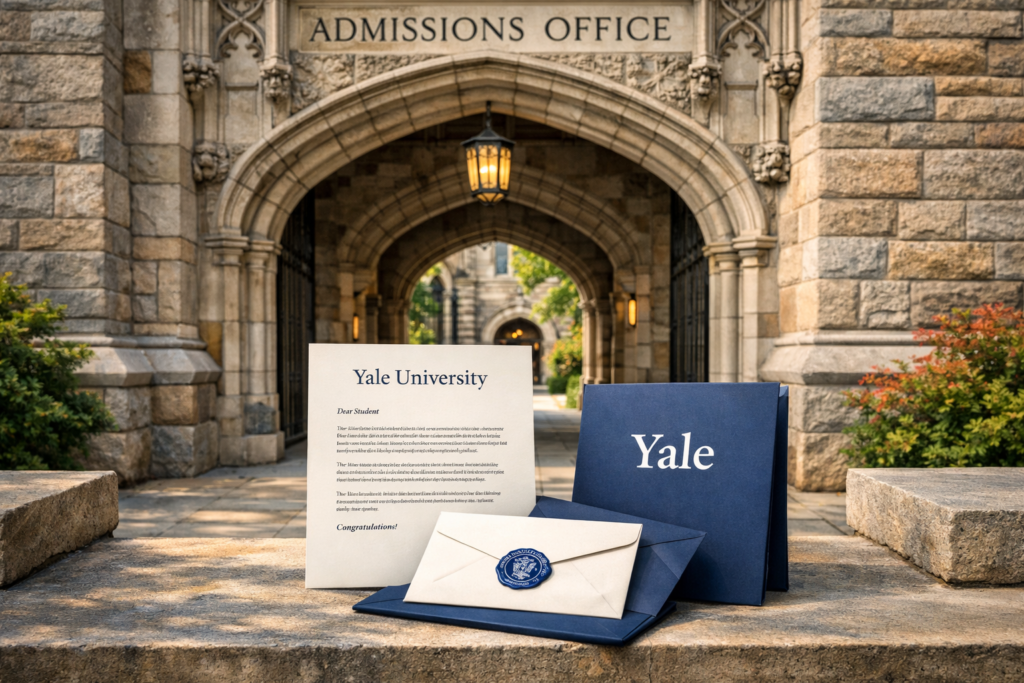
Yale is one of the most selective universities in the United States. The acceptance rate for the Class of 2028 was approximately 3.7 percent, meaning that fewer than four out of every hundred applicants were admitted. Yale accepts applications through the Common Application and QuestBridge. The Early Action deadline is typically November 1, and the Regular Decision deadline is January 2.
Yale practices a holistic admissions process, meaning it evaluates the full profile of every applicant rather than relying solely on test scores or grades. The most important factors in the Yale admissions process include academic excellence in a rigorous high school curriculum, standardized test scores (SAT or ACT), letters of recommendation, personal essays, extracurricular activities and leadership, and demonstrated intellectual curiosity.
Competitive applicants typically present GPAs at or near the top of their class, often achieving straight A grades in Advanced Placement, International Baccalaureate, or honors-level courses. For standardized testing, the middle 50 percent of admitted students score between 1510 and 1570 on the SAT and between 34 and 36 on the ACT. Yale is test-optional through at least the 2025-2026 application cycle, meaning applicants may choose whether to submit test scores.

For International Students
International students follow the same application process as U.S. students, with a few additional requirements. International applicants for whom English is not a first language are required to submit scores from the TOEFL or IELTS to demonstrate English language proficiency. The minimum TOEFL score required is 100 on the internet-based test (iBT). For the IELTS, a score of at least 7.0 is expected. Some applicants may submit the Duolingo English Test instead.
All financial aid applications from international students are reviewed on the same need-based criteria as those from U.S. students. Yale is one of the very few universities in the world that meets 100 percent of demonstrated financial need for all admitted students, regardless of nationality or immigration status.
Yale University Tuition and Fees (2025-2026)
The following table outlines the cost of attendance at Yale University for the 2025-2026 academic year. Yale does not differentiate tuition between in-state and out-of-state students, as it is a private university. These figures represent the published cost of attendance before financial aid is applied.
| Expense Category | Undergraduate (Per Year) | Graduate / Professional |
| Tuition | $64,700 | $45,000 – $70,000 (varies by school) |
| Room (On-Campus) | $11,000 | $10,500 – $14,000 |
| Board (Meal Plan) | $7,200 | $5,500 – $7,500 |
| Books and Supplies | $1,100 | $1,000 – $2,000 |
| Personal Expenses | $2,500 | $2,000 – $3,500 |
| Health Insurance (est.) | $3,600 | $3,600 |
| Total Estimated COA | $90,100 – $92,000 | $67,600 – $100,600 |
Important Note: These are published costs before financial aid. Yale meets 100 percent of demonstrated financial need for all admitted students. Families earning under $75,000 per year typically pay nothing. Families earning between $75,000 and $200,000 pay between zero and 20 percent of their income annually. This makes Yale significantly more affordable than many public universities for qualifying families.
Read Also : University of Colorado Boulder – Admissions, Programs, Fees, Scholarships & Career Outcomes (2026)
Scholarships and Financial Aid at Yale University
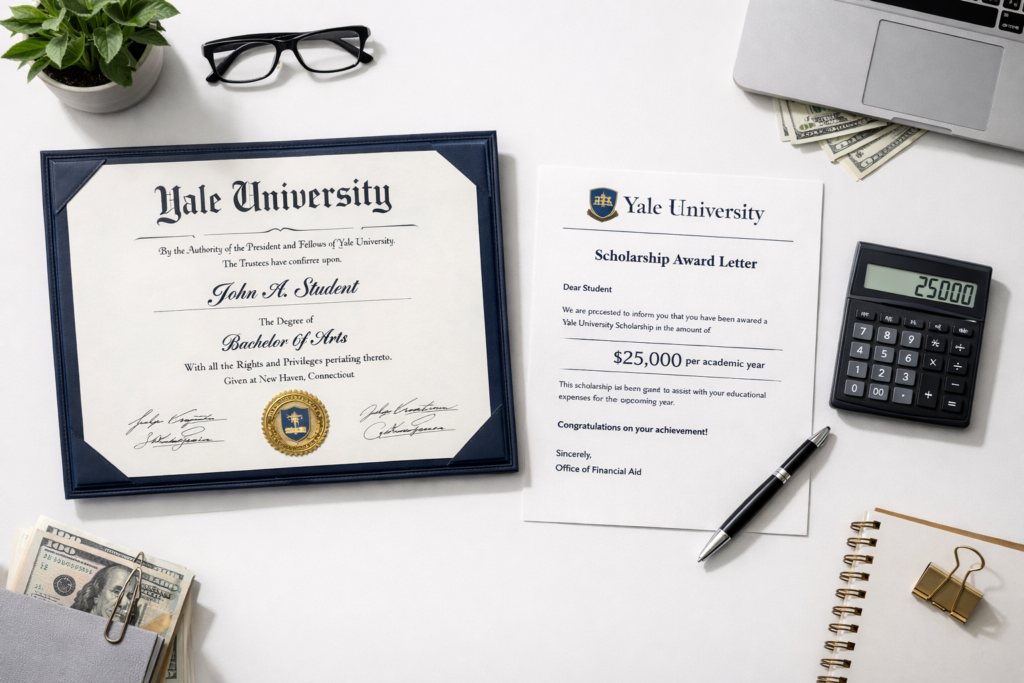
Yale is need-blind in its admissions process for U.S. citizens and permanent residents, meaning that an applicant’s ability to pay does not influence the admissions decision. Once admitted, Yale guarantees to meet 100 percent of the demonstrated financial need of every student. Yale does not offer merit-based scholarships independent of need; all aid is distributed based on financial need as determined by the Yale financial aid application process.

| Aid Program | Eligibility | Coverage | Details |
| Yale Scholarship (Need-Based) | All admitted undergrads with demonstrated need | Up to 100% of demonstrated need | No repayment required; grant, not loan |
| QuestBridge National College Match | Low-income high-achieving seniors | Full four-year scholarship | Apply separately via QuestBridge portal |
| Yale Financial Aid for International Students | International admits with demonstrated need | Up to 100% of need | Need-blind for applicants from select countries |
| Yale Graduate Fellowships | PhD students in most programs | Full tuition + stipend | Varies by department; most PhD students fully funded |
| School-Specific Fellowships (SOM, Law, Medicine) | Graduate-level admits | Partial to full tuition grants | Apply through respective school’s financial aid office |
| Work-Study Programs | Students with financial need | Hourly campus employment | On-campus jobs typically 10-15 hours per week |
| Federal Aid Programs (U.S. Citizens) | U.S. citizens with FAFSA eligibility | Pell Grant, Stafford Loans | Complete FAFSA annually for eligibility |
Students seeking the most accurate and personalized estimate of financial aid should use Yale’s Net Price Calculator available on the Yale financial aid website. The calculator provides a customized estimate based on family income, assets, and other factors.
Read Also : University of Pennsylvania Tuition Fees, Acceptance Rate, Admission, and Campus Life 2026
Campus Life and Student Facilities at Yale
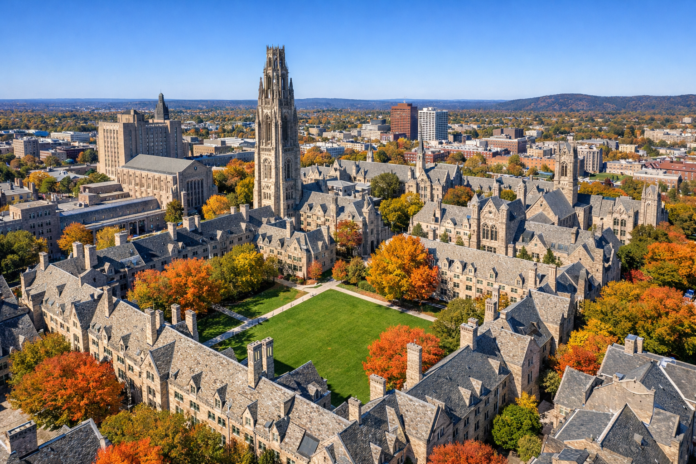
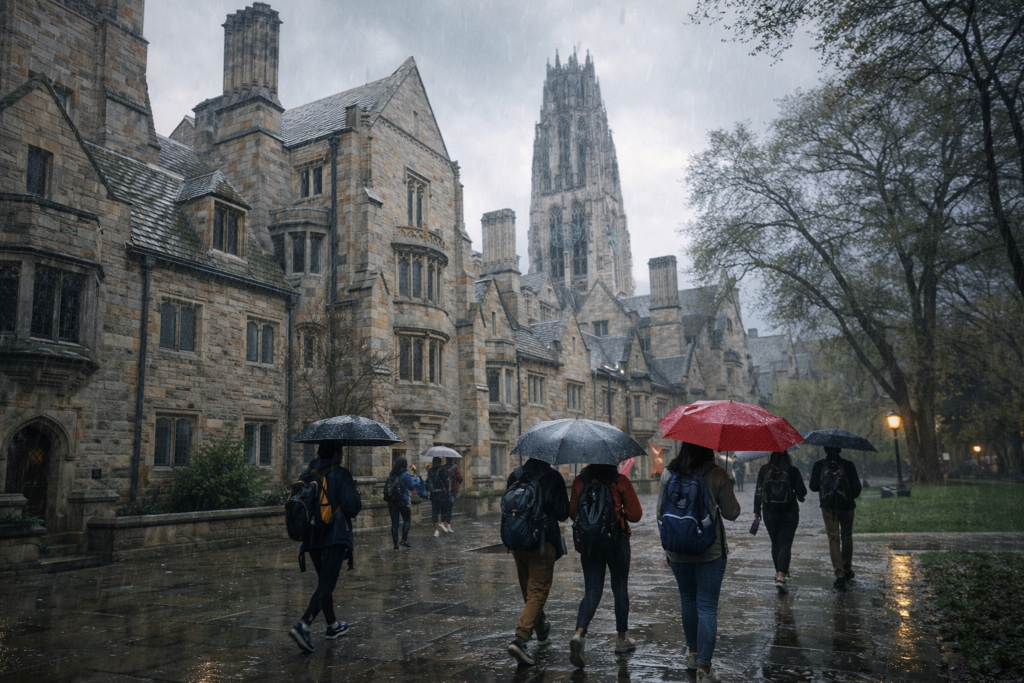
Yale’s campus in New Haven is one of the most architecturally distinctive in the United States. The campus is dominated by Gothic collegiate architecture, with limestone and brick buildings that give the university a timeless, distinguished appearance. The layout of the campus is centered around the Yale Old Campus and Cross Campus, where students gather, study, and socialize throughout the year.
The residential college system is central to campus life at Yale. Each of the 14 residential colleges has its own dining hall, common rooms, library, gym, and social spaces. Students are assigned to a residential college during their first year and remain affiliated with it throughout their time at Yale. This system creates tight-knit communities and a strong sense of belonging within the larger university.
Yale operates more than 500 registered student organizations covering every conceivable interest, from debate and politics to theater, film, music, entrepreneurship, and community service. The Yale Dramatic Association and the Yale a cappella tradition are particularly famous, and the university hosts multiple performance venues including the Shubert Theatre, which features professional Broadway productions.
Athletic facilities at Yale are extensive and include Payne Whitney Gymnasium, which is one of the largest collegiate gyms in the country, multiple swimming pools, tennis courts, a sailing center on the Long Island Sound, and Yale Bowl, the historic football stadium. Yale’s location in New Haven also gives students access to cultural institutions including the Yale University Art Gallery, the Yale Peabody Museum of Natural History, and the Yale Center for British Art.
Yale’s libraries are among the finest in the world. The Sterling Memorial Library and the Beinecke Rare Book and Manuscript Library are internationally recognized institutions housing rare collections that support research across all disciplines. Students have access to more than 15 million volumes and extensive digital research databases.
Read Also : University of Arizona Tuition Fees, Acceptance Rate, Admission, and Campus Life 2026
Career Outcomes and Internships for Yale Graduates
Yale’s career outcomes are consistently among the strongest of any university in the United States. The Yale Office of Career Strategy (OCS) provides comprehensive support to undergraduate and graduate students throughout their career development journey, from identifying internship opportunities to preparing for on-campus recruiting cycles and negotiating job offers.
Employment and Placement Data
According to Yale’s First Destination Survey, approximately 95 percent of Yale College graduates who respond to the survey report being employed, enrolled in graduate school, or engaged in a fellowship program within six months of graduation. This figure reflects the strong demand for Yale graduates across virtually every sector of the economy. Yale is one of the most heavily recruited universities by Wall Street investment banks, management consulting firms, and top technology companies.
Top Employers Recruiting at Yale
The top employers who consistently recruit Yale graduates include Goldman Sachs, Morgan Stanley, McKinsey and Company, Bain and Company, Boston Consulting Group, Google, Microsoft, Amazon, Meta, JPMorgan Chase, Deloitte, and numerous federal agencies, law firms, and hospitals. Yale’s alumni network is also a powerful resource for connecting with employers in every industry.
Average Starting Salaries by Field
| Career Field | Median Starting Salary | Common Employers |
| Investment Banking / Finance | $110,000 – $150,000 | Goldman Sachs, JPMorgan, Morgan Stanley |
| Management Consulting | $95,000 – $120,000 | McKinsey, BCG, Bain |
| Technology / Software Engineering | $130,000 – $160,000 | Google, Amazon, Microsoft, Meta |
| Law (after law school) | $215,000+ | Big Law firms (Cravath, Sullivan & Cromwell) |
| Medicine (after residency) | $200,000 – $400,000+ | Major hospital systems, academic medicine |
| Government / Public Policy | $55,000 – $80,000 | State Dept, White House, Congress |
| Academia / Research | $60,000 – $90,000 (postdoc) | Universities, NIH, research institutes |
| Nonprofit / Social Impact | $45,000 – $65,000 | NGOs, foundations, advocacy organizations |
Yale students also have access to the Yale Summer Experience Award, which provides funding for students pursuing unpaid or low-paid internships in the public sector, nonprofits, and the arts. This program ensures that financial constraints do not prevent Yale students from accessing high-value career experiences.
Read Also : Iowa State University Cost of Attendance 2026: Tuition Fees, Admission, Jobs, Salary & Living in Ames Iowa
Housing and Living Costs for Yale Students
Yale requires first-year undergraduate students to live in one of the university’s residential colleges, which provides a structured and supportive transition into college life. Upperclassmen may choose to remain in university housing or explore off-campus rental options in New Haven.

| Expense | On-Campus (Estimated) | Off-Campus (Estimated) |
| Housing (per year) | $11,000 | $9,600 – $14,400 |
| Meals / Food (per year) | $7,200 (meal plan) | $6,000 – $9,000 |
| Transportation (per year) | $500 – $1,000 | $1,200 – $2,500 |
| Utilities (per year) | Included in housing | $1,200 – $2,400 |
| Health Insurance (per year) | $3,600 | $3,600 |
| Personal / Miscellaneous | $2,500 | $3,000 – $4,000 |
| Total Annual Living Cost | $24,800 – $26,300 | $24,600 – $36,300 |
New Haven is a mid-sized city with a relatively affordable cost of living compared to cities like New York, Boston, or San Francisco. Off-campus housing near Yale’s campus ranges from approximately $800 to $1,500 per month for a one-bedroom apartment. Many students share apartments to reduce housing costs. New Haven also offers a vibrant local restaurant and arts scene, with significant student discounts available at many local establishments.
For international students on an F-1 visa, on-campus housing is strongly recommended for the first year, as it simplifies logistics around arrival, campus access, and building connections with other students.
Read Also : University of Kansas (2026): Tuition, Acceptance Rate, Ranking, Scholarships & Is It Worth the Cost?
Final Verdict: Who Should Apply to Yale University and Who Should Not
| Category | Details |
| Best Fit: High-achieving US students | Students ranking in the top 1-5% of their class with exceptional extracurriculars and a clear intellectual passion should apply. Yale rewards depth, curiosity, and demonstrated leadership. |
| Best Fit: International students seeking US exposure | Yale’s global reputation and need-blind aid for select international students makes it one of the best options for international applicants seeking a prestigious US degree with financial support. |
| Best Fit: Students targeting law, medicine, or academia | Yale Law School, Yale School of Medicine, and Yale’s doctoral programs are world-ranked. Students with these career goals should consider Yale a top-priority application. |
| Best Fit: Low-income and first-generation students | Yale’s generous financial aid program means qualifying students from low-income families often pay nothing. QuestBridge applicants should definitely apply. |
| Not Ideal: Students seeking large state university culture | Yale’s Ivy League environment is academically intense and socially different from large public universities. Students who prefer a relaxed atmosphere or large lecture-based classes may feel out of place. |
| Not Ideal: Students focused on purely vocational training | Students seeking direct vocational programs (nursing, engineering technology, hospitality) will find Yale’s curriculum more theoretical and research-focused than practical trade programs. |
| Not Ideal: Students without a strong application profile | Given the 3.7% acceptance rate, students with average academic profiles should also apply to a range of less selective schools. Yale should be treated as a reach school for even strong applicants. |
Overall, Yale University is an exceptional institution for students who are academically ambitious, intellectually curious, and committed to making an impact in their chosen field. The investment of time and effort required to apply and attend Yale is justified by the outcomes, network, and education that the university delivers. For students who qualify for financial aid, Yale is also one of the most affordable elite universities in the world on a net cost basis.
Read Also : University of Nebraska Lincoln (UNL): Complete Overview for US & International Students (2025–26)
Frequently Asked Questions About Yale University (2026)
1. What is the acceptance rate at Yale University for 2026?
The acceptance rate at Yale University for the most recent entering class (Class of 2028) was approximately 3.7 percent. This makes Yale one of the most selective universities in the United States. Both Early Action and Regular Decision applicants face similarly competitive odds. Students should treat Yale as a reach school regardless of their academic profile.
2. Does Yale University offer full scholarships to international students?
Yale does not offer merit-based scholarships that automatically cover full tuition. However, Yale does offer need-based financial aid to international students on the same terms as U.S. students. Admitted international students with demonstrated financial need may receive aid that covers some or all of the cost of attendance. Yale is need-blind for applicants from a select group of countries. Prospective international students should contact the Yale Office of Undergraduate Admissions to confirm current need-blind and need-based aid policies.
3. What GPA is required to get into Yale University?
Yale does not publish a minimum GPA requirement. In practice, the vast majority of admitted students have unweighted GPAs of 3.9 or higher, representing near-perfect academic performance in rigorous coursework. Yale’s admissions process is holistic, meaning GPA is one factor among many. Students with slightly lower GPAs who demonstrate exceptional talent, leadership, or academic achievement in other ways may still be competitive applicants.
4. Is Yale University good for international students on an F-1 visa?
Yes. Yale is one of the most welcoming universities in the United States for international students on F-1 student visas. The university provides extensive support through the Yale Office of International Students and Scholars (OISS), which assists with visa documentation, work authorization, tax filing, and cultural adjustment. International students on F-1 visas are eligible for Curricular Practical Training (CPT) and Optional Practical Training (OPT), which allows them to work in the U.S. during and after their studies. STEM graduates may qualify for a 24-month OPT extension, allowing up to three years of U.S. work experience after graduation.
5. What TOEFL score is required for admission to Yale University?
Yale requires a minimum TOEFL score of 100 on the internet-based test (iBT) for international applicants for whom English is not a primary language. For the IELTS, a score of at least 7.0 is expected. Applicants who have completed their entire secondary education in English-medium institutions may request a waiver of the English proficiency requirement. All language test requirements should be verified directly with the Yale admissions office, as policies may be updated.
6. What is the average salary of a Yale University graduate?
Yale graduates earn among the highest salaries of any university in the United States. Median starting salaries vary significantly by field: graduates entering investment banking or management consulting typically earn $100,000 to $150,000 in their first year. Technology graduates earn starting salaries of $130,000 to $160,000. Yale Law School graduates who join large law firms earn starting salaries of $215,000 or more. Graduates in public service, nonprofit work, and academia typically earn less but benefit from Yale’s network and prestige in career advancement over time.
7. Does Yale University offer online degrees or online programs?
Yale does not offer online undergraduate degree programs. The university is committed to the residential college experience as the foundation of undergraduate education. However, Yale does offer some online courses and certificates through platforms such as Coursera, where learners worldwide can access courses taught by Yale faculty. Certain continuing education and professional development programs offered through Yale’s schools may have online or hybrid components, but these are not full degree programs.
8. How hard is it to get a job after graduating from Yale University?
Yale graduates generally have strong employment outcomes. According to Yale’s First Destination Survey, approximately 95 percent of respondents report being employed, enrolled in graduate school, or in a fellowship program within six months of graduation. Yale’s Office of Career Strategy runs comprehensive recruiting programs, connecting students with hundreds of top employers across finance, technology, government, healthcare, and the arts. The Yale alumni network is one of the most powerful in the world and significantly enhances employment prospects for graduates throughout their careers.
Read Also : Oklahoma State University 2026: Fees Jobs After Graduation & OPT for International Students

